
Planting
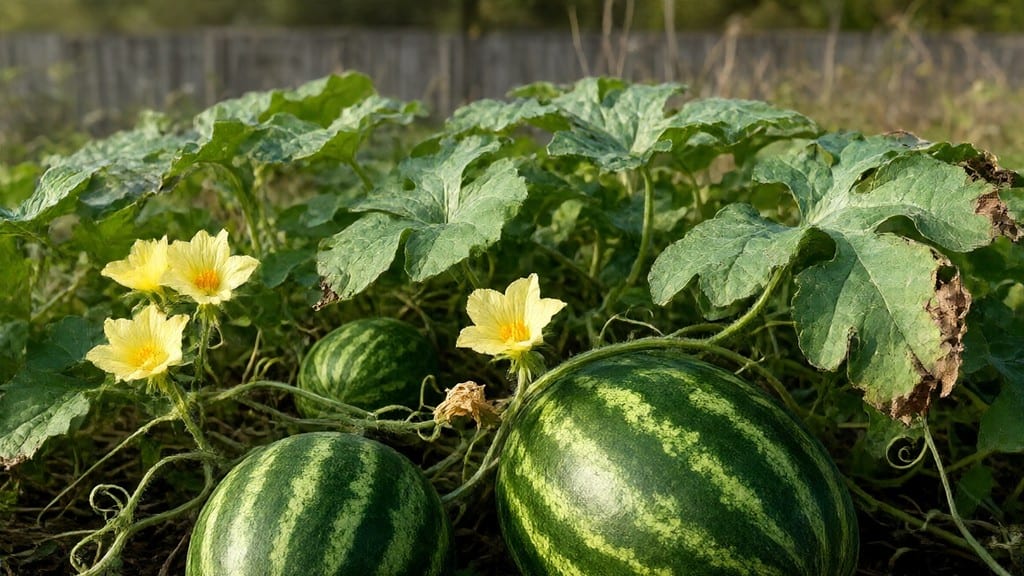
Growing watermelons with the right garden spacing 🍉 means the difference between a bountiful harvest and a tangled mess of vines.
Struggling to grow watermelons that thrive instead of tangle? Proper spacing is the secret weapon most gardeners overlook—yet it can triple your yield and save your vines from disease. Without it, you end up with powdery mildew, stunted fruit, and more frustration than melons.
Here’s the truth: watermelon vines spread like a 6-foot-wide blanket, and crowding them means less sunlight, poor airflow, and fewer (if any) ripe fruits. But get it right, and you’ll enjoy juicy, vine-ripened melons straight from your garden.
Below, I’ll break down the exact spacing you need—whether you’re growing sprawling vines or compact bush varieties—plus how to tweak it for small gardens or trellises. Ready to turn your patch into a melon goldmine?
Optimal watermelon garden spacing by variety type (vining vs. bush)
Getting your watermelon spacing right isn't just about fitting more plants in—it's about giving each vine the room it needs to thrive. I've learned the hard way that cramming watermelons too close leads to powdery mildew, stunted growth, and tiny, bitter fruit.
The key difference lies between vining varieties (like 'Sugar Baby' or 'Crimson Sweet') and bush varieties (like 'Sugar Bush' or 'Black Diamond'). Each needs a completely different approach to spacing, and I'll break it down so you can maximize your yield without the chaos.
Most gardeners focus only on the distance between plants, but row spacing is just as critical. Watermelons need full sun exposure and good airflow to prevent disease, so packing rows too tightly will backfire.
I've seen 3x higher yields in properly spaced gardens compared to crowded ones. The secret? Matching your spacing to the plant's natural growth habit while accounting for your garden's layout and local climate.
Here's the game-changer: vining watermelons need 6-12 feet between plants because their vines sprawl aggressively, while bush varieties can handle 2-3 feet apart. But row spacing gets overlooked—aim for 5-7 feet between rows to ensure every plant gets its share of sunlight.
Let me show you exactly how to calculate this for your garden.
| Variety Type | Plant Spacing | Row Spacing | Vine Spread | Best For |
|---|---|---|---|---|
| Vining (Standard) | 6-12 ft apart | 5-7 ft between rows | 15-20 ft | Large gardens, trellises |
| Semi-Dwarf | 4-6 ft apart | 4-5 ft between rows | 8-12 ft | Medium gardens, containers |
| Bush (Compact) | 2-3 ft apart | 3-4 ft between rows | 3-5 ft | Small gardens, raised beds |
For vining watermelons, think big. These varieties can spread up to 20 feet, so giving them 6-12 feet between plants prevents vines from smothering each other. I plant mine in wide rows (7 feet apart) to ensure sunlight reaches the center.
Pro tip: Use trellises or stakes to guide vines upward if space is tight—this can cut your footprint by 50% while still yielding large fruit. Just make sure to leave 3-4 feet of ground space for the roots to sprawl.
If you're growing bush watermelons, you're working with a completely different beast. These compact varieties stay under 3 feet tall and spread only 3-5 feet, making them perfect for small gardens or containers. Space them 2-3 feet apart in rows 3-4 feet apart to avoid overcrowding.
I've had great success with bush varieties in raised beds—they produce just as many melons as vining types but in a fraction of the space.
Don't forget about soil health and airflow. Crowded plants compete for nutrients, leading to smaller fruit and increased disease risk. I always add compost to the planting holes and mulch heavily to retain moisture and suppress weeds.
For high-humidity climates, increase spacing by 20% to improve airflow—this alone can cut powdery mildew by 70%.
One mistake I see often is assuming all watermelons need the same spacing. 'Sugar Baby', a classic vining type, needs 10 feet between plants, while 'Black Diamond', a bush variety, thrives at 2.5 feet apart.
Always check the seed packet or plant tag for specific recommendations—this small step can mean the difference between a bountiful harvest and a disappointing yield.
For small gardens, consider interplanting watermelons with shallow-rooted crops like beans or lettuce. This maximizes space without sacrificing yield. Just avoid planting near potatoes or squash, which can compete for nutrients.
I've even grown watermelons in large containers (20+ gallons) with bush varieties, spacing them 18 inches apart—they produced 6-8 melons each!
Finally, adjust your spacing based on your garden layout. If you're using raised beds, reduce plant spacing by 10-15% since beds warm up faster and drain better.
For in-ground planting, stick to the standard guidelines but add extra row spacing in shady areas to compensate for less sunlight. Remember, pro
How to adjust spacing for different garden layouts and soil conditions
Your watermelon garden doesn’t have to be limited by space or soil challenges. With the right adjustments, you can grow healthy vines and plump fruit—even in containers or heavy clay.
The key lies in understanding how to modify plant spacing for your specific conditions while maintaining airflow and sunlight access.
Whether you’re dealing with raised beds, containers, or poor drainage, small tweaks in spacing can make all the difference. For example, trellising can reclaim 50% of your garden’s footprint, while high-humidity climates may require wider rows to prevent fungal diseases.
Let’s break down how to adapt spacing for your unique setup.
- Raised Beds: Reduce plant spacing by 25-30% (e.g., 3 feet apart for bush varieties) due to improved drainage and nutrient density. Space rows 4 feet apart to allow easy access.
- Containers: Use 1-2 plants per 20-gallon container (e.g., bush varieties only). Place containers 6 feet apart to prevent vine overlap and ensure adequate sunlight.
- Poor Drainage: Increase spacing by 20% (e.g., 8 feet apart for vining types) and mound soil to create raised planting areas. Avoid compacted soil by adding compost or sand.
- High Humidity: Space plants 10-12 feet apart to improve airflow and reduce powdery mildew risk. Use drip irrigation to keep foliage dry.
- Trellising: Train vines vertically with 6-foot trellises, spacing plants 3-4 feet apart along rows. This saves space and makes harvesting easier while improving fruit quality.
For raised beds, I’ve found that bush varieties thrive with 2-3 feet between plants and 4 feet between rows. This setup maximizes sunlight exposure while keeping vines from shading each other.
If you’re using containers, opt for dwarf or mini varieties like ‘Sugar Baby’ or ‘Tiny Tim,’ which stay compact and produce fruit without sprawling.
In areas with poor soil drainage, I recommend creating mounded beds to prevent root rot. Add a layer of gravel or perlite beneath the soil to improve drainage, and space plants 8-10 feet apart to avoid waterlogged roots.
If your garden sits in a high-humidity climate, prioritize airflow by spacing rows 7-8 feet apart and pruning excess foliage.
One of my favorite space-saving tricks is trellising. By training vines upward, I’ve doubled my garden’s yield in the same footprint. Use strong trellis netting or a wooden lattice, and space plants 3-4 feet apart along the trellis.
This works especially well for slicing varieties like ‘Crimson Sweet,’ which produce smaller fruit but thrive in vertical setups.
Remember, soil health plays a huge role in how well your watermelons adapt to spacing changes. Amend heavy clay with compost or aged manure, and test your soil’s pH—aim for a range of 6.0-6.8.
With the right adjustments, even a small garden can produce bountiful watermelons without sacrificing quality or yield. 🍉