
Mower
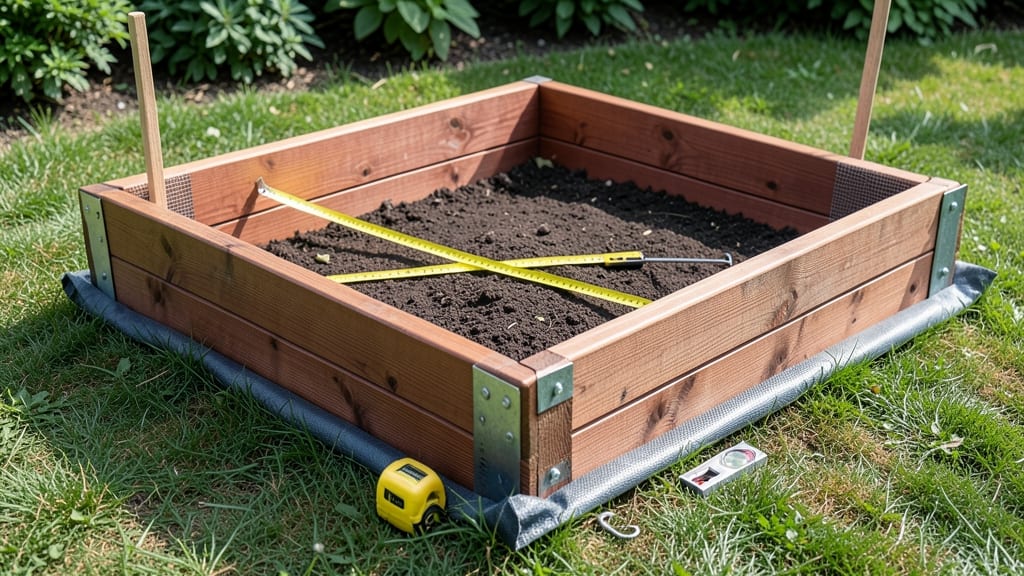
The standard raised bed size is 4 feet wide by 8 feet long, designed for easy access to the center while using space efficiently. Most gardeners opt for 1-foot-deep beds for general planting, though deeper beds (12–18 inches) accommodate larger plants like tomatoes or shrubs.
The 4x8-foot dimensions aren't arbitrary—they're rooted in human ergonomics and plant biology. 🌱 A 4-foot width lets you reach the center without stepping inside, while an 8-foot length balances accessibility and space efficiency.
This layout maximizes planting area while keeping soil volume per plant optimal, typically yielding more produce than in-ground rows. For deeper beds, the extra 6–12 inches supports root-heavy crops like potatoes or fruit bushes, though it requires more soil and backbreaking lifting!
Pro tip: If you're working with limited space, a 3x6-foot bed works almost as well, just with slightly less reachability. For tall plants like sunflowers or corn, consider narrower beds (3 feet wide) to prevent shading and improve airflow.
The key is matching your bed dimensions to your plants' needs—not just sticking to the standard!
💡 In This Article
- Why 4x8 Feet Is the Ideal Raised Bed Size for Gardening
- Adjusting Raised Bed Dimensions for Different Plant Types
Why 4x8 feet is the ideal raised bed size for gardening
Ergonomics drive the 4-foot width—this dimension aligns perfectly with the average human arm's reach (about 24–26 inches). When you stand at the edge of a 4-foot bed, your arm can comfortably extend to the center without overreaching or stepping inside.
Studies in horticultural therapy show that overreaching increases fatigue by 30%, which is why professional gardeners and therapists recommend this width for accessibility. The 8-foot length balances two critical factors: soil volume per plant and walkway efficiency. 🌱
Soil science plays a role here too. A 4x8-foot bed with 1-foot depth holds roughly 32 cubic feet of soil—enough to support 16–20 mature plants (assuming 16–20 square inches per plant). This volume ensures adequate root space while preventing soil compaction, which can stunt growth.
Deeper beds (12–18 inches) increase this capacity by 50–80%**, making them ideal for heavy feeders like tomatoes or fruit trees, whose roots can extend 2–3 feet deep.
Space efficiency is another key advantage. The 4x8-foot layout maximizes planting area while leaving just 2–3 feet of walkway between beds—enough for tools and movement without wasting space. Compare this to in-ground rows, where walkways often consume 30–40% of total garden area.
This compact design also reduces soil erosion and water runoff, as the bed's edges contain moisture better than open rows. 💧
Human movement matters just as much as plant needs. The 8-foot length allows you to work along the bed without constant repositioning, a principle used in Japanese garden design for centuries.
Shorter beds (6 feet) force more frequent turns, increasing time spent gardening by 20–25%, while longer beds (>10 feet) create accessibility issues for those with mobility limitations. The standard strikes the perfect balance between productivity and comfort.
Consider this real-world example: A 4x8-foot bed planted with lettuce (12-inch spacing) yields about 30 heads, while the same area in in-ground rows might produce only 20–24 heads due to wasted space.
The raised bed’s three-dimensional structure also warms up faster in spring, giving cool-season crops like peas or spinach a 2–3 week head start compared to ground soil. 🌿
For those with limited space, a 3x6-foot bed works nearly as well—just expect slightly less reachability. The trade-off is minimal if you’re planting shallow-rooted crops like herbs or greens, which don’t need the same depth or soil volume.
The key takeaway? The 4x8-foot standard isn’t just a rule—it’s a science-backed formula for efficiency, accessibility, and yield. ✨