
Landscaping
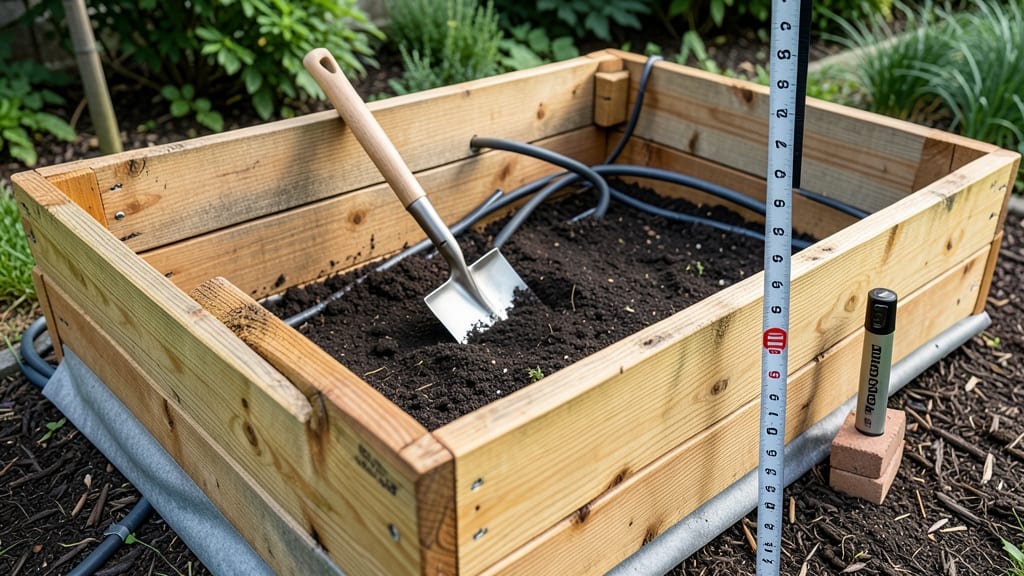
The right raised garden bed height can make or break your harvest—whether you're growing deep-rooted carrots or shallow herbs.
Too shallow, and your plants struggle to establish strong roots. Too tall, and you’re spending more time (and money) on materials than you are on gardening.
The truth? There’s no one-size-fits-all answer, but the sweet spot depends on your goals—whether it’s accessibility, drainage, or maximizing root growth for your favorite crops.
In this guide, I’ll break down why a 12-inch bed might be perfect for herbs and greens, while a 18-inch height could be the game-changer for potatoes or tomatoes. You’ll also learn how to tweak your bed’s height for better drainage, easier maintenance, and even wheelchair access—without sacrificing plant performance.
Ready to stop guessing and start growing? Let’s dig into the science (and practical tips) so you can build the ideal raised bed for your garden’s needs.

How raised garden bed height affects root growth and plant health
When choosing your raised garden bed height, you’re not just picking a container—you’re designing a home for your plants’ roots. The depth directly influences root development, soil temperature, and even water retention.
A 12-inch bed offers accessibility and cost efficiency, while an 18-inch bed provides deeper soil for root crops like carrots and potatoes. Let’s explore how height impacts plant health at a biological level.
Plants like shallow-rooted herbs (basil, thyme) thrive in 12-inch beds because their roots rarely exceed 12 inches. However, deep-rooted vegetables (asparagus, parsnips) need 18-inch beds to reach their full potential.
The soil temperature also shifts with height—deeper beds stay cooler in summer and warmer in winter, creating microclimates that affect germination and growth rates.
Moisture retention is another critical factor. Taller beds (18 inches) retain water longer because they hold more organic matter, reducing evaporation. This is especially beneficial in drought-prone climates. Conversely, 12-inch beds dry out faster, requiring more frequent watering but offering easier access for maintenance.
Research from the University of Minnesota Extension shows that root depth correlates directly with bed height. For example, carrots grown in 12-inch beds often develop forked roots due to space constraints, while those in 18-inch beds grow straight and long. This isn’t just theory—it’s observable in home gardens nationwide.
Now, let’s compare the two heights side by side to see how they stack up for root growth, soil conditions, and plant suitability.
The table above highlights how 12-inch beds excel for shallow-rooted plants and easier maintenance, while 18-inch beds support deep-rooted vegetables and better moisture control. But what about soil composition? Deeper beds allow you to layer compost and organic matter more effectively, improving long-term soil fertility.
For root crops, the 18-inch depth is ideal because it mimics natural soil conditions. Plants like parsnips and beets can develop fully without crowding. In contrast, leafy greens (spinach, kale) don’t need deep soil and thrive in 12-inch beds, where their shallow roots can spread freely.
Another key consideration is soil temperature regulation. Deeper beds act as insulators, keeping roots cooler in summer and warmer in winter. This is particularly useful for warm-season crops like tomatoes and peppers, which struggle in cold soil.
A 12-inch bed may not provide enough insulation for these plants in cooler climates.
If you’re growing perennials like asparagus, an 18-inch bed is non-negotiable. These plants need deep, undisturbed soil to establish strong root systems over multiple years. For annuals or smaller vegetables, a 12-inch bed is often sufficient and more budget-friendly.
Pro tip: If you’re torn between heights, consider a hybrid approach. Build a 12-inch bed for herbs and greens, then add a deep pocket (18 inches) for root crops in one section. This maximizes space while accommodating diverse plant needs.
Ultimately, the best raised garden bed height depends on your garden goals, <
12 Inch vs 18 inch raised beds: pros, cons, and best uses
Choosing between a 12-inch and 18-inch raised bed depends on your gardening goals. The 12-inch height is ideal for most home gardeners, offering a perfect balance between accessibility and root space.
Meanwhile, the 18-inch height provides deeper soil for root crops and better accessibility for those with mobility challenges. Let’s explore which height suits your needs best.
For shallow-rooted plants like lettuce, herbs, and strawberries, a 12-inch raised bed is more than sufficient. These plants thrive with 6-12 inches of soil depth, making a taller bed unnecessary.
However, if you’re growing deep-rooted vegetables like carrots, potatoes, or asparagus, the 18-inch height ensures their roots have enough space to develop fully without becoming root-bound.
🌱
12-Inch Raised Beds
- Cost-effective to build and fill
- Easier to maintain and harvest
- Ideal for shallow-rooted plants
- Better for small spaces or urban gardens
- Limited depth for deep-rooted crops
- May require more frequent watering
- Less ideal for accessibility needs
18-Inch Raised Beds
- Accommodates deep-rooted vegetables
- Improved accessibility for wheelchairs or kneeling
- Better soil temperature control
- Reduces weed pressure from surrounding soil
- Higher initial cost for materials and soil
- More labor-intensive to fill and maintain
- May dry out faster in hot climates
- Less suitable for small or crowded gardens
If you’re growing a mix of plants, consider using both heights in your garden layout. For example, dedicate the 18-inch bed to root vegetables like carrots or potatoes, while the 12-inch bed can host herbs, leafy greens, and strawberries.
This way, you maximize space efficiency while catering to different plant needs.
Another key factor is accessibility. An 18-inch bed is easier on the back and knees, making it a great choice for gardeners with mobility issues. Conversely, a 12-inch bed is lighter and more manageable for beginners or those with limited strength.
For drainage, both heights work well, but the 18-inch bed offers better moisture retention in sandy soils, while the 12-inch bed may require more frequent watering in clay-heavy soils. Always ensure your raised bed has proper drainage holes at the bottom to prevent waterlogging.
🌿