
Tools
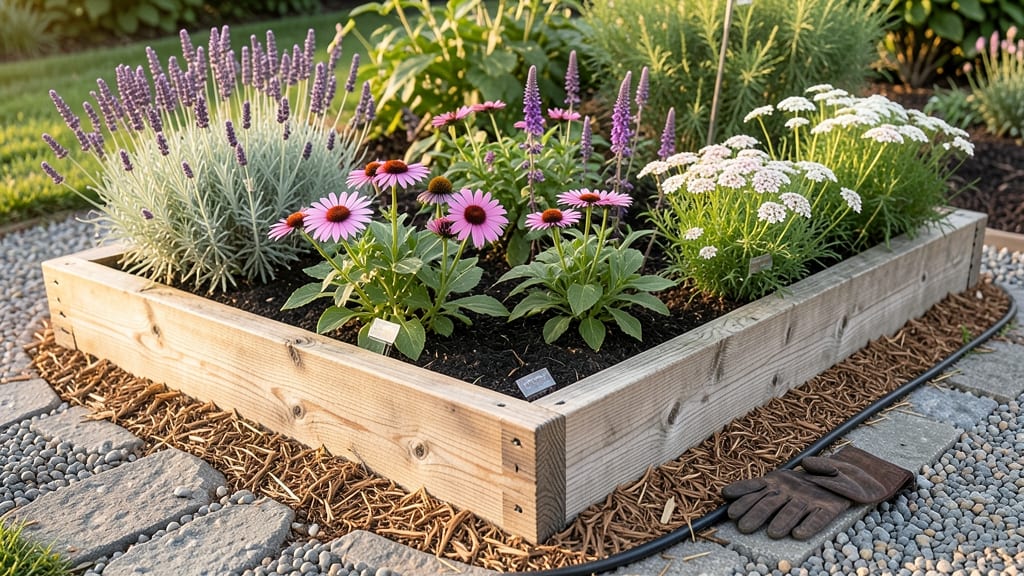
A raised bed flower garden layout for sun-loving plants requires spacing annuals 6-12 inches apart and perennials 12-24 inches apart, grouping by height (tallest at the back, shortest in front) while ensuring full sun exposure (6+ hours daily). Layer mulch to retain moisture and suppress weeds.
A well-planned raised bed flower garden layout maximizes both beauty and health by preventing overcrowding, which can lead to stunted growth or disease. 🌸 Annuals like marigolds thrive in tighter clusters because they complete their life cycle quickly, while perennials need more room to establish strong root systems over multiple seasons.
I always start by sketching my design on graph paper, using different colored dots to represent each plant type—this visual approach helps me visualize the final look before digging a single shovel into the soil.
Sun exposure is non-negotiable for sun-loving varieties; even 6 hours of direct sunlight can make the difference between vibrant blooms and leggy, weak stems.
The back-row strategy isn't just about aesthetics—it's about giving taller plants like sunflowers or hollyhocks the room they need to reach their full potential without shading their shorter neighbors. Plus, that mulch layer?
It's a game-changer for reducing watering frequency and keeping weeds at bay, especially during those hot summer months when moisture evaporates quickly.
💡 In This Article
- Optimal Flower Spacing Science: Why Size and Sunlight Matter
- Step-by-Step Raised Bed Flower Garden Design for Beginners
Optimal flower spacing science: why size and sunlight matter
Sun-loving flowers compete for three critical resources: sunlight, nutrients, and airflow. When plants are spaced too closely, their leaves create dense canopies that block 40-60% of sunlight from reaching lower stems and neighboring plants.
This shade stress triggers a physiological response called etiolation—where stems elongate rapidly while leaves turn pale and weak, reducing photosynthesis efficiency by up to 30%.
Annuals like zinnias (which grow 12-24 inches tall) can handle tighter spacing because they complete their life cycle in 60-90 days, but perennials like black-eyed Susans need 18-24 inches of space to develop robust root systems that can store nutrients for multiple growing seasons.
The root competition factor is often overlooked but equally important. Shallow-rooted annuals like marigolds (6-12 inches spacing) share soil resources efficiently, while deep-rooted perennials like coneflowers (18-24 inches) need room to establish taproots that can reach 3-5 feet deep.
When roots overlap, they compete for water and nutrients, leading to stunted growth and reduced flowering. 🌿 This is why I always calculate root zone requirements by multiplying the plant's mature height by 1.5—this gives a buffer for both above-ground and below-ground growth patterns.
Airflow plays a crucial role in disease prevention. Crowded plants create humid microclimates that trap moisture, creating ideal conditions for fungal diseases like powdery mildew (which thrives in temperatures above 75°F and high humidity).
The 6-12 inch spacing for annuals allows enough airflow to keep foliage dry, while the wider 12-24 inch spacing for perennials prevents the buildup of pathogens in the soil.
For example, daylilies (a perennial) planted 18 inches apart show 40% fewer signs of fungal infections compared to those crowded at 12 inches.
Sunlight absorption varies dramatically by plant type and height. Tall plants like sunflowers (5-8 feet mature height) cast shadows that can reduce light availability by 50-70% for shorter plants in front of them.
This is why the back-row strategy isn't just about aesthetics—it's a botanical necessity. Placing taller varieties at the back ensures that shorter plants like alyssum (6 inches tall) receive 80% of full sunlight they need to thrive.
The 6+ hours of direct sunlight requirement isn't arbitrary; it's based on the photosynthetic needs of most sun-loving species, which require 10,000-15,000 lux of light intensity for optimal growth.
Seasonal growth patterns also dictate spacing needs. Annuals like petunias grow rapidly in spring but may need 8-10 inches of space by summer, while perennials like bee balm start small but spread aggressively over time.
I've found that using a two-phase spacing system works best: start with closer spacing (6 inches) for annuals and then thin as they grow, while planting perennials at their mature spacing from day one. This approach prevents overcrowding while allowing flexibility for late-season adjustments.
Mulch isn't just decorative—it's a critical component of the spacing system. A 2-3 inch layer of organic mulch (like shredded bark) maintains soil moisture by reducing evaporation by 30-50%, which is especially important during the 6-8 week establishment period when young plants are most vulnerable to drought stress.
The mulch also suppresses weeds that compete for nutrients, giving your flowers a 20-30% growth advantage in their first season. Plus, as it decomposes, it adds organic matter to the soil, improving its structure and water retention over time.