
Companion Plants
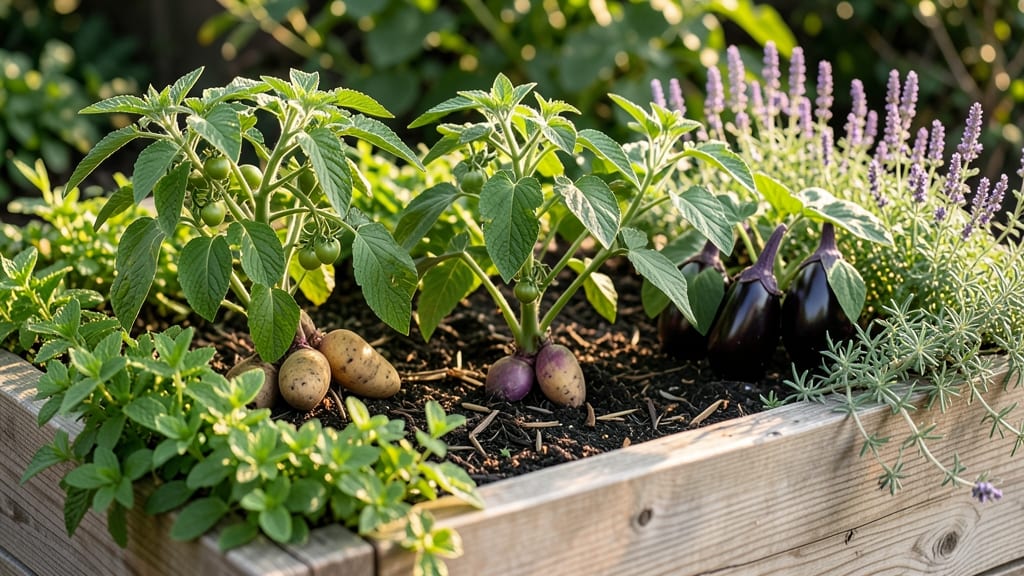
Transform your raised bed into a high-yield, pollinator-friendly garden with these 10 science-backed companion planting layouts. Each design maximizes space, repels pests, and attracts beneficial insects for a thriving ecosystem.
Classic Three Sisters Raised Bed
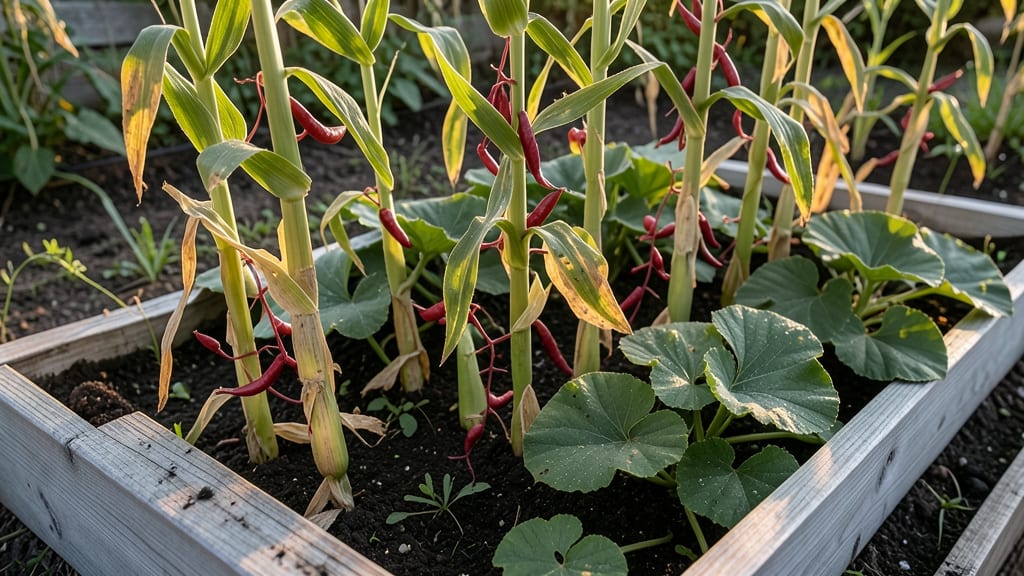
Bring a piece of history to your garden with the Three Sisters method—a time-tested Native American technique that turns your raised bed into a thriving ecosystem. This trio of corn, beans, and squash doesn’t just grow together; it creates a self-sustaining cycle where each plant supports the others, reducing weeds, improving soil, and even attracting pollinators with late-season blooms.
Start by planting corn in the center of your bed—its tall stalks will provide a natural trellis for pole beans to climb, while the beans’ roots fix nitrogen in the soil, feeding the corn and squash. Summer squash or pumpkins spread along the base, shading the soil to retain moisture and suppress weeds. The beans’ vines also deter pests that might target the corn, and the squash leaves create a living mulch that keeps the bed cool and weed-free.
This layout is perfect for beginners or anyone looking to grow food sustainably—it requires minimal intervention once established and delivers a triple harvest. Plus, the late-season flowers on corn and beans provide a late-summer feast for bees and butterflies. 🌱
Mediterranean Herb And Tomato Tower
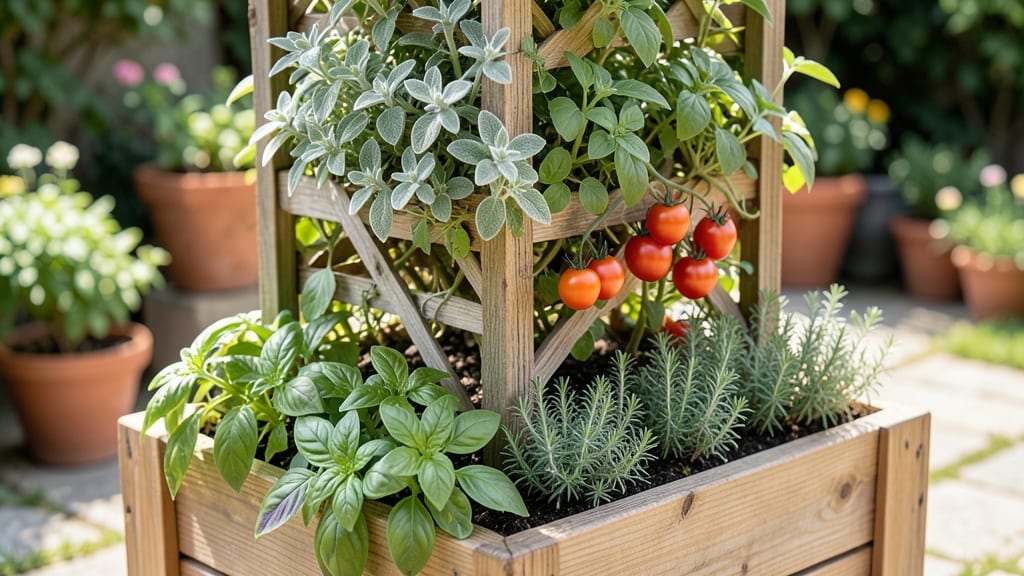
Transform your small space into a fragrant, pest-repelling powerhouse with a Mediterranean Herb and Tomato Tower. This vertical layout stacks basil, oregano, and thyme alongside cherry tomatoes, creating a natural defense system against whiteflies and aphids while maximizing harvest in tight areas.
Start by planting thyme at the base—its woody stems and drought tolerance make it ideal for the bottom layer. Add oregano in the middle for its hardy growth and pest-deterring properties, then top with basil and cherry tomatoes, which thrive in the slightly warmer, airier upper zone. The herbs' strong aromas confuse pests while their shallow roots won’t compete with tomatoes for nutrients. Prune herbs regularly to maintain airflow and prevent fungal issues.
This design is perfect for urban gardeners, balcony planters, or anyone with limited space. The aromatic layers not only repel pests but also create a sensory garden experience you’ll love harvesting from all season. 🌿
Brassica Pest-Repellent Square Foot
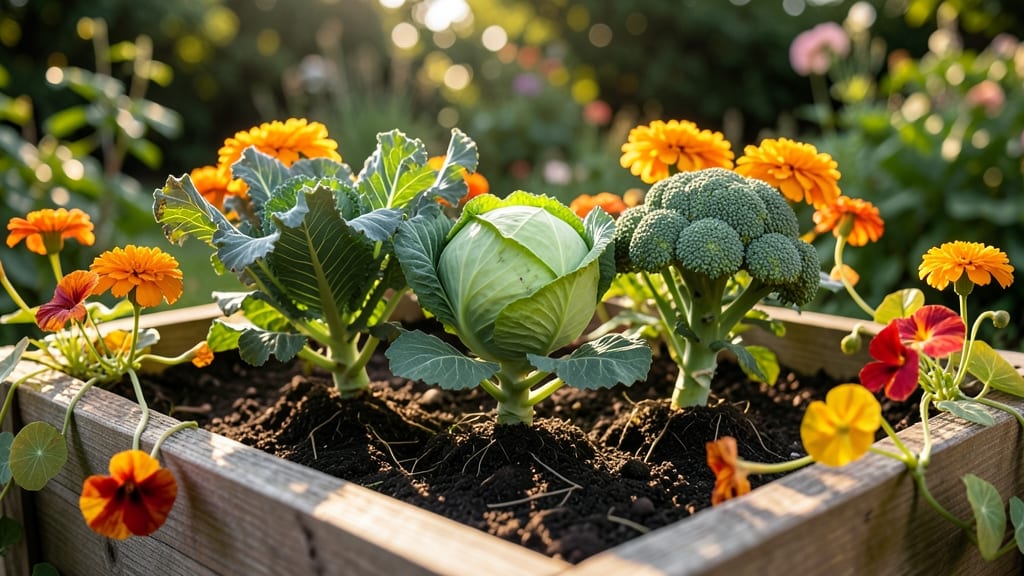
Tired of battling cabbage worms that devour your brassicas before you can harvest? This square-foot fortress combines kale, cabbage, and broccoli with their natural defenders: marigolds and nasturtiums. The bright orange and fiery flowers act as a decoy, confusing pests while attracting predatory wasps that hunt cabbage worms naturally.
Plant your brassicas in the center of a 1-foot square, surrounded by marigolds on two sides and nasturtiums on the other two. The marigolds release a scent that repels pests, while nasturtiums provide edible ground cover that deters slugs. This layout works especially well in cool-season gardens and requires minimal maintenance—just keep the flowers blooming to maintain their pest-control benefits.
Perfect for organic gardeners and beginners, this design eliminates the need for chemical sprays while boosting your harvest. The colorful border also adds visual appeal to your raised bed. 🌟
Salad Greens With Flowering Alliums
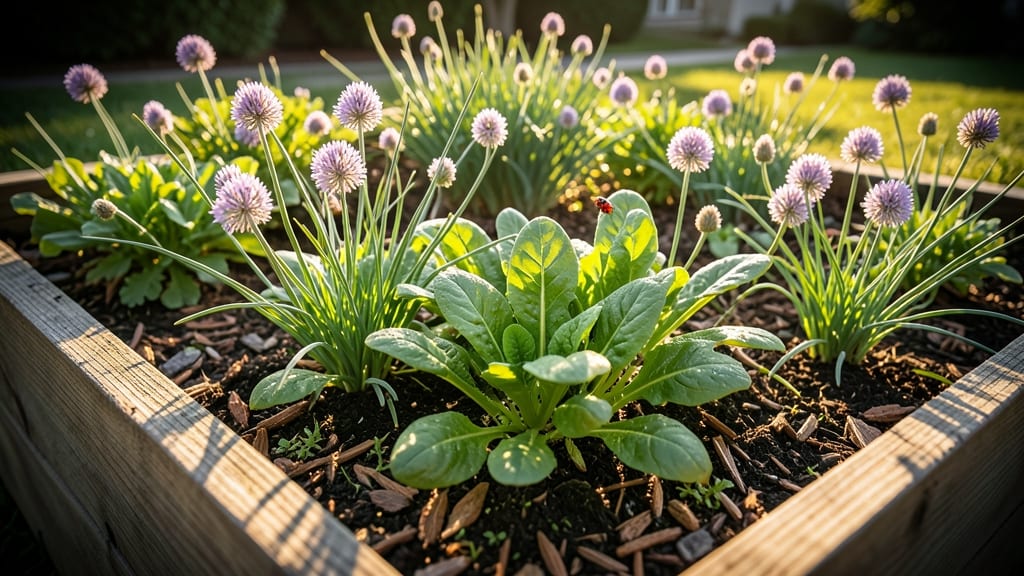
Tired of slugs decimating your salad greens before you even harvest them? Flowering alliums like chives and garlic chives are the secret weapon your raised bed needs. Their strong scent repels slugs while their blooms attract beneficial insects that keep pests in check naturally.
Plant lettuce, spinach, and arugula in the center of your bed, surrounded by chives and garlic chives. The allium flowers not only deter slugs but also extend your harvest by 4-6 weeks by attracting pollinators that boost plant vigor. For best results, keep the bed consistently moist and provide afternoon shade during hot summer months to prevent bolting.
This layout is perfect for urban gardeners with small spaces or anyone looking to maximize their salad harvest with minimal effort. 🌿
Peppers And Basil Pest-Free Triangle
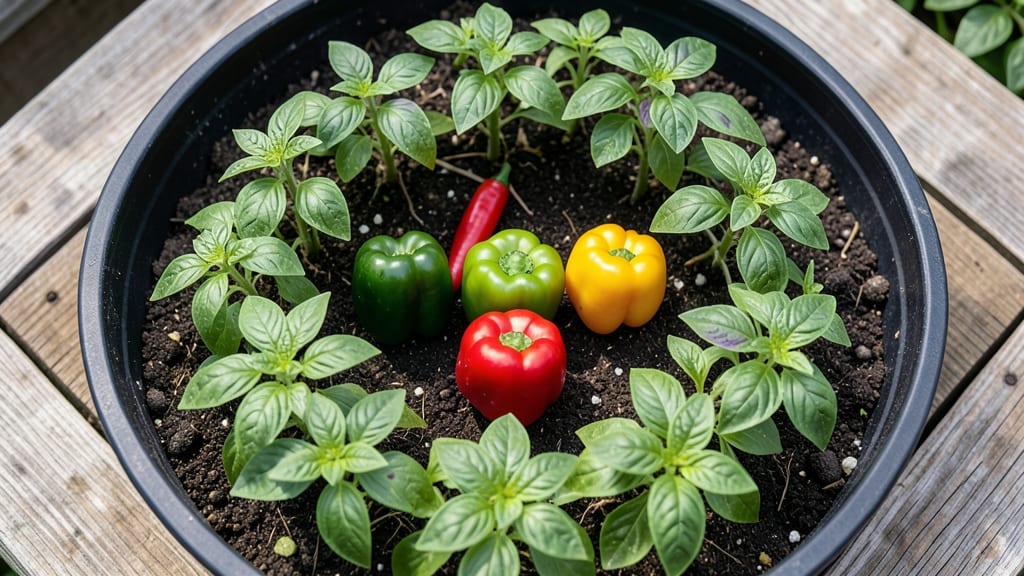
Turn your small raised bed or container into a pest-free pepper paradise with this simple but powerful trio. Plant hot peppers (like jalapeños or cayenne) in the center, surrounded by a ring of sweet basil—the combination naturally deters pests like aphids and whiteflies while enhancing the peppers' heat and flavor.
For best results, space peppers 12-18 inches apart and let basil cascade slightly over the edges. The basil’s strong scent masks pepper odors that attract pests, while its leaves release compounds that repel insects. This layout thrives in full sun (6+ hours daily) and works perfectly in 5-gallon containers or small raised beds.
Urban gardeners and beginners will love this low-maintenance setup—it’s a space-saving powerhouse that doubles as a culinary bonus. 🌱
Root Vegetable And Carrot Flower Border
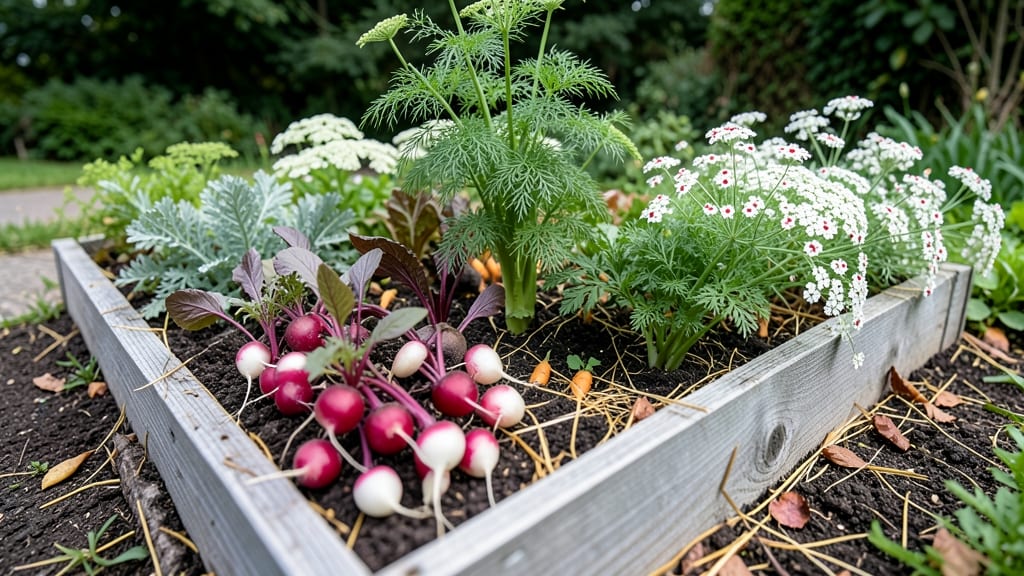
Tired of battling carrot flies ruining your root crop harvest? This root vegetable and flower border combines the practicality of radishes, beets, and carrots with the pest-deterring power of dill and Queen Anne's lace—nature's own aphid control system.
Plant radishes (fast-growing) at the edges to act as trap crops, drawing carrot flies away from your carrots. Interspersed dill and Queen Anne's lace attract hoverflies, which prey on aphids while their strong scent masks the smell of carrots, confusing pests. This layout thrives in full sun with well-draining soil, requiring minimal maintenance once established.
Perfect for small-space gardeners or those seeking a low-fuss solution, this border delivers both harvest and beauty while keeping pests at bay—ideal for late-spring through fall planting. 🌱
Strawberry And Borage Pollinator Magnet
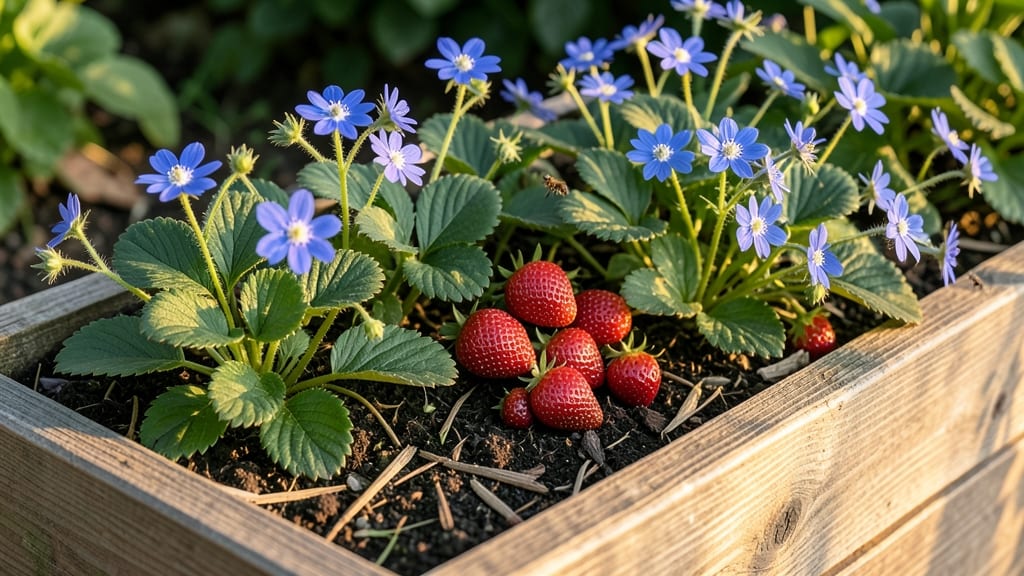
Want a raised bed that feeds you and the bees? Pair June-bearing strawberries with borage for a dual-purpose powerhouse—sweet fruit plus pollinator paradise. This combo works year-round: strawberries deliver summer harvests, while borage’s vibrant blue flowers bloom from spring to fall, luring bees for better fruit set.
Plant strawberries along the edges of your bed, leaving space for borage to sprawl between rows. The borage’s strong scent deters slugs, which often target strawberries, while its nectar-rich blooms attract bees that boost pollination. For best results, mulch strawberries with straw to retain moisture and keep fruit clean. This layout thrives in full sun and well-draining soil—ideal for small spaces or container gardens.
Perfect for beginners or pollinator enthusiasts, this pairing reduces pests naturally while maximizing your harvest. Plus, borage’s edible flowers add a cucumber-like flavor to salads—so you get three benefits in one bed! 🌟
Cucumber And Nasturtium Trellis System
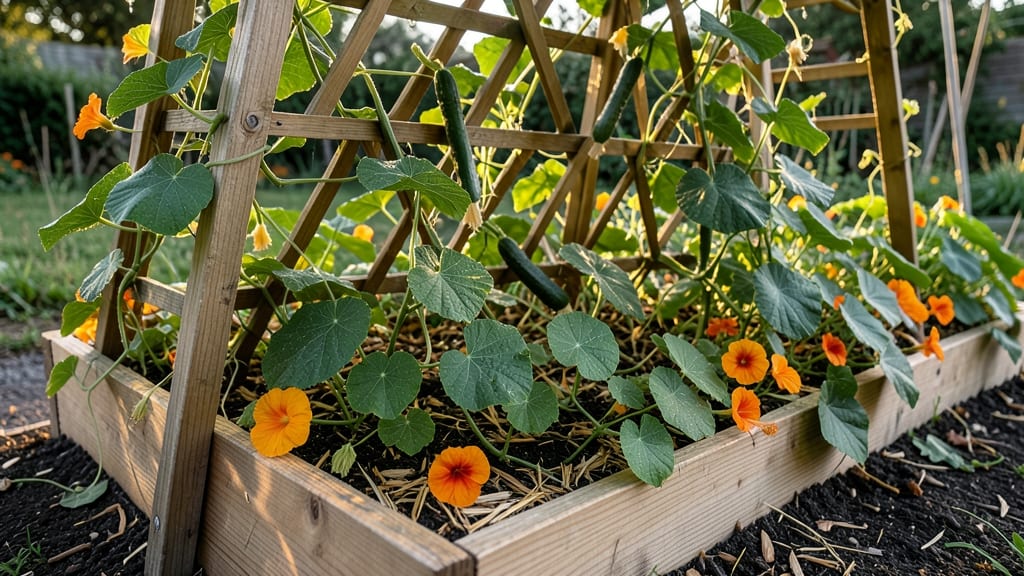
Turn your small raised bed into a high-yield cucumber oasis with this dual-purpose trellis system that doubles as a pest-deterrent and pollinator magnet. By training vining cucumbers alongside nasturtiums, you create a dynamic vertical garden that repels cucumber beetles while adding edible, peppery flowers to your harvest.
Start by installing a 3-4 foot tall trellis along one side of your raised bed, then plant cucumbers at the base with nasturtiums interspersed every 12 inches. The bright orange nasturtium blooms confuse cucumber beetles while attracting beneficial insects like hoverflies and ladybugs. For best results, choose bushy nasturtium varieties like 'Alaska' or 'Jewel Mix' that cascade alongside the cucumber vines. This setup maximizes your square footage by growing upward instead of outward, perfect for urban gardeners or small spaces.
Urban gardeners and balcony growers will love this space-saving solution, while organic gardeners benefit from the natural pest control that eliminates the need for chemical sprays. Plus, the nasturtiums' edible flowers add a peppery kick to salads—talk about a two-for-one harvest! 🌱
Garlic And Flower Bulb Winter Layout
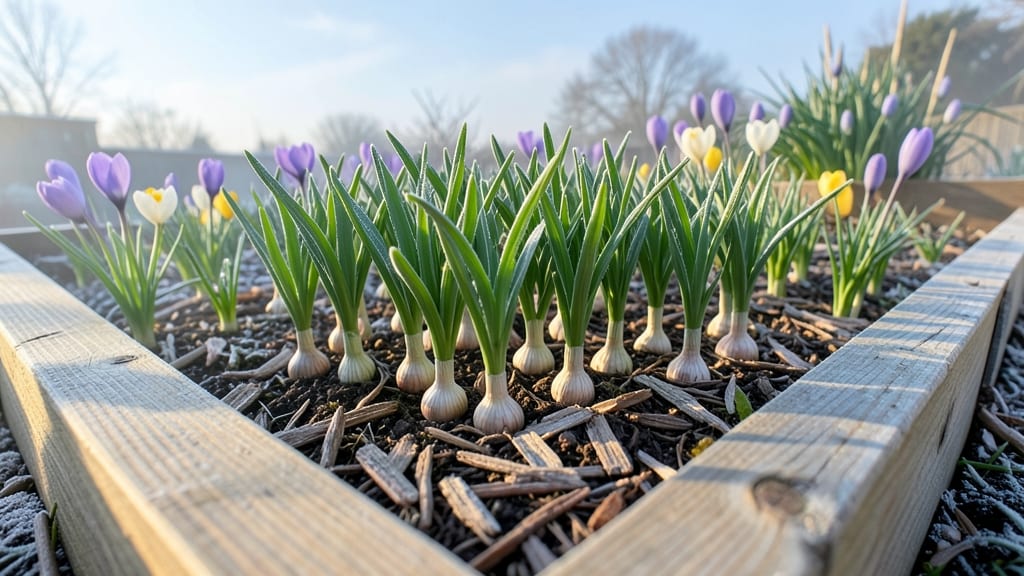
Turn your winter garden into a pest-deterring pollinator paradise with this simple yet stunning layout. While other beds lie dormant, this hardneck garlic centerpiece surrounded by crocuses and chives creates year-round visual interest while working hard underground.
Plant hardneck garlic in fall (Zone 3-9) with crocus bulbs nestled between cloves—their early spring blooms provide crucial nectar when few other flowers are available. Add chives around the perimeter for their mild onion scent that naturally repels aphids and Japanese beetles. The garlic's strong aroma also deters deer and rabbits from browsing your other plants.
This layout is perfect for gardeners who want low-maintenance winter beauty with high rewards—harvesting garlic in summer while enjoying year-round color and early-season pollinators. The crocuses will even naturalize over time, reducing future planting work. 🌷
Nightshade And Mint Isolation Bed

Struggling with cross-contamination between your tomatoes, potatoes, and eggplants? A dedicated Nightshade and Mint Isolation Bed solves this while keeping pests at bay—naturally. This layout contains all your Solanaceae family plants in one raised bed, surrounded by a border of mint and thyme to create a protective barrier. The strong scents of mint deter Colorado potato beetles, a notorious pest, while thyme repels aphids and whiteflies.
Start by planting your nightshade crops—tomatoes, potatoes, and eggplants—in the center of the bed, ensuring they’re spaced properly for airflow. Surround them with mint along the outer edges to contain wandering roots and create a natural pest-repellent perimeter. Add thyme at the base to deter soil-borne pests and improve soil health. This setup is ideal for organic certification because it eliminates the need for chemical pesticides while maintaining clean crop separation.
Perfect for gardeners who prioritize organic practices and want to avoid cross-pollination issues, this layout is especially useful for those growing heirloom or specialty varieties. It’s also a great solution for small gardens where space is limited but you still want to grow multiple nightshade crops. 💚