
Landscaping
Maximize your potato harvest in limited space with these 10 innovative raised bed designs. Whether you're a small-space gardener or aiming for record yields, these creative solutions optimize growth and simplify maintenance.
Vertical Potato Tower Planters
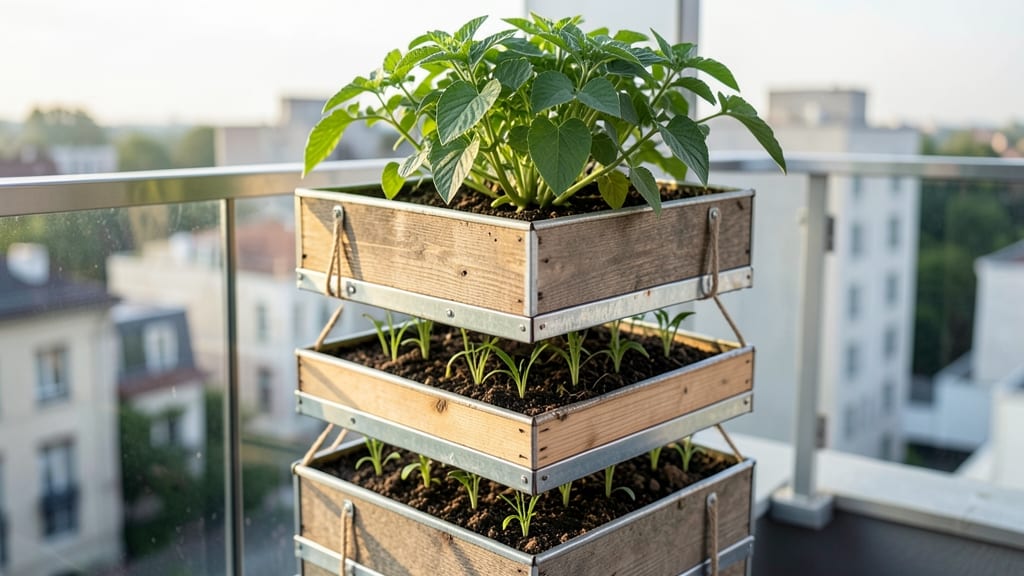
Transform your tiny urban yard or balcony into a potato powerhouse with vertical potato tower planters—the ultimate space-saving hack for growing spuds. These stacked, modular systems turn limited square footage into a high-yield potato garden, all while keeping your plants within easy reach.
Each pocket in the tower (typically 4-6 levels) holds its own potato plant, ensuring every tuber gets direct sunlight exposure without shading neighbors. Use fabric grow pockets for lightweight portability or sturdy wooden frames for durability. Plant seed potatoes in each pocket, then watch them grow upward while tubers form below—no digging required! For best results, place your tower in a spot with at least 6 hours of sun daily and water at the base to keep soil consistently moist.
This design is a game-changer for renters, balcony gardeners, and small-space enthusiasts who want fresh potatoes without sacrificing their patio or yard space. Plus, the vertical setup makes harvesting a breeze—just lift the pockets and pluck your spuds! 🌱
Wooden Wine Barrel Potato Beds
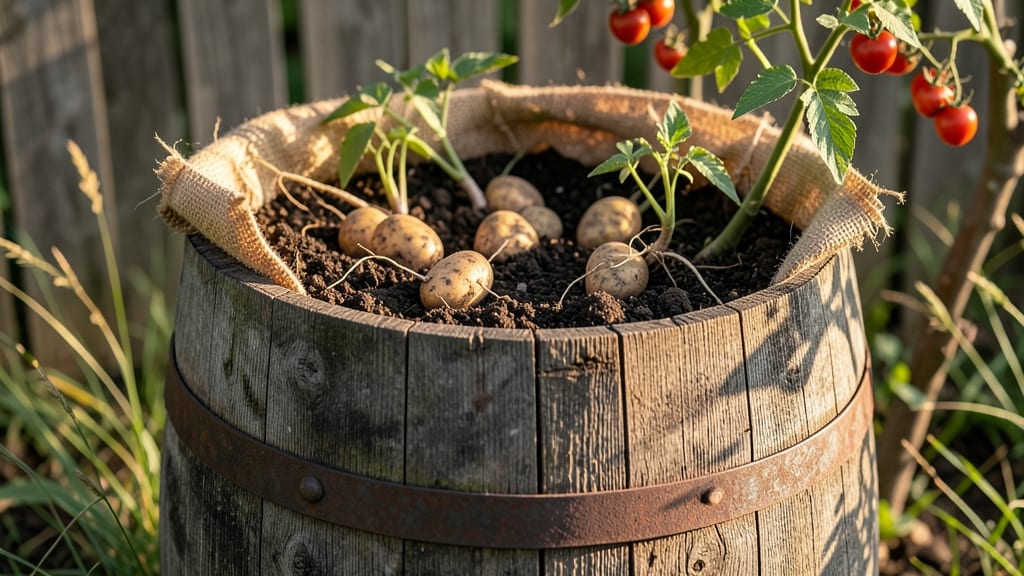
Turn your old wine barrel into a rustic, functional planter that gives heirloom potatoes the deep soil and room they crave. These barrels naturally provide excellent drainage while their stout sides prevent soil compaction—ideal for varieties like Yukon Gold or Russian Banana that need space to spread.
Cut the barrel horizontally to create a shallow bed (12–18 inches deep) and line the bottom with landscape fabric to retain moisture. Fill with loamy, compost-rich soil and plant seed potatoes 4–6 inches apart. The barrel’s curved shape also makes harvesting easier—simply roll it to access tubers from all sides.
This design is perfect for gardeners who love repurposed materials and want a low-maintenance bed that doubles as decor. The rustic charm blends beautifully with cottage-style gardens. 🌻
Hillside Potato Trenches with Straw Mulch
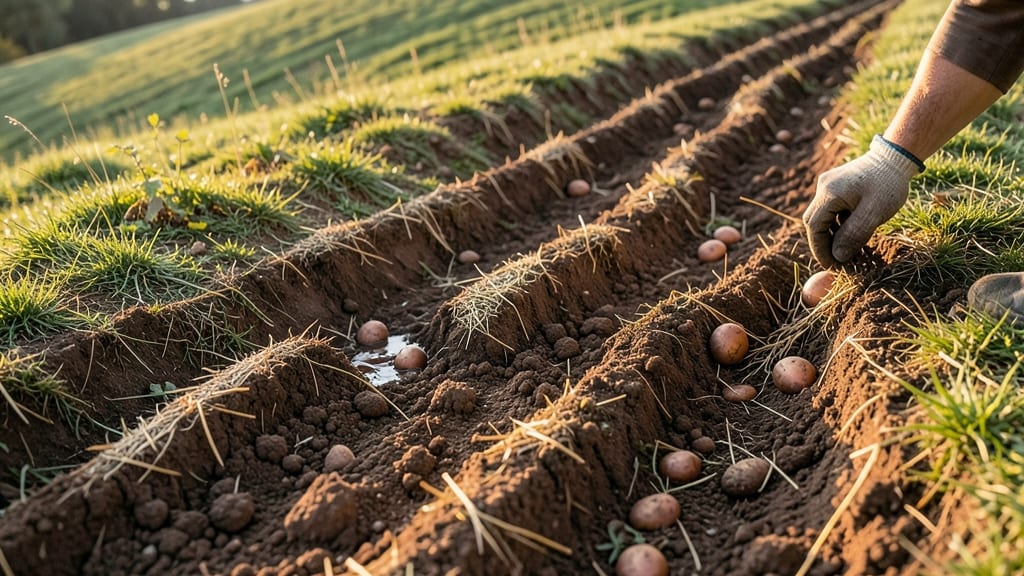
Turn your steep garden into a potato paradise without the risk of soil washing away. Hillside potato trenches use the natural slope to create deep, loose planting pockets that hold moisture while preventing erosion—no heavy lifting required!
Start by marking 12-inch-wide trenches along the contour of the slope, spacing them 2-3 feet apart. Fill each with a mix of loose garden soil and compost, then cover with 3-4 inches of straw mulch to retain moisture and suppress weeds. Plant seed potatoes at the bottom, and as they grow, gently mound soil and straw around the stems to encourage tuber formation. This method works especially well with early-maturing varieties like 'Yukon Gold' or 'Red Pontiac'.
Perfect for gardeners with sloped land who want to avoid expensive terraces, this approach also reduces watering needs by up to 50% while keeping soil temperatures stable. 🌱
Pallet Wood Potato Crates
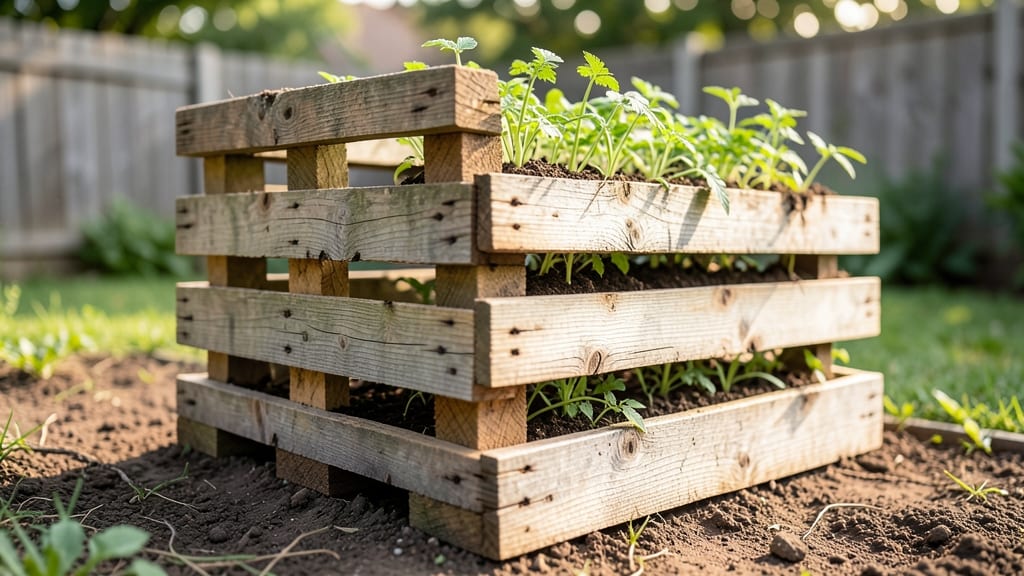
Turn your old wooden pallets into a zero-cost potato-growing system that eliminates tuber competition and makes harvesting a breeze. These simple DIY crates transform scrap wood into functional, side-accessible planters perfect for small gardens or urban spaces.
Disassemble pallets into individual 12-inch-deep compartments (standard potato depth) and line them with landscape fabric to prevent soil spillage. Plant seed potatoes in each crate with 6 inches of loose, well-draining soil, leaving room for tubers to expand. The open sides let you harvest potatoes without digging—just reach in and pull them out when ready. This design also prevents volunteer potatoes from sprouting in unwanted areas.
This solution is ideal for beginners on a budget or gardeners with limited space who want to grow multiple varieties without the mess of traditional in-ground planting. Plus, the rustic wood aesthetic adds charm to any garden. 🌱
Fabric Grow Bags for Potatoes
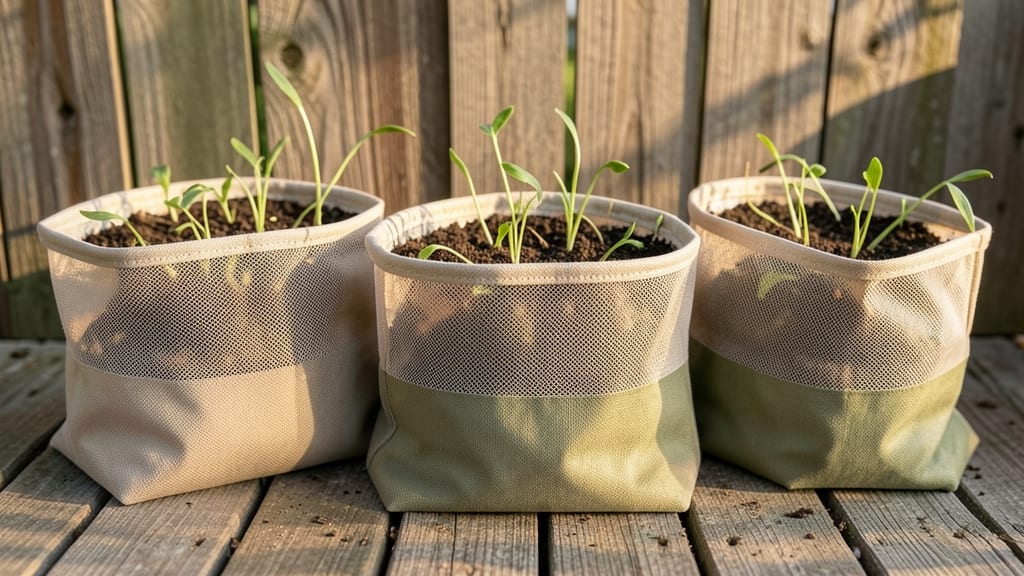
If you're tired of heavy, cumbersome containers that limit your potato-growing options, fabric grow bags are the game-changer you need. These lightweight, breathable bags prevent soil compaction while allowing roots to spread naturally in all directions—ideal for renters or gardeners with poor-quality soil.
Simply fill the bags with a mix of compost, peat moss, and perlite for optimal drainage, then plant seed potatoes 4-6 inches deep. The fabric's breathability reduces rot risk, and the bags' portability lets you move your potato patch to follow the sun or protect from pests. For best results, place bags on a raised platform to improve airflow and prevent water pooling.
This solution is perfect for urban gardeners or anyone without permanent garden space. No digging, no heavy lifting—just plug-and-play potato growing! 🌱
Tiered Potato Planter Boxes
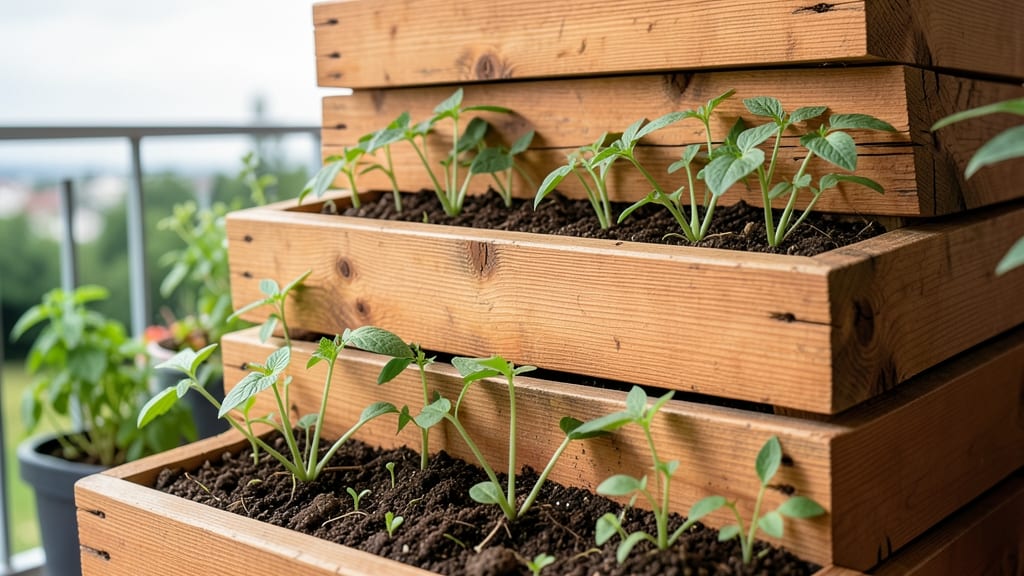
Transform your small patio or balcony into a potato powerhouse with tiered planter boxes that grow vertically instead of horizontally. These stackable wooden layers let you plant multiple varieties at once, with each tier maturing at different times for a continuous harvest—no more waiting for the whole crop to ripen!
Start by building or buying three-to-five wooden boxes (12-18 inches deep) with drainage holes. Plant early-maturing varieties like 'Yukon Gold' in the top tier and longer-season types like 'Russet' in the bottom. Space boxes on a sturdy stand or elevated surface to ensure airflow, and add compost to the soil for extra nutrients. This method also makes harvesting easier—simply slide out each tier as tubers mature!
Perfect for urban gardeners or anyone with limited space, these planters let you grow a full potato crop without sacrificing your yard for a traditional in-ground bed. Plus, the vertical design adds a modern, organized look to any garden. 💚
Straw Bale Potato Gardens
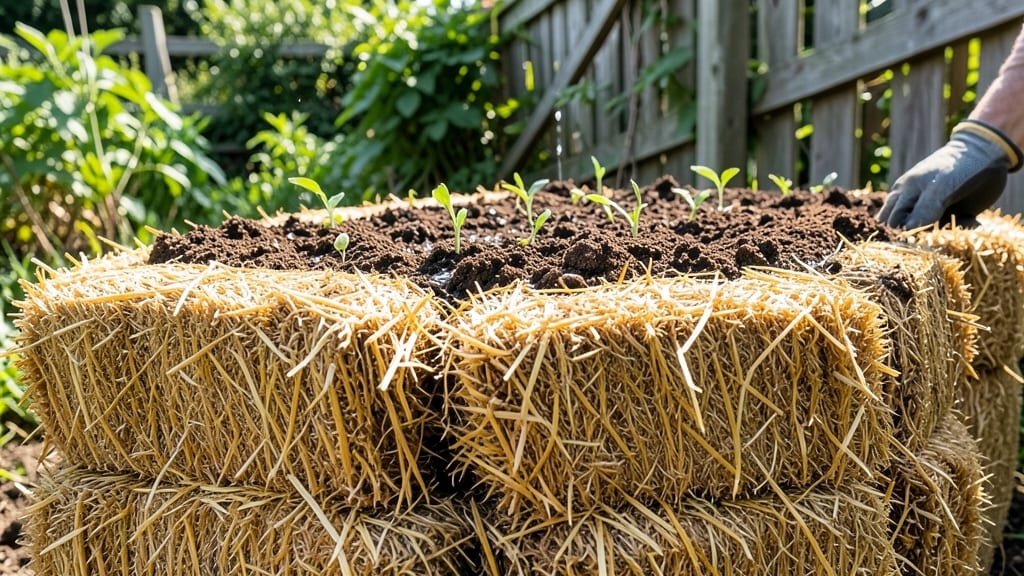
Skip the digging and weeds with straw bale potato gardens, a game-changer for beginners or gardeners with limited mobility. This no-dig method transforms bales into ready-to-plant beds that condition in just 2-3 weeks—no tilling, no backbreaking prep.
Simply soak the bales for 2 days, fill with soil, and plant seed potatoes directly. The bales act as natural insulation, keeping tubers cool in summer and warm in spring while suppressing weeds. Water conservation is built-in—the straw retains moisture while preventing evaporation. Perfect for small spaces or uneven terrain, these beds also make harvesting a breeze since tubers grow in contained pockets.
This method is ideal for those who want low-maintenance gardens with fewer pests and less water waste. Plus, the bales break down naturally, enriching your soil for future crops. 🌱
Underground Potato Cloche Beds
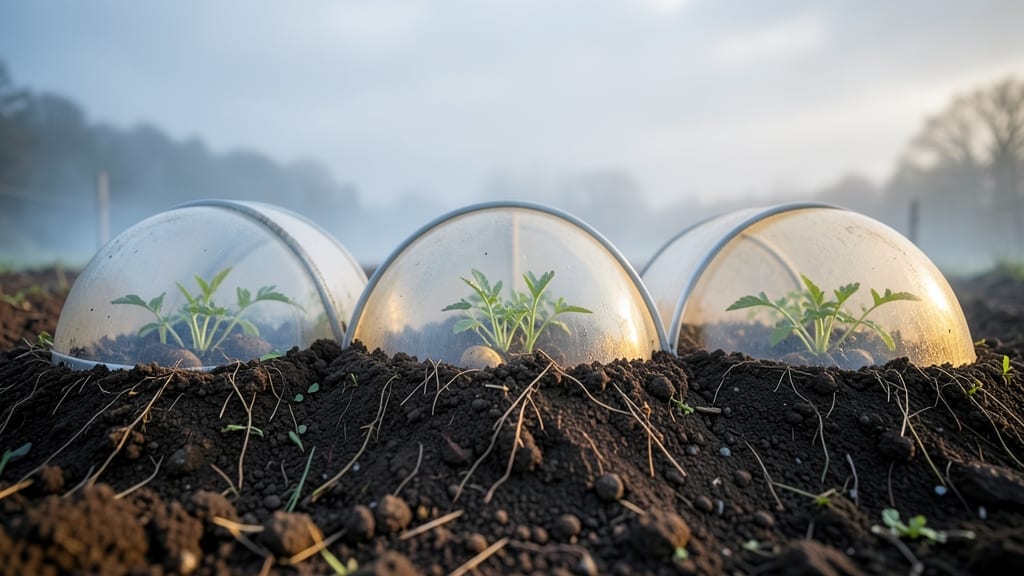
Extend your growing season in chilly climates with underground potato cloches—half-buried, dome-shaped planters that act like natural greenhouses. These innovative beds shield tubers from late frosts and hungry pests while keeping soil temperatures stable, even when daytime highs dip below 50°F.
Simply bury clear plastic or glass cloches halfway into the ground, fill with loose, well-draining soil, and plant seed potatoes on top. The domes trap warmth from the earth while allowing sunlight to filter through. For northern gardeners, this method can push harvests into October or even November, and it works especially well with early-maturing varieties like Yukon Gold or Red Pontiac.
This low-maintenance solution is ideal for gardeners with short seasons or those who want to experiment with unseasonal harvests. Just remember to lift the cloches on warm days to prevent overheating. 🌱
Hanging Potato Sack Planters
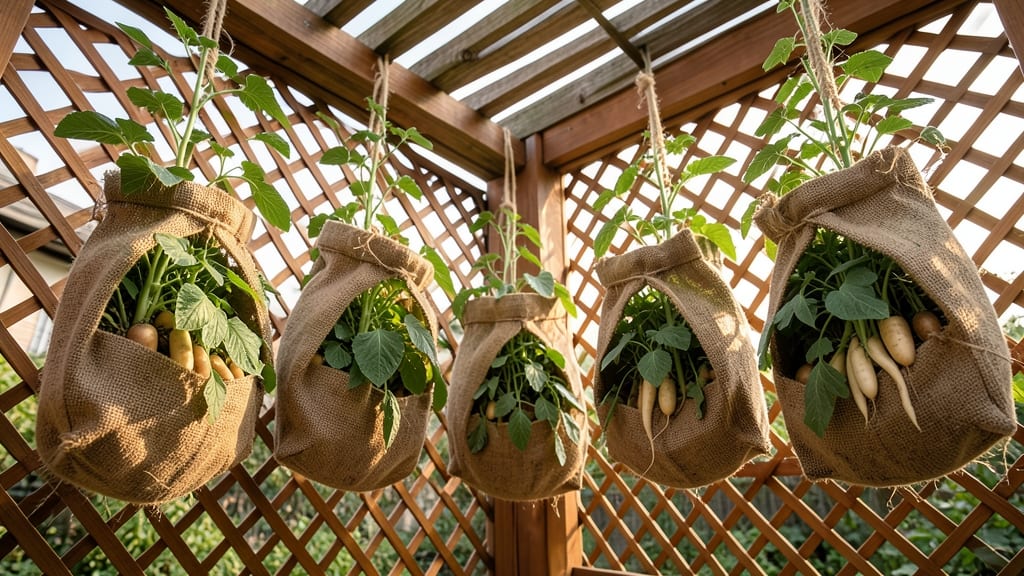
Transform your garden's vertical space into a potato-growing wonderland with hanging burlap sack planters—a whimsical yet practical solution for small yards or urban balconies. These sacks, suspended from pergolas or fences, let tubers grow downward while keeping foliage upright to soak up full sunlight, doubling your yield in minimal footprint.
Start by filling sturdy burlap sacks (at least 12 inches deep) with loose, well-draining soil mixed with compost. Hang them at 4-5 feet above ground for easy access, and plant seed potatoes near the top. As the plants grow, gently tuck new foliage into the sack to encourage downward tuber formation. This method works best with early-maturing varieties like Yukon Gold or Red Pontiac, which thrive in the unique growing conditions.
Perfect for renters or gardeners with limited ground space, these planters add a charming, rustic aesthetic while maximizing harvests. Just ensure sacks are securely fastened to prevent sagging—your future potato bounty will thank you! 🌱
Lasagna-Style Potato Beds

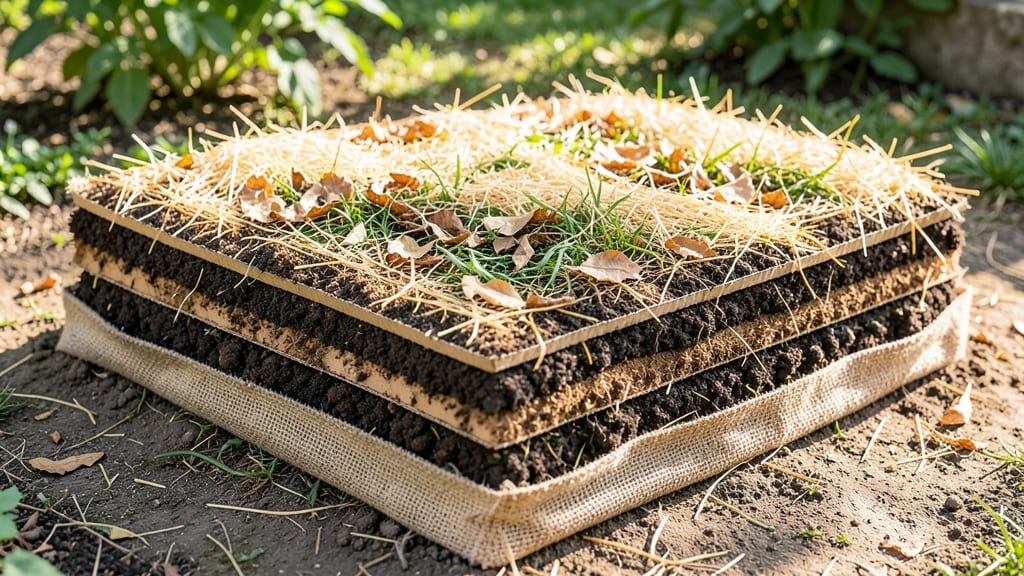
Skip the months of tilling and amending soil—lasagna-style potato beds build rich, fertile ground in just a weekend using layers of organic materials. This no-dig method mimics natural decomposition while creating ideal conditions for high-yield potato crops without synthetic fertilizers.
Start with a thick base of cardboard (to block weeds), then alternate between green layers (grass clippings, kitchen scraps) and brown layers (straw, leaves, shredded newspaper). Top with 6–12 inches of finished compost and plant seed potatoes directly into the center. The layers break down over time, releasing nutrients exactly when your potatoes need them most.
Perfect for organic gardeners or anyone tired of heavy soil prep, this method also reduces watering needs by improving moisture retention. Plus, the process is endlessly customizable—add manure for extra fertility or worm castings for faster decomposition. 🌱