
Plants
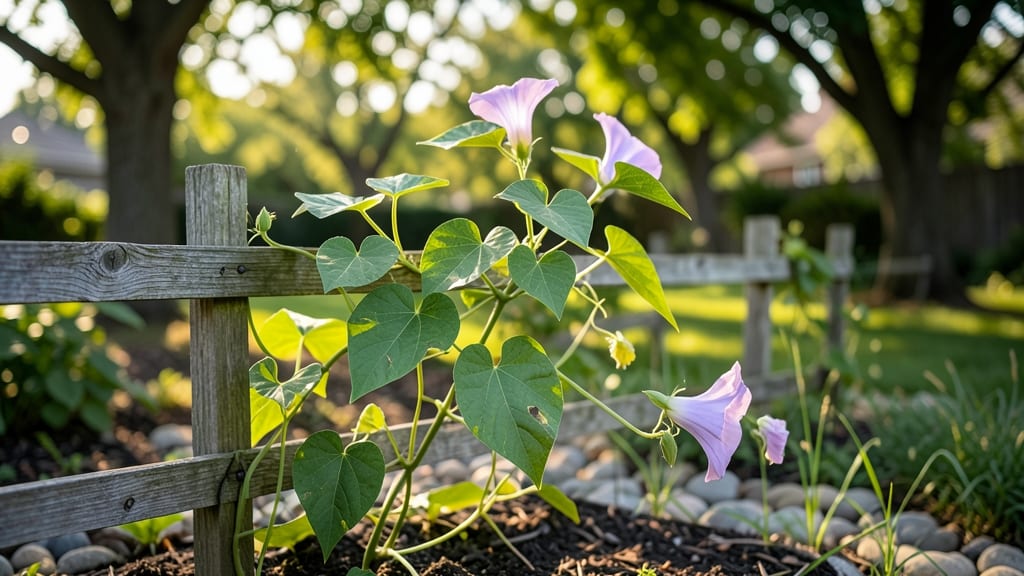
The 3-lobed leaf morning glory (Ipomoea tricolor) transforms bare fences into sky-high canopies within weeks. ✨ I’ve watched these vines race up trellises at 10+ feet per season, their heart-shaped leaves unfurling like nature’s confetti.
The key to spotting this variety? Count the lobes—three distinct ones, not five like common morning glories, and a slightly waxy texture that sets it apart.
Start with well-draining soil and a sunny spot (at least 6 hours of direct light daily), then stake your vines early—they’ll cling but need support to reach their full 15-foot potential.
Water consistently but avoid soggy roots, and pinch back leggy growth to encourage bushier, more productive vines. The payoff? A summer-long show of trumpet-shaped blooms in blues, purples, and whites that hummingbirds adore.
Save seeds by letting a few flowers fade naturally—these vines self-seed readily, though they may pop up where you least expect them. For pests, watch for aphids and powdery mildew; a neem oil spray keeps both at bay without harming pollinators.
The real magic? These vines thrive on neglect once established, making them perfect for busy gardeners who still want drama.
Pro tip: Train vines vertically on a strong trellis or arbor to save space and create a stunning vertical garden. If you’re in a cooler climate, start seeds indoors 4-6 weeks before last frost—they germinate best in warm soil.
Once you’ve grown one, you’ll never buy morning glory plants again.
📚 In This Guide
- What you need
- Instructions
- Tips and common mistakes
- Wrapping up and next steps
What you need
- ● Seeds or young plants: Morning glory seeds (3-lobed leaf variety) or nursery-grown vines (1-3 plants per trellis or climbing structure).
- ● Climbing support: Trellis (6-8 ft tall), fence, or sturdy pergola (ensure it’s at least 3-4 ft wide for sprawling vines).
- ○ Optional but helpful: Twine or soft garden ties (for guiding young vines).
- ● Well-draining soil: Mix garden soil with compost (ratio: 3 parts soil : 1 part compost) for nutrient-rich growth.
- ● Watering can or hose: With a gentle spray nozzle (vines need 1-1.5 inches of water weekly).
- ○ Fertilizer (optional but recommended): Balanced, slow-release fertilizer (e.g., 10-10-10, 1 tbsp per plant at planting).
- ● OR organic options like fish emulsion or worm castings (every 4-6 weeks).
- ● Garden trowel or small shovel: For planting seeds (dig holes ½ inch deep).
- ● Gloves: To protect hands while handling soil or vines.
- ● Pruning shears: For trimming dead or overgrown vines (sharp, sterilized blades preferred).
- ● Sunlight access: Full sun to partial shade (6+ hours of sunlight daily for best blooms).
- ● Patience! 🌱 Morning glories grow fast—some varieties can spread 5-10 ft in a season.
- ● 🌡️ Plant after the last frost: Seeds germinate best in warm soil (60°F+)—wait until spring!
- ● ✨ Succession planting: Sow seeds every 2-3 weeks for continuous blooms.
- ● 🎯 Deadhead spent blooms: Pinch off faded flowers to encourage more vibrant blooms.
Step-by-Step guide to growing a thriving 3-Lobed morning glory vine
Here's how to coax those fast-spreading vines into a showstopping display—no green thumb required.
🌱 Step 1: Choose the Perfect Planting Location
Morning glories adore full sun—at least 6-8 hours daily—so scout a south- or west-facing wall, trellis, or fence. I always check for afternoon shade first; if your spot gets hotter than 90°F, provide afternoon shade to prevent leaf scorch. The vine will climb anything sturdy, but a 4-6 foot trellis gives the best vertical structure for those iconic trumpet-shaped blooms.
Test your spot by observing how sunlight moves across it throughout the day. Morning glories won't tolerate soggy roots, so ensure the area drains well—water pooling at the base invites root rot. If your soil feels heavy or clay-like, amend it with 2-3 inches of compost before planting. This vine spreads fast, so give it 10-12 inches of space between plants to prevent overcrowding.
🌿 Step 2: Plant Seeds at the Right Depth and Time
Direct-sow seeds after your last frost date when soil reaches at least 60°F. I like to wait until nighttime temperatures stay above 55°F—cold snaps will stall germination. Plant seeds ½ inch deep, spacing them 6 inches apart in rows 12 inches apart. The 3-lobed variety germinates quickly, often within 7-14 days, so don’t rush—waiting for warm soil speeds up the process.
Press seeds gently into the soil with your finger—no need to bury them deeper. Water lightly afterward, keeping the soil consistently moist but not soggy until germination. A fine mist from a spray bottle prevents seeds from washing away. Once seedlings emerge, thin them to 6 inches apart to give roots room to spread. Real talk: If you skip thinning, you’ll end up with a tangled mess of vines competing for sunlight.
☀️ Step 3: Provide Support and Encourage Vertical Growth
As soon as seedlings reach 4-6 inches tall, install your trellis or support structure. Morning glories twine naturally, but they need something sturdy to climb—bamboo stakes or a wire mesh trellis work perfectly. Gently guide the vines upward as they grow; they’ll latch on and spiral upward on their own. You’ll see the first tendrils appear within 2-3 weeks after germination—this is when the magic starts.
Water at the base deeply 1-2 times per week, aiming for 1 inch of water per week. Let the top 1-2 inches of soil dry out between waterings to prevent fungal issues. Avoid wetting the leaves, especially in the morning; damp foliage invites powdery mildew. If your vine starts to lag, a balanced 10-10-10 fertilizer applied every 4-6 weeks gives it the boost it needs for rapid growth.
✂️ Step 4: Prune for Health and Continuous Blooms
Deadhead spent blooms every 2-3 days to encourage more flowers. Simply pinch off the faded blossoms at the base—this redirects energy to new growth. I also trim back any leggy or overcrowded vines in early summer to promote bushier growth. Cut just above a leaf node where new shoots can emerge. Morning glories are annuals, so they’ll keep producing until frost kills them.
Watch for pests like aphids or spider mites, which love the tender new growth. A strong spray of water usually knocks them off, but for stubborn infestations, neem oil works wonders. If your vine starts to yellow or wilt, check for powdery mildew—improve airflow by spacing plants farther apart or pruning back crowded areas. The key is balance: enough water to thrive, but not so much it drowns the roots.
🌸 Step 5: Enjoy the Show and Plan for Next Year
Your morning glory will burst into bloom 6-8 weeks after planting, with flowers opening in the morning and lasting just one day—hence the name! The 3-lobed variety produces deep blue, purple, or white trumpet-shaped blooms that attract hummingbirds and bees. To extend the display, plant a second batch 4-6 weeks after the first for a staggered bloom time.
Save seeds from your healthiest plants for next year by allowing a few flowers to fade naturally on the vine. The seed pods will dry and split open—collect them before they scatter. Store them in a cool, dry place until spring. With minimal effort, you’ll have a fast-spreading, low-maintenance vine that turns any space into a vertical garden masterpiece.
Tips & tricks for thriving 3-Lobed morning glory vines
These game-changing strategies will help you grow a lush, fast-spreading morning glory display with minimal effort.
Sunlight Strategy: While morning glories need at least 6-8 hours of direct sunlight daily, I've found that positioning them slightly west of full sun (around 5-6 hours) in hotter climates (above 90°F) prevents leaf scorch while still producing abundant blooms. The key is afternoon shade—this is when the sun's intensity peaks and can damage tender leaves. If you notice yellowing leaves in the afternoon, move your trellis or provide shade with a light fabric.
Germination Hack: The 7-14 day germination window can feel like an eternity, but there's a trick to speed things up: soak your seeds overnight in warm water before planting. This pre-hydration jumpstarts the process, often resulting in sprouts within 5-7 days instead of waiting for the full 14 days. Just be sure to plant them immediately after soaking—they'll be eager to grow! For extra insurance, I cover newly planted seeds with a thin layer of vermiculite to retain moisture during those critical first days.
Vertical Growth Technique: When those first tendrils appear within 2-3 weeks (as mentioned in Step 3), don't wait to install your trellis! I've seen vines struggle to latch onto structures if they're too tall. Instead, install your support as soon as seedlings hit 4-6 inches—this gives them something sturdy to climb immediately. For extra stability, I weave a few strands of twine horizontally between vertical supports to create a "net" that gives young vines more surface area to grip. This prevents the vine from becoming top-heavy and flopping over.
Pruning Insight: The 2-3 day deadheading schedule might seem frequent, but here's why it works: morning glories produce flowers along their entire length, not just at the tips. By removing spent blooms regularly, you're encouraging the plant to redirect its energy toward producing more flowers along the stem rather than focusing on seed production. I use clean, sharp scissors to make precise cuts just above the leaf node—this clean cut prevents disease from entering the plant through ragged edges.
Pro Tips for Morning Glory 3 Lobed Leaf Vine
- These game-changing strategies will help you grow a lush, fast-spreading morning glory display with minimal effort.
- The key is afternoon shade—this is when the sun's intensity peaks and can damage tender leaves.
- Germination Hack: The 7-14 day germination window can feel like an eternity, but there's a trick to speed things up: soak your seeds overnight in warm water before planting.
Frequently asked questions
How fast does the 3-lobed leaf morning glory vine grow?
The 3-lobed leaf variety is a fast grower—expect vines to climb 6 to 10 feet per season under ideal conditions (full sun, moist soil, and regular watering). With proper support (like a trellis or fence), it can cover large areas quickly, making it perfect for vertical gardens or privacy screens.
Does this vine need full sun, or can it tolerate partial shade?
While it thrives in full sun (6+ hours daily), this vine can tolerate partial shade, especially in hotter climates. In shadier spots, expect slower growth and fewer flowers. If planting in partial shade, choose a location with at least 4–6 hours of morning sun for best results.
Is the 3-lobed leaf morning glory toxic to pets or humans?
Yes, all parts of the morning glory vine—leaves, seeds, and stems—are toxic if ingested. They contain caffeine-like compounds that can cause vomiting, diarrhea, or lethargy in pets (especially dogs). Keep it away from curious animals and supervise children around it.
Can I grow morning glory from seed, or should I buy a starter plant?
You can easily grow from seed—they’re hardy and germinate quickly (in 7–14 days) when planted directly in the ground after the last frost. For faster results, buy a starter plant, but seeds are cheaper and just as reliable. Pro tip: Soak seeds overnight for quicker germination!
Why aren’t my morning glory vines flowering, even though they’re healthy?
Lack of flowers often stems from over-fertilizing (too much nitrogen), poor sunlight, or crowded roots. Try these fixes:
- Move to a sunnier spot (6+ hours of light).
- Use a low-nitrogen fertilizer (like 5-10-10) or none at all.
- Prune nearby plants to reduce competition.
How do I control this vine’s aggressive spread?
This vine is not invasive but can spread quickly. To manage it:
- Train vines on a trellis or fence to contain growth.
- Trim back overly long vines in late summer to redirect energy.
- Remove self-seeding vines in spring if they pop up where unwanted.
Wrapping up and next steps
The morning glory 3-lobed leaf vine is a stunning, low-maintenance climber that brings vibrant color and lush foliage to any garden. With its fast-spreading vines and striking blooms, it’s perfect for trellises, fences, or even container gardens—just be prepared for its enthusiastic growth!
Whether you’re a seasoned gardener or just starting out, this plant rewards patience with breathtaking displays.
Ready to transform your space? Start by choosing the right spot—sunny and sheltered works best—and plant your seeds or cuttings this season. Watch your garden come alive with this easy-to-grow beauty! 🌿✨