
Plants
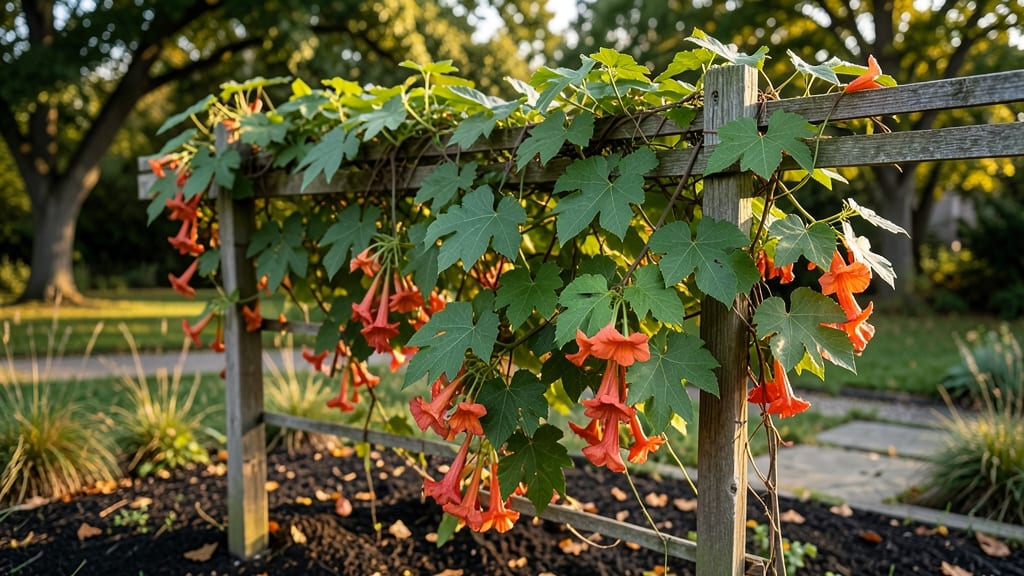
That fast-growing five-lobed leaf vine could be the dramatic vertical accent your garden needs—think lush, heart-shaped foliage climbing trellises in just a few months. 🌿 I’ve grown Cobaea scandens (cup-and-saucer vine) and Cardiospermum halicacabum (balloon vine), and both transform bare walls into tropical canopies with minimal effort.
The secret? Mimicking their native rainforest conditions—bright, indirect light, well-draining soil, and consistent moisture without soggy roots.
These vines thrive in USDA Zones 9-11 but can be grown as annuals or overwintered indoors in cooler climates. Start with seeds in spring (they germinate quickly) or take stem cuttings from established plants—both methods yield vigorous growth.
Just be ready for their 10-15 foot per season reach; install sturdy trellises early to avoid tangled chaos. The lobed leaves alone make them stand out, but the bonus is their late-summer blooms: Cobaea produces bell-shaped flowers, while Cardiospermum offers balloon-like seed pods that pop open dramatically.
Pruning isn’t just for shaping—it’s about controlling their aggressive growth while encouraging bushier vines. Trim back leggy stems in early spring to redirect energy to foliage, and deadhead spent blooms to prolong flowering.
Watch for aphids or spider mites on new growth; a strong spray of water usually clears them before they become a problem. With the right care, you’ll have a living curtain that outshines any store-bought fabric—plus, it’s completely edible if you’re feeling adventurous (though it’s not a culinary staple).
Perfect for patios, pergolas, or even indoor growing with grow lights. The key is patience—these vines start slow but explode into growth once established. Once you see that first 10-foot climb in a season, you’ll understand why gardeners swear by them. Ready to turn vertical space into a jungle retreat?
Root Causes of Leaf Shape Shifts
The iconic five-lobed leaf vine (often Podranea ricasoliana or similar species) may sometimes produce leaves with fewer or irregular lobes—or even revert to simpler shapes. While this isn’t a "problem" in the traditional sense, it can frustrate gardeners aiming for that classic tropical look.
Understanding the why behind these changes helps you correct or prevent them. Below are the most common triggers, explained in clear, actionable terms.
Not all vines labeled "five-lobed" are genetically identical. Some species or cultivars naturally produce leaves with 3–7 lobes, depending on their lineage. For example:
- Podranea ricasoliana: Typically 5 lobes, but younger leaves or stressed plants may show 3–4 lobes.
- Cocculus laurifolius (a related vine): Often has 3–5 lobes, with the "five-lobed" form being a cultivated variant.
- Hybrids or mislabeled plants: Nursery mix-ups can lead to vines with inconsistent leaf shapes.
Actionable fix: If you’re set on a consistent five-lobed look, research the exact species before purchasing. Ask for certified cultivars (e.g., 'Royal Purple' or 'Alba') from reputable growers. Pro tip: 💡 Take a leaf rubbing (press a leaf on paper with a pencil) to compare with reference images.
Leaves are plastic—they adapt to stress by simplifying their structure to conserve energy. Common stressors that shrink or alter lobes include:
| Stressor | Effect on Leaves | How to Fix |
|---|---|---|
| ❄️ Cold Snaps (<40°F/4°C) | Leaves may emerge with fewer lobes or curled edges as the plant prioritizes survival over aesthetics. | Move potted vines indoors or to a frost-free microclimate. Mulch heavily for ground covers. |
| ☀️ Excessive Heat + Dry Soil | Leaves can wilt and develop jagged, under-lobed shapes due to water loss. | Increase shade (30–50% filter) and water deeply 2–3x/week in summer. |
| 💦 Overwatering (Soggy Roots) | Root stress leads to smaller, deformed leaves with fewer lobes as the plant struggles to photosynthesize. | Ensure well-draining soil (add perlite or sand). Water only when top 2" of soil is dry. |
| 🌪️ Strong Wind | Physical damage to emerging leaves can stunt lobe development or cause irregular shapes. | Provide a windbreak (e.g., trellis or fence) or prune to protect new growth. |
Pro tip: 🌡️ Monitor your vine’s leaf temperature—if it’s <10°F cooler than ambient air, it’s likely stressed. Use a shade cloth in peak sun.
A vine’s leaf shape is a direct reflection of its nutritional status. Deficiencies in key nutrients can lead to:
- Nitrogen (N) deficiency: Leaves may yellow (chlorosis) and develop fewer, smaller lobes as the plant can’t support complex structures.
- Magnesium (Mg) deficiency: Causes interveinal yellowing and can stunt lobe growth.
- Potassium (K) deficiency: Leaves may curl and exhibit marginal scorch, leading to irregular shapes.
- Excess phosphorus (P): Can lock out other nutrients, causing poor leaf development.
Diagnose & fix:
- 📊 Test your soil (home kits or lab analysis). Ideal pH for most five-lobed vines: 6.0–7.0.
- 💡 Amend soil:
- For N deficiency: Add compost or fish emulsion.
- For Mg/K deficiency: Use Epsom salt (Mg) or wood ash (K).
- ⏰ Fertilize in spring with a balanced 10-10-10 formula, then switch to low-P (5-2-2) in summer to avoid imbalances.
Warning: ⚠️ Avoid high-salt fertilizers (e.g., synthetic blooming formulas), which can burn roots and worsen leaf deformities.
Certain pests and pathogens physically alter leaf development or sap nutrients, leading to malformed lobes:
- Spider Mites: Suck sap from new growth, causing stunted, lobeless leaves.
- Aphids: Cluster on tender leaves, distorting emerging lobes into curled or fused shapes.
- Fungal Leaf Spot (e.g., Alternaria): Necrotic spots can prevent lobes from fully expanding.
- Root-Knot Nematodes: Weakened roots reduce nutrient uptake, leading to small, simple leaves.
Prevent & treat:
- 🔍 Inspect leaves daily for webbing (mites), sticky residue (aphids), or spots.
- 💦 Blast pests off with a strong water spray (repeat 3x/week).
- 🌿 Apply neem oil (1 tsp/L water) or insecticidal soap for soft-bodied pests.
- 🌱 Rotate crops if nematodes are suspected; solarize soil in summer.
Pro tip: ✨ Use reflective mulch (aluminum foil under black plastic) to repel pests like mites.
By identifying the root cause of your vine’s leaf shape changes, you can restore its tropical elegance—or at least embrace its natural variability! For persistent issues, consider whether the vine’s genetics or environment are
Reviving Your Tropical Vine
When your five-lobed leaf vine starts struggling—whether it’s from pests, disease, or environmental stress—don’t panic! With the right approach, you can nurse it back to health and keep it thriving. Below, we’ve mapped out practical solutions for common issues, along with prevention tips to avoid future problems.
Signs: Slow growth, yellowing leaves, roots circling the pot.
Fix It: 🔥 Repot with Fresh Soil – Gently remove the vine from its current container and trim any tangled or circling roots. Choose a pot 2–3 inches larger in diameter with drainage holes. Use a well-draining potting mix (a blend of peat, perlite, and compost works well).
👨🍳 Prune Back Overgrowth – Trim excess foliage to redirect energy to new growth. Focus on removing yellow or damaged leaves first.
🌱 Fertilize Lightly – After repotting, use a balanced liquid fertilizer (10-10-10) diluted to half strength. Wait 4–6 weeks before fertilizing again to avoid root burn.
Prevent It: ✨ Repot every 1–2 years to keep roots healthy. 📊 Monitor growth—if vines outgrow their pot, upgrade sooner. 🌡️ Avoid overwatering, which can suffocate roots.
Signs: Sticky residue, white webbing, tiny bugs on leaves/stems.
Fix It: 🔪 Isolate the Plant – Move it away from other vines to prevent spreading.
🍳 Wipe Down Leaves – Use a neem oil solution (1 tsp neem oil + 1 tsp mild soap + 1 quart water) or rubbing alcohol (70% isopropyl) on a cotton swab to kill pests.
🌿 Spray Systemically – For severe infestations, use an insecticidal soap or horticultural oil (follow label instructions). Reapply every 5–7 days for 2–3 weeks.
⏰ Encourage Beneficial Insects – Release ladybugs or lacewings near the plant to naturally control pests.
Prevent It: 💡 Inspect new plants before bringing them indoors. 🎯 Keep humidity moderate (40–60%)—pests thrive in dry, dusty conditions. 🥗 Dust leaves regularly with a damp cloth to deter mites.
Signs: Wilting, mushy stems, yellowing leaves, foul-smelling soil.
Fix It: 🚰 Check the Soil – Stick your finger 1–2 inches deep—if it’s soggy, hold off on watering.
🌧️ Repot in Dry Conditions – Remove the vine, trim rotted roots (black/mushy areas), and repot in fresh, dry potting mix.
💧 Adjust Watering Habits – Water only when the top inch of soil is dry. Ensure the pot has drainage holes, and empty the saucer after watering.
🌱 Improve Airflow – Move the plant to a bright, indirect spot with gentle breezes to speed drying.
Prevent It: 📊 Use a moisture meter to track soil dryness. ✨ Choose pots with drainage—terracotta helps wick away excess moisture. 🌡️ Avoid cold drafts, which slow root recovery.
Signs: Brown, crispy edges on leaves, faded color.
Fix It: 🏠 Move to Indirect Light – Place the vine 6–10 feet from a south-facing window or under sheer curtains.
🌿 Gradually Acclimate – If moving from low to high light, do it over 1–2 weeks to avoid shock.
💧 Increase Humidity – Mist leaves daily or use a pebble tray with water to prevent dryness.
Prevent It: 💡 Rotate the pot occasionally for even growth. 🎯 Avoid direct afternoon sun—it’s the harshest for tropical vines. 🥗 Fertilize lightly in bright conditions to support leaf health.
Signs: Drooping leaves, brown tips, slow growth.
Fix It: 🌡️ Keep in Ideal Conditions – Maintain 65–80°F and 50–70% humidity. Use a humidifier or group plants together to raise moisture levels.
💦 Mist Regularly – Lightly mist leaves 2–3 times a week, especially in dry climates.
🏡 Avoid Drafts – Keep away from AC vents, heaters, or open windows in winter.
Prevent It: 📊 Use a hygrometer to monitor humidity levels. ✨ Mist in the morning to allow leaves to dry slightly during the day. 🌿 Choose a stable location—avoid moving the plant frequently.
- Trim damaged foliage to encourage new growth.
- Boost light gradually—sudden changes can shock the plant.
- Use a rooting hormone if propagating cuttings for faster recovery.
- Be patient—some vines take 4–8 weeks to bounce back after stress.
With these targeted fixes, your five-lobed leaf vine should perk up in no time! 🌿✨ Whether it’s pests, water issues, or light problems, addressing the root cause (literally!) will have your vine thriving again.
Frequently asked questions about five-lobed leaf vines
What are the most common types of vines with five-lobed leaves?
The two most popular varieties are Cobaea scandens (cup-and-saucer vine) and Cardiospermum halicacabum (balloon vine). Both feature dramatic heart-shaped leaves with five distinct lobes, but Cobaea produces stunning bell-shaped flowers while Cardiospermum offers unique balloon-like seed pods. For tropical climates, Podranea ricasoliana is another excellent choice.
How fast do these vines grow, and when will I see results?
These tropical vines are fast growers, often reaching 10-15 feet per season with ideal care. You'll typically see noticeable growth within 4-6 weeks after planting, especially when provided with bright indirect light and consistent moisture. Install trellises early—they'll need support quickly!
Can I grow a five-lobed leaf vine indoors?
Yes! These vines thrive indoors with proper lighting. Place them near east or north-facing windows or use grow lights for 12-14 hours daily. Maintain 65-80°F temperatures and 50-70% humidity using a pebble tray or humidifier. Just be prepared for slower growth compared to outdoor conditions.
What's the best way to propagate a five-lobed leaf vine?
Start with stem cuttings for fastest results: Take 4-6 inch sections with at least 2-3 nodes, remove lower leaves, and dip in rooting hormone. Plant in moist perlite or sand, keeping humid until roots form (2-4 weeks). Seeds also work but take longer—soak overnight before planting for better germination.
Why are my vine's leaves developing fewer lobes than expected?
This usually indicates stress from nutrient deficiencies, over/under-watering, or temperature fluctuations. Check for yellowing (nitrogen deficiency) or brown tips (potassium deficiency). Maintain consistent moisture and 60-80°F temperatures. Some younger leaves naturally have fewer lobes—focus on mature growth for the classic five-lobed shape.