
Planting
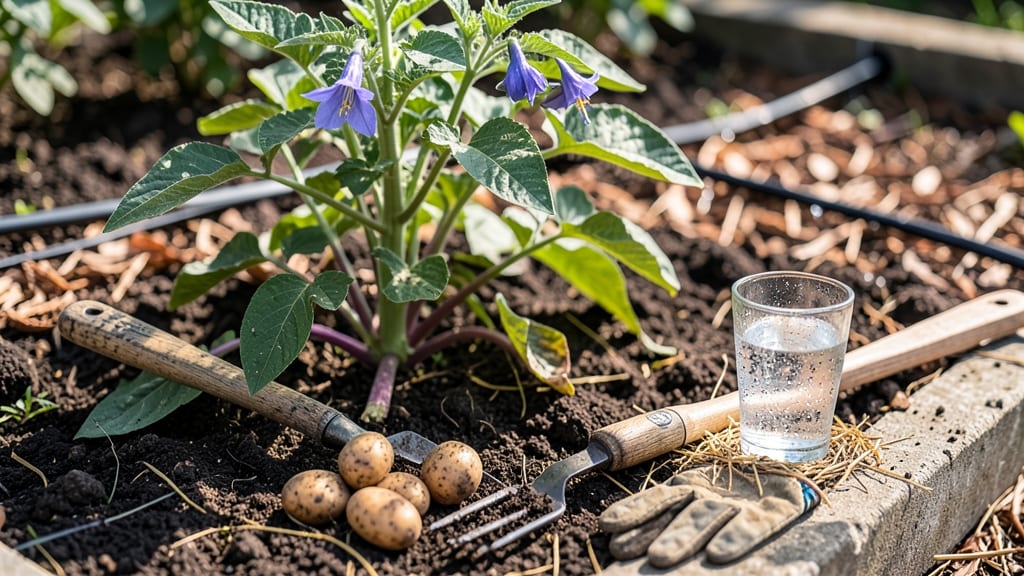
A raised bed how deep a raised bed for potatoes needs to be is critical—aim for 12–18 inches to give tubers the room they crave. Any less, and you’ll end up with stunted harvests or wasted space.
Struggling to grow potatoes with the perfect depth in your raised bed? Get it wrong, and you’ll waste space—or worse, lose your entire crop. The right depth isn’t just about guesswork; it’s a science that directly impacts yield, soil health, and ease of harvest.
Most gardeners assume deeper is always better, but too much depth can lead to poor drainage or unnecessary material costs. The key is balancing aeration, moisture, and root expansion—without overcomplicating your setup.
In this guide, I’ll break down the exact depth you need, how to adjust for different soil types, and the pro tips to maximize your 🥔 harvest—even in small spaces.
Optimal raised bed depth for potatoes: the science-backed measurement
Potatoes need space to grow—not just above ground, but deep below where their tubers form. In raised beds, depth directly affects yield, drainage, and ease of harvest. While many gardeners assume deeper is always better, science shows 12–18 inches is the sweet spot for most varieties.
This range accommodates root development and prevents soil compaction while maximizing tuber production.
Potatoes grow in three stages: sprouting, tuber formation, and bulking. Each stage demands specific soil conditions. Shallow beds (6–10 inches) restrict tuber growth, while beds over 24 inches risk poor drainage and wasted space.
The ideal depth balances these needs, ensuring aeration and moisture retention without sacrificing structural integrity.
The minimum depth for potatoes in raised beds is 12 inches, but 18 inches is ideal for late-season varieties like Russet or Yukon Gold. Early harvesters (e.g., Red Pontiac) thrive in 12-inch beds because their tubers mature faster and don’t need as much vertical space.
Understanding your variety’s growth habit helps tailor bed depth to avoid stunted plants or wasted soil.
Soil type also influences depth. In clay-heavy soils, aim for 18 inches to improve drainage and prevent waterlogging. For sandy soils, 12–14 inches suffices since they drain quickly. Amending soil with compost or perlite can adjust texture without increasing depth, making shallower beds viable for certain varieties.
Potatoes need oxygen-rich soil for tuber formation. Deeper beds (>18 inches) can create anaerobic zones near the bottom, where roots suffocate and tubers rot. Instead of digging deeper, focus on soil aeration by mixing in compost or coconut coir.
This improves structure without sacrificing depth efficiency. For example, a 14-inch bed with aerated soil often outperforms a 20-inch bed with compacted layers.
Another key factor is harvesting ease. Shallow beds (<12 inches) make digging potatoes tedious, especially for large varieties. Conversely, beds over 24 inches become labor-intensive to maintain and may not yield proportionally more.
The 12–18 inch range strikes a balance, allowing tubers to fill the space while keeping harvests manageable. For container growing, 12-inch deep troughs work for early varieties, but expect smaller yields.
If you’re growing multiple potato varieties in one season, consider layered planting. Early harvesters (e.g., New Potatoes) can go in the top 6 inches of a 18-inch bed, while late varieties occupy the lower layers.
This technique maximizes space but requires stratified soil layers with distinct planting zones. Always label your beds to track varieties and avoid cross-contamination.
Test your bed’s depth before planting by inserting a trowel or ruler into the soil. If the depth feels too shallow for your variety, add a layer of compost or straw to build it up gradually.
Avoid compacting the soil during this process, as dense layers restrict root growth. For raised beds, use lightweight amendments
How to adjust raised bed depth for maximum potato yields
Adjusting your raised bed depth for potatoes isn’t just about digging deeper—it’s about creating the perfect environment for tuber development. Potatoes need 12–18 inches of loose soil to grow properly, but compacted or poorly layered soil can stunt growth or even rot your crop.
The key lies in balancing drainage, aeration, and nutrient-rich layers to encourage strong root systems and abundant harvests.
Many gardeners make the mistake of assuming deeper always means better, but over-deepening beds can lead to waterlogging or wasted space. Instead, focus on layering soil types—like mixing compost, sandy loam, and organic mattersuccessively plant multiple potato varieties in the same bed over time.
⚠️ Critical Depth Mistake to Avoid
Compacted soil is the #1 killer of potato yields in raised beds. If your bed feels hard like clay after watering, your tubers will struggle to expand. Test your depth by pressing a finger into the soil—if it springs back slowly, it’s too dense. The fix? Add coarse sand or perlite to the bottom 6 inches and fluff the soil with a garden fork before planting.
Start by testing your current bed depth with a simple soil probe. Push a ruler or dowel into the soil until it hits resistance—this marks the root zone limit.
If it’s less than 12 inches, you’ll need to add 6–12 inches of fresh soil (a mix of 50% compost, 30% topsoil, and 20% perlite works well).
For tiered beds, divide the space into layers: plant early varieties in the top 6 inches and deeper types in the lower layer.
Don’t forget to mound soil around stems as plants grow—a technique called hilling. This encourages more tuber formation and prevents greening (toxic solanine buildup). Use a shovel or hands to gently pile soil around stems every 2–3 weeks until the bed’s edge is reached.
This also helps with drainage during heavy rains.
For clay-heavy soils, add a 4-inch sand layer at the bottom of your bed before filling with compost-rich topsoil. If your soil is sandy, mix in peat moss or coconut coir to retain moisture.
Always water deeply after amending the soil to help particles settle into place. A moisture meter can confirm you’ve struck the right balance—aim for 60% moisture retention without sogginess.
Finally, rotate your potato varieties in the bed each season to prevent disease buildup. Early harvesters like ‘Yukon Gold’ can go in shallower pockets, while late-season types like ‘Russet’ need the full 18-inch depth.
By layering soil types and testing depth, you’ll transform your raised bed into a potato-growing powerhouse—no guesswork required.