
Tools
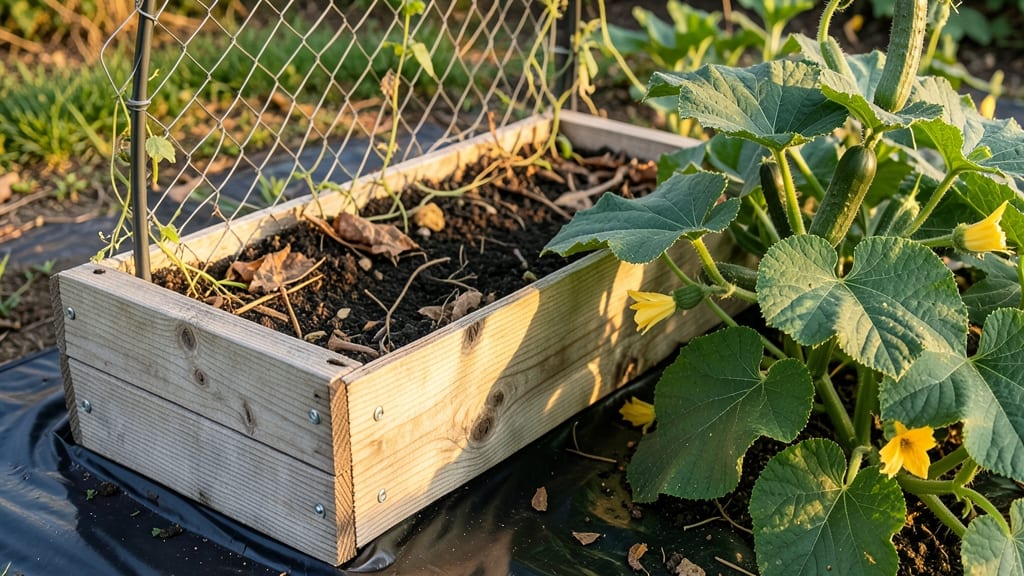
Growing cucumbers in a raised bed garden turns a sunny corner into a vine-covered harvest machine. 🌱 The secret isn't just good soil—it's the perfect mix of warmth, support, and consistent moisture that raised beds deliver.
My first cucumber plants in a raised bed produced three times more fruit than my in-ground attempts, and the vines stayed cleaner too.
Start with well-draining soil mixed with compost—cucumbers hate soggy roots. Plant seeds 1 inch deep, 2 feet apart, and add a trellis or sturdy stakes right away. The vines will climb like crazy, and off-the-ground fruit stays cleaner and less prone to rot.
Water deeply twice a week, keeping the soil damp but never waterlogged.
By midsummer, you'll be harvesting crisp cucumbers that taste like summer should. The raised bed keeps pests like squash bugs at bay better than ground planting, and the warm soil speeds up germination.
Plus, no more bending over—just reach in, pick, and enjoy. This is how you grow cucumbers that actually taste like the ones from the farmers' market.
If you're in a cooler climate, opt for bush varieties like 'Bush Champion' or 'Spacemaster'—they thrive in raised beds and need less space. For hotter areas, vining types like 'Straight Eight' or 'Marketmore' will reward you with heavy yields if you keep them trellised.
The key is consistency: sun, water, and support. That's all cucumbers really ask for.
📚 In This Guide
- What you need
- Instructions
- Tips and common mistakes
- Wrapping up and next steps
What you need
- ● Raised Bed: Dimensions: At least 4’ x 8’ (or larger) and 6–12” deep (cucumbers need space to sprawl!)
- ● Material: Untreated wood (cedar or redwood), composite lumber, or galvanized metal
- ● Quality Soil: Mix: 60% topsoil, 30% compost, and 10% perlite or vermiculite (well-draining is key!)
- ● Quantity: ~1 cubic yard per 4’ x 8’ bed
- ● Cucumber Seeds or Seedlings: Quantity: 2–4 plants per 4’ x 8’ bed (or 1 plant per 12–18” of space for bush varieties)
- ● Varieties: Pickles (e.g., ‘Boston Pickling’), slicing (e.g., ‘Straight Eight’), or bush types (e.g., ‘Bush Champion’)
- ● Support System: Trellis, cage, or stakes (4–6’ tall) for vining varieties
- ● Twine or soft plant ties (to secure vines)
- ● Watering Supplies: Drip irrigation or soaker hose (to keep soil consistently moist)
- ● Watering can or hose with adjustable nozzle
- ● Fertilizer: Balanced organic fertilizer (10-10-10) or compost tea (follow package rates)
- ● Mulch: Straw or shredded leaves (2–3” thick) to retain moisture and suppress weeds
- ● Row Cover or Frost Cloth: Protects young plants from pests and cold snaps.
- ● Pruning Shears: For trimming excess foliage or harvesting.
- ● pH Test Kit: Ensures soil pH is 6.0–6.8 (ideal for cucumbers).
- ● Compost Activator: Speeds up decomposition for richer soil.
- ● Harvest Basket or Tote: Makes picking cucumbers a breeze!
Step-by-step instructions for growing cucumbers in a raised bed
Here’s how I grow cucumbers that sprawl beautifully while producing pounds of fruit—no tangled vines or wasted space.
🌱 Step 1: Prepare the Raised Bed for Optimal Drainage and Warmth
Start by filling your raised bed with a mix of 50% high-quality garden soil, 30% compost, and 20% perlite or coarse sand to prevent compaction. Cucumbers hate soggy roots, so add a 2-inch layer of composted wood chips at the bottom for drainage. I like to work in a 5-foot by 8-foot bed—big enough for 4 plants with room to sprawl.
Raised beds warm up faster than ground soil, giving cucumbers a head start. Test the soil temperature with a thermometer—it should be at least 60°F before planting. If it’s cooler, cover the bed with black plastic for a week to accelerate warming. This ensures roots stay active and vines grow strong from day one.
☀️ Step 2: Plant Seeds or Transplants at the Right Depth and Spacing
For direct sowing, plant 2-3 seeds per hill, 1 inch deep, spaced 3-4 feet apart in rows 5 feet apart. Cucumbers are heavy feeders, so add a handful of balanced organic fertilizer (like 5-5-5) at planting time. If using transplants, bury them deeper than the original pot—up to the first true leaves—to encourage strong root systems.
I always plant seeds in mounds rather than rows. This improves air circulation and makes harvesting easier. Water gently after planting to settle the soil, but don’t overdo it—soil should feel damp but not soggy. Mulch with straw or shredded leaves to retain moisture and suppress weeds while keeping the soil cool.
💧 Step 3: Train Vines and Manage Water for Maximum Yield
Cucumbers grow fast, so install trellises or strong stakes as soon as vines reach 12 inches tall. I use 5-foot bamboo stakes driven into the corners of each mound, then weave vines gently with soft twine. This keeps fruit off the ground, reduces disease risk, and makes harvesting a breeze.
Water deeply 2-3 times per week, aiming for 1 inch of water total. Let the top 2 inches of soil dry out between waterings—consistent moisture prevents bitter fruit. Avoid wetting leaves when watering; use a soaker hose or drip irrigation to deliver water at the base. This prevents fungal diseases like powdery mildew, which can ruin a crop in weeks.
✂️ Step 4: Prune and Harvest for Continuous Production
Once vines hit the trellis, prune side shoots (suckers) that grow in the leaf axils to direct energy into fruit production. Leave 1-2 main vines per plant and trim anything that crowds the main stems. This might seem harsh, but it keeps air flowing and prevents overcrowding, which leads to smaller, misshapen cucumbers.
Harvest when fruit reaches 6-8 inches long—check plants every 2-3 days in peak season. Use pruning shears or a sharp knife to cut stems, leaving a ½-inch stub. The more you pick, the more your plants produce. I’ve seen cucumbers go from flower to harvest in just 50 days when conditions are right—so stay vigilant!
🌿 Step 5: Extend the Season with Simple Care
As summer winds down, reduce watering slightly and stop fertilizing 4-6 weeks before frost. Cucumbers are sensitive to cold, so cover plants with frost cloth on chilly nights if you’re pushing for a late harvest. I often let a few vines die back naturally in fall—they’ll produce a final flush of fruit before the season ends.
After harvest, remove all vines and debris to prevent pests and diseases from overwintering. Add a 2-inch layer of compost to the bed and top with fresh mulch. This keeps the soil fertile and ready for next year’s crop. With this method, I’ve had cucumbers thriving for two full seasons in the same bed—proof that raised beds pay dividends.
Tips & tricks for perfect raised bed cucumbers
Here's what nobody tells you about maximizing your cucumber harvest in raised beds—these are the secrets that transformed my garden from decent to downright prolific.
Soil Mix Matters: The 50-30-20 blend of garden soil, compost, and perlite isn't just arbitrary—it creates the perfect balance of nutrients, aeration, and moisture retention. I've found that adding a handful of worm castings to the mix gives an extra boost of microbial activity that cucumbers love. This isn't just about drainage; it's about creating an environment where roots can breathe while holding onto just enough moisture to prevent stress. The composted wood chips at the bottom create a natural sponge layer that prevents compaction while keeping roots cool.
Timing is Everything: That 60°F soil temperature minimum isn't just a suggestion—it's the sweet spot where cucumber seeds actually germinate reliably. I've learned the hard way that cooler soils can leave you waiting weeks for sprouts. If your spring is unpredictable, consider using a seedling heat mat for the first week. The black plastic trick works wonders for warming soil, but don't leave it on longer than a week—it can actually overheat the soil and damage emerging seedlings. Think of it as a jumpstart rather than a long-term solution.
Trellis Technique: The moment vines hit 12 inches, they're ready for support. I've tried various trellis systems, but the bamboo stake method has been my most reliable. The key is to train vines gently—don't force them. Use soft twine or even old tights to weave vines up the stakes. This isn't just about saving space; vertical growth creates better air circulation around the plants, which dramatically reduces the risk of fungal diseases. I've seen cucumber plants with perfect trellis training produce 30% more fruit than those left to sprawl.
Harvest Discipline: Those 6-8 inch cucumbers won't pick themselves, and the more you harvest, the more your plants produce. I keep a small basket right by my raised bed and check plants every 2-3 days during peak season. The secret to clean cuts is to use sharp pruning shears and leave that ½-inch stub—it prevents damage to the main vine while allowing new growth to develop. Don't wait for cucumbers to get larger than 8 inches, or your plant will shift its energy from producing more fruit to growing bigger cucumbers.
Pro Tips for Growing Cucumbers In A Raised Bed Garden
- Here's what nobody tells you about maximizing your cucumber harvest in raised beds—these are the secrets that transformed my garden from decent to downright prolific.
- Soil Mix Matters: The 50-30-20 blend of garden soil, compost, and perlite isn't just arbitrary—it creates the perfect balance of nutrients, aeration, and moisture retention.
- Timing is Everything: That 60°F soil temperature minimum isn't just a suggestion—it's the sweet spot where cucumber seeds actually germinate reliably.
Frequently asked questions
Got questions about growing cucumbers in a raised bed? You’re not alone! Here are answers to the most common queries—from timing to troubleshooting—to help you cultivate a thriving vine.
When is the best time to plant cucumbers in a raised bed?
Plant cucumbers after the last frost when soil temperatures reach at least 60°F (15°C). In most regions, this means late spring (April–June). For warmer climates, start as early as February! Use black plastic mulch to warm the soil faster if needed.
How deep should the raised bed be for cucumbers?
Aim for 10–12 inches deep to accommodate cucumber roots and improve drainage. Deeper beds (18+ inches) allow for better moisture retention and root spread, especially in sandy soils. Just ensure proper drainage—cucumbers hate soggy feet!
What should I do if my cucumber plants get pests like squash bugs or aphids?
Start with neem oil or insecticidal soap for mild infestations. For squash bugs, handpick eggs (look for clusters under leaves) or use row covers early in the season. Introduce beneficial nematodes for soil-dwelling pests. Rotate crops yearly to break pest cycles!
Can I grow cucumbers in a raised bed without trellising?
Yes, but expect smaller, bushier plants with fewer fruits. If you skip trellising, leave 3–4 feet of space per plant to prevent overcrowding. Varieties like ‘Bush Champion’ or ‘Spacemaster’ are bred for compact growth. Just monitor for disease—poor airflow = more mildew risks!
How do I extend the cucumber season in cooler climates?
Use row covers or cold frames to protect plants from light frosts (down to 50°F/10°C). Choose shorter-season varieties (50–60 days to maturity) like ‘Straight Eight’ or ‘Marketmore 76.’ Mulch heavily with straw to insulate roots and retain warmth.
Pro Tip Table: Quick Fixes for Common Issues
| Problem | Solution |
|---|---|
| Yellowing leaves | Check for powdery mildew (spray with baking soda mix) or nutrient deficiency (add compost or balanced fertilizer). |
| Poor fruit set | Hand-pollinate flowers (gently shake vines) or attract bees with nearby flowering plants. |
| Blossom-end rot | Ensure consistent moisture—water deeply 1–2x/week and mulch to prevent calcium uptake issues. |
Wrapping up and next steps
Growing cucumbers in a raised bed garden is a rewarding journey that combines sunlight, soil science, and a little patience—and the results are delicious! With the right setup, you’ll enjoy crisp, homegrown cucumbers that outshine store-bought varieties.
Whether you’re a beginner or a seasoned gardener, this method makes it easier than ever to cultivate thriving vines and a bountiful harvest.
Now that you’re armed with sun-loving secrets, it’s time to roll up your sleeves! Start by gathering your supplies and sketching your raised bed layout. Then, watch your garden transform into a lush, productive oasis—one vine at a time. Happy growing! 🌱