
Pests
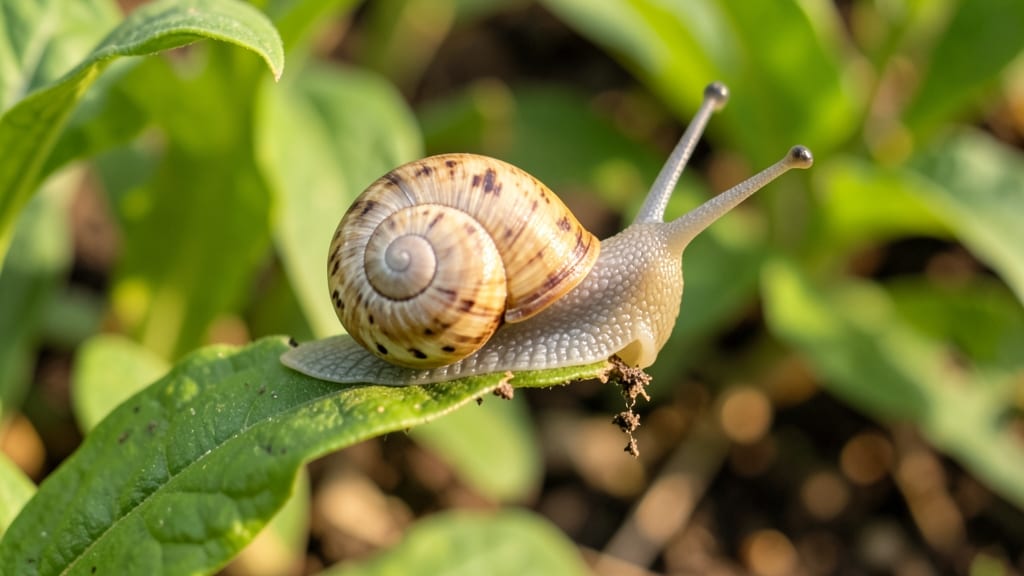
Understanding garden snail anatomy reveals how their spiral shell protects them, their muscular foot enables gliding, and retractable tentacles help navigate. The radula—a specialized scraping tongue—breaks down plant matter while their mucus trail reduces friction for movement.
Garden snails thrive thanks to their specialized body structure, where every feature serves a survival purpose. 🔥 The coiled shell isn't just armor—it grows with the snail, repairing cracks through calcium-rich secretions, while their broad foot secretes mucus to create a slippery path for effortless travel.
This anatomy explains why they're so effective at reaching plants and evading predators, even though they move at just 0.03 mph.
What's fascinating is how their anatomy adapts to different threats. The two long tentacles (eyestalks) can retract instantly when disturbed, while the radula's thousands of tiny teeth act like a rasp to shred leaves. This combination makes them both resilient pests and fascinating study subjects for gardeners and scientists alike.
💡 In This Article
- How Snail Shells Protect and Support Movement
- Identifying Garden Snail Body Parts for Pest Control
How snail shells protect and support movement
A garden snail's shell is more than just a protective home—it's a dynamic structure that grows with the snail through a process called accretion. The shell forms from a single layer of living tissue called the mantle, which continuously secretes calcium carbonate to build new chambers.
This growth happens in a spiral pattern, with each new whorl adding about 0.5-1.5 millimeters per week during active seasons, creating the iconic coiled shape that can house up to 5-7 whorls in an adult.
The shell's spiral design isn't just for aesthetics—it's an engineering marvel that distributes weight evenly. The center of gravity stays low and centered, allowing the snail to move without tipping over, even when climbing at angles up to 45 degrees.
This stability is crucial because their 0.03 mph speed makes them vulnerable to predators. The shell also acts as a mobile fortress: when threatened, the snail retracts completely, sealing the opening with a mucus plug that hardens within minutes, creating a nearly impenetrable barrier. 🔥
Calcium is the building block of this protection, and snails obtain it from their environment. They scrape calcium carbonate from soil, decaying plant matter, and even eggshells using their radula. Interestingly, their diet influences shell strength—snails fed calcium-rich foods develop thicker shells.
In captivity, this can lead to malformed shells if calcium is deficient, proving how closely their anatomy ties to their surroundings.
The shell's repair system is equally impressive. When damaged, the mantle secretes periostracum, a protein layer that acts like a biological patch. Over 2-4 weeks, the snail gradually rebuilds the affected area by adding new calcium layers, ensuring the shell remains intact.
This self-repair capability explains why garden snails can survive even after losing parts of their shell—a trait that makes them surprisingly resilient pests.
Beyond defense, the shell plays a role in movement. The snail's body is attached to the shell's last whorl, and as the muscular foot extends forward, the shell acts as a counterbalance.
This weight distribution allows them to glide efficiently, with their 1-inch-wide foot secreting mucus that reduces friction by up to 40%. The spiral shape also helps them navigate tight spaces, like between plant leaves or under mulch, where they're often found.
What's often overlooked is how the shell's growth patterns reflect the snail's life history. Each whorl marks a period of growth, and irregularities can indicate stress—like cracks from dry conditions or deformities from poor nutrition.
This makes shell analysis a tool for understanding their environment, from soil quality to seasonal changes. For gardeners, recognizing these patterns can reveal why snails are thriving in certain areas of their yard. ✨