
Landscaping
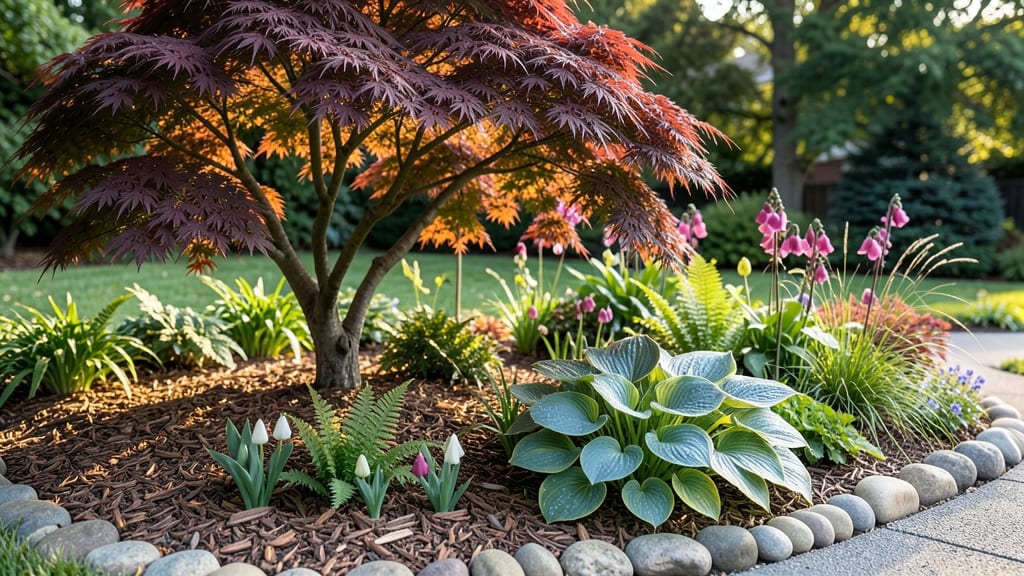
Flower bed ideas around trees transformed my yard from ordinary to enchanting. 🌿 The key is choosing plants that love dappled light and won’t compete with tree roots—like hostas, ferns, and bleeding hearts—while keeping the tree healthy. My first attempt failed when I planted sun-loving annuals too close; now I use mulch and strategic spacing to protect both the roots and the blooms.
Start with the tree’s root zone as your guide: keep plants at least 18 inches away from the trunk and use mulch to retain moisture. For small trees, a narrow bed of shade-tolerant perennials works beautifully, while larger trees can support a mix of shrubs, bulbs, and ground covers.
My favorite combo? Hosta leaves, lungwort flowers, and creeping phlox—it’s lush, low-maintenance, and thrives in partial shade.
By late summer, your bed will burst with color and texture, even under the tree’s canopy. The secret is layering plants with different heights and bloom times—early spring bulbs like daffodils, midseason perennials, and fall foliage plants keep interest all season.
Plus, the dappled light creates a magical, filtered effect that makes every garden look like a postcard.
Urban settings or tight spaces? No problem. Even in small yards, a well-planned tree bed adds depth and charm. Just avoid heavy mulch piles against the trunk—keep it 3-4 inches thick—and water deeply but infrequently to encourage deep root growth.
With the right plants and a little patience, your tree bed will become the garden’s star attraction.
📚 In This Guide
- What you need
- Instructions
- Tips and common mistakes
- Wrapping up and next steps
What you need
- ● Soil amendments: Compost (2–3 bags, 40–60 lbs each)
- ● Organic mulch (6–10 bags, 2–3 cubic feet each, e.g., shredded bark or pine straw)
- ● Slow-release fertilizer (1–2 bags, 10–20 lbs, 10-10-10 or tree-specific formula)
- ● Plants: Dappled-light-tolerant perennials (e.g., Hosta, Ferns, Bleeding Heart, Astilbe)
- ● Shade-loving annuals (e.g., Impatiens, Begonias, Caladiums)
- ● Ground covers (e.g., Sweet Woodruff, Liriope, or Creeping Jenny)
- ● Tools: Garden trowel or hand shovel
- ● Pruning shears (for trimming plants or tree roots if needed)
- ● Garden rake (for leveling soil)
- ● Measuring tape (10–25 feet)
- ● Garden hose with spray nozzle
- ● Edging: Flexible metal or plastic edging (5–10 feet, depending on bed size) to define the flower bed.
- ● Decorative stones: Mulch alternatives like river rocks or pebbles (1–2 bags, 20–30 lbs each).
- ● Plant markers: Stakes or labels for identifying plants (10–20 pieces).
- ● Watering system: Drip irrigation kit or soaker hose (10–20 feet) for efficient hydration.
- ● Tree guards: Protective barriers (e.g., tree rings) if pets or wildlife are a concern.
- ● Assess your tree’s canopy size and root zone—avoid planting too close to the trunk (keep flowers 3–5 feet away).
- ● Check soil drainage—amend heavy clay or sandy soil with compost for optimal growth.
- ● Plan for sunlight exposure—most trees cast dappled shade; pair plants accordingly.
- ● Clear weeds/debris from the area before starting.
Step-by-Step guide to designing a thriving flower bed around trees
Here's how to create a stunning, low-maintenance display that makes the most of dappled shade.
🌿 Step 1: Assess Your Tree's Light Conditions
Start by observing your tree's canopy throughout the day. Note where sunlight filters through (dappled light) versus where it stays consistently shaded. Most trees cast partial shade—bright patches mixed with deeper shadows. I like to sketch a rough map of these zones to plan my plant placement.
Pay special attention to the tree's trunk and roots. The area immediately around the trunk (the "root flare") gets the least light, while the outer edges receive more sun. This is where you'll place your sun-loving plants, while shade-tolerant varieties go closer to the trunk. A simple trick: Use a flashlight to simulate sunlight patterns and see where light hits the ground.
🪴 Step 2: Choose the Right Plant Pairings for Dappled Light
For a cohesive look, I recommend grouping plants with similar light needs. Start with 3-5 shade-tolerant perennials like hostas, ferns, or astilbes for the deeper shade areas. These plants handle 3-6 hours of filtered light daily and thrive in moist, well-drained soil.
For the brighter dappled zones, add 2-3 part-shade flowers like bleeding hearts, lungwort, or Japanese forest grass. These plants love 6-8 hours of dappled light and add vertical interest. I always include at least one low-growing ground cover, like ajuga or sweet woodruff, to fill gaps and suppress weeds.
☀️ Step 3: Prepare the Soil and Protect the Tree Roots
Before planting, clear away weeds and debris within a 3-foot radius of the tree trunk. Use a garden fork to loosen the soil 6-8 inches deep, being careful not to damage roots. Mix in 2-3 inches of compost to improve drainage and fertility—this is especially important in tree rings where soil can become compacted.
Lay down a 3-inch layer of mulch (cypress or hardwood) around the base, keeping it 3 inches away from the trunk to prevent rot. Mulch helps regulate soil temperature and retains moisture, which is crucial for shade-loving plants. I always water deeply after mulching to help it settle and make contact with the soil.
🌱 Step 4: Plant in Layers for Depth and Visual Interest
Begin with your tallest plants (like grasses or small shrubs) at the back, closest to the tree trunk. Next, add medium-height perennials (such as hostas or astilbes) in the middle layer. Finally, tuck in low-growing plants (like ajuga or sweet woodruff) at the front. This creates a natural, cascading effect that draws the eye upward.
Space plants according to their mature size—typically 12-18 inches apart for perennials and 6-12 inches apart for ground covers. Water each plant deeply after planting to encourage root establishment. A light layer of mulch over the soil helps retain moisture and keeps weeds at bay.
💧 Step 5: Maintain with Minimal Effort
Water your new flower bed 1-2 times per week for the first month, ensuring the soil stays moist but not soggy. After that, most shade-tolerant plants will only need watering during prolonged dry spells. I check soil moisture by sticking my finger 1 inch deep—if it feels dry, it's time to water.
Fertilize lightly in early spring with a balanced, slow-release fertilizer (like 10-10-10) to support new growth. Avoid heavy-handed fertilizing, which can encourage leafy growth at the expense of flowers. Instead, focus on keeping the mulch layer intact and removing spent blooms to encourage continuous flowering.
Tips & tricks for perfect flower bed design around trees
Creating a thriving flower bed around trees takes more than just planting—it's about understanding the subtle dance of light and root competition. Here's what I've learned from years of trial and error to make your design truly flourish.
Light Mapping is Everything: I can't stress this enough—take the time to map your tree's light patterns before buying a single plant. Use a flashlight test at different times of day to identify the brightest and darkest spots. This is how I avoid planting sun-lovers in deep shade or shade-tolerants where they'll get scorched. The 3-6 hour filtered light zones are perfect for hostas and ferns, while the 6-8 hour dappled areas can handle bleeding hearts and lungwort. Mark these zones with stakes if you need to—trust me, it saves you from costly mistakes later.
Root Protection Strategy: When loosening soil in Step 3, work carefully within that 3-foot radius—you're dealing with delicate roots that can be easily damaged. I use a garden fork to gently break up compacted soil without disturbing the roots too much. The key is to create channels for water and air without creating wounds. After amending with compost, I always do a "root check" by gently lifting the mulch to ensure no roots are exposed or stressed from the process.
Layering Like a Pro: The secret to that lush, layered look in Step 4 isn't just about height—it's about creating visual flow. Start with your tallest plants closest to the trunk where they won't compete with the tree's roots for water. I like to create a "staircase effect" where each layer is slightly shorter than the one behind it. For example, place 2-foot grasses at the back, 18-inch hostas in the middle, and 6-inch sweet woodruff at the front. This creates depth perception that makes your bed look fuller and more intentional.
Mulch Maintenance Matters: That 3-inch layer of mulch you add in Step 3 isn't just for looks—it's a living part of your ecosystem. I check my mulch every 3-4 months to ensure it's still 3 inches thick and hasn't settled or decomposed. If it's breaking down too quickly, I top it up with fresh mulch. The golden rule: never let mulch touch the tree trunk—this prevents rot and gives pests a highway to your tree. A good trick is to create a "mulch volcano" shape that slopes away from the trunk.
Pro Tips for Flower Bed Ideas Around Trees
- Creating a thriving flower bed around trees takes more than just planting—it's about understanding the subtle dance of light and root competition.
- Light Mapping is Everything: I can't stress this enough—take the time to map your tree's light patterns before buying a single plant.
- Root Protection Strategy: When loosening soil in Step 3, work carefully within that 3-foot radius—you're dealing with delicate roots that can be easily damaged.
Frequently asked questions
Got questions about creating stunning flower beds around trees? You’re not alone! Here are some of the most common concerns—and their answers—to help you design with confidence.
What are the best low-maintenance plants for flower beds around trees?
Opt for drought-tolerant perennials like hostas, ferns, and astilbes—they thrive in dappled shade and require minimal care. Ground covers like ajuga or creeping phlox also suppress weeds while adding texture. Pro tip: Mulch heavily to retain moisture and reduce weeding!
When is the best time to plant a flower bed around a tree?
Plant in early spring or fall (4–6 weeks before frost) for ideal root establishment. Avoid summer heat or winter freezes, which stress plants. If planting in containers, you can extend the window slightly—but always water deeply afterward.
How do I protect young trees while planting nearby flowers?
Keep flower beds at least 3–5 feet away from the tree trunk to avoid root competition. Use root barriers if needed, and avoid heavy mulch piles against the trunk (this can suffocate roots). Drip irrigation helps deliver water directly to plants without oversaturating the tree.
What if my tree’s dappled shade is too intense for flowers?
Start with shade-tolerant varieties like heuchera, lungwort, or Japanese forest grass. If sunlight is extremely limited, consider container gardens or raised beds for more control. Gradually introduce sun-loving plants as the tree matures (and shade lightens).
How do I keep pests (like slugs or deer) from ruining my flower bed?
Use organic deterrents like diatomaceous earth (for slugs) or deer-resistant plants (e.g., lamium, hellebores). Physical barriers (like chicken wire) or companion planting (e.g., marigolds) can also help. Check the materials section for more tips!
Wrapping up and next steps
Transforming the space around your trees into a vibrant flower bed doesn’t have to be overwhelming—it’s all about embracing the natural beauty of dappled light and choosing plants that thrive together.
Whether you opt for bold perennials, delicate annuals, or a mix of both, the key is patience and observation to let your garden evolve into a stunning, low-maintenance oasis. 🌿
Ready to get started? Sketch a rough design, gather your supplies, and begin planting—one shovel at a time! For extra inspiration, browse local nurseries or online plant communities to discover new favorites that suit your climate and style. Happy gardening! 🌸