
Planting
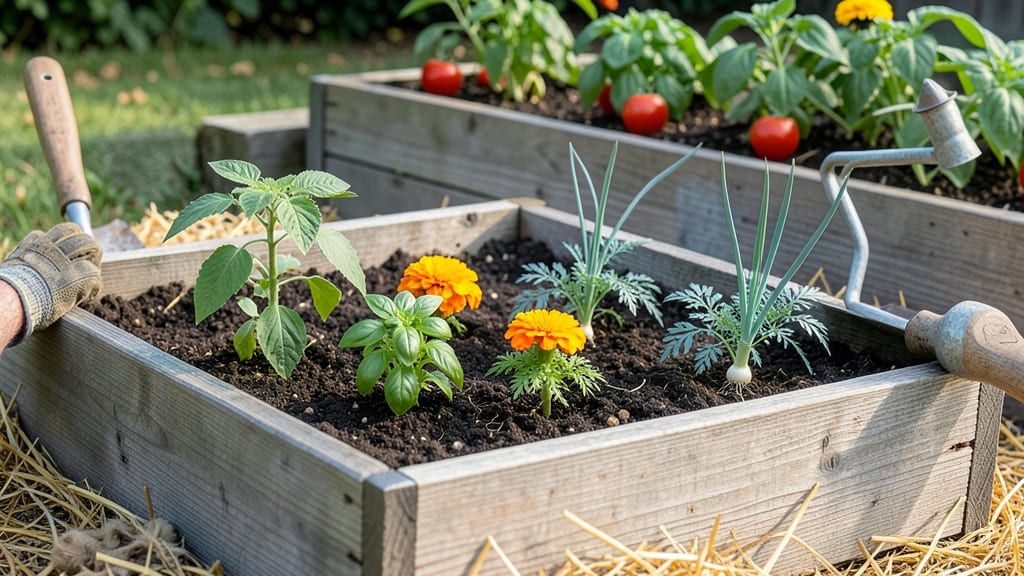
A strategic companion planting raised bed layout maximizes garden space by pairing basil with tomatoes to deter pests naturally, marigolds with vegetables to suppress nematodes, and onions with carrots to enhance flavor and growth while ensuring sunlight reaches all plants efficiently.
A well-planned raised bed layout leverages nature's partnerships to boost yields and reduce maintenance. 🌱 For example, planting basil near tomatoes confuses pests like whiteflies, while marigolds release compounds that deter harmful nematodes.
The key is arranging taller plants like corn or sunflowers at the back, with shorter crops such as lettuce or radishes in front, ensuring every plant gets adequate light without shading its neighbors.
This approach also creates a self-sustaining ecosystem. Legumes like peas fix nitrogen in the soil, benefiting heavy feeders such as tomatoes and peppers. Meanwhile, herbs like dill and cilantro attract beneficial insects that pollinate your crops. The result? A thriving garden that requires fewer chemical interventions and more intentional design.
💡 In This Article
- Science Behind Effective Raised Bed Companion Planting
- Step-by-Step Raised Bed Companion Planting Design Guide
Science behind effective raised bed companion planting
The magic of companion planting in raised beds starts with chemical communication between plants. Take marigolds, for instance—they release a compound called alpha-terthienyl through their roots, which repels nematodes and other soil-dwelling pests.
This chemical defense creates a natural barrier that can reduce nematode populations by up to 90% in just 6-8 weeks. Meanwhile, basil emits a scent that masks the smell of tomatoes, confusing pests like whiteflies and aphids that rely on these aromas to find their hosts.
Symbiotic relationships play a crucial role too. Legumes like peas and beans form nodules on their roots that house nitrogen-fixing bacteria, converting atmospheric nitrogen into a form plants can use.
A single pea plant can fix enough nitrogen to supply 20-30 pounds of soil per season—enough to support heavy feeders like tomatoes and peppers without synthetic fertilizers.
The roots of onions and garlic release sulfur compounds that deter pests while improving the flavor of neighboring crops like carrots, which can develop a sweeter taste when grown alongside alliums.
Space optimization comes from understanding plant growth habits. Taller plants like corn or sunflowers should occupy the back of the bed, where they can reach for sunlight without casting excessive shade.
In a 4x8-foot raised bed, placing corn at the north end allows it to grow 6-8 feet tall while still letting shorter plants like lettuce (6-12 inches) thrive in the front.
This vertical layering mimics natural forest ecosystems, where each plant occupies a distinct light zone without competing for resources.
Microclimates within raised beds also create opportunities for strategic pairings. For example, leafy greens like spinach prefer cooler temperatures (50-65°F) and can thrive in the shade of taller plants during summer months.
Meanwhile, heat-loving crops like peppers (75-90°F ideal) benefit from being planted near basil, which helps deter pests that might otherwise stress the peppers. The raised bed's elevated soil warms up faster in spring, giving you a 2-3 week head start compared to ground planting.
Don't overlook the role of beneficial insects in this ecosystem. Dill and fennel attract hoverflies, whose larvae devour aphids, while alyssum flowers draw parasitic wasps that control caterpillars. These insect allies can reduce pest populations by 50-70% when properly integrated.
The key is creating a diverse plant community that supports this food web—monoculture beds lack this natural pest control.
Soil health improves through these relationships too. Plants like comfrey, when grown as a living mulch, accumulate nutrients in their leaves that can be chopped and dropped to feed the soil.
Pairing comfrey with brassicas (like kale) creates a nutrient cycle where the comfrey's deep roots bring up minerals while its leaves decompose to enrich the topsoil. This no-dig approach maintains soil structure and microbial activity better than tilling.