
Planting
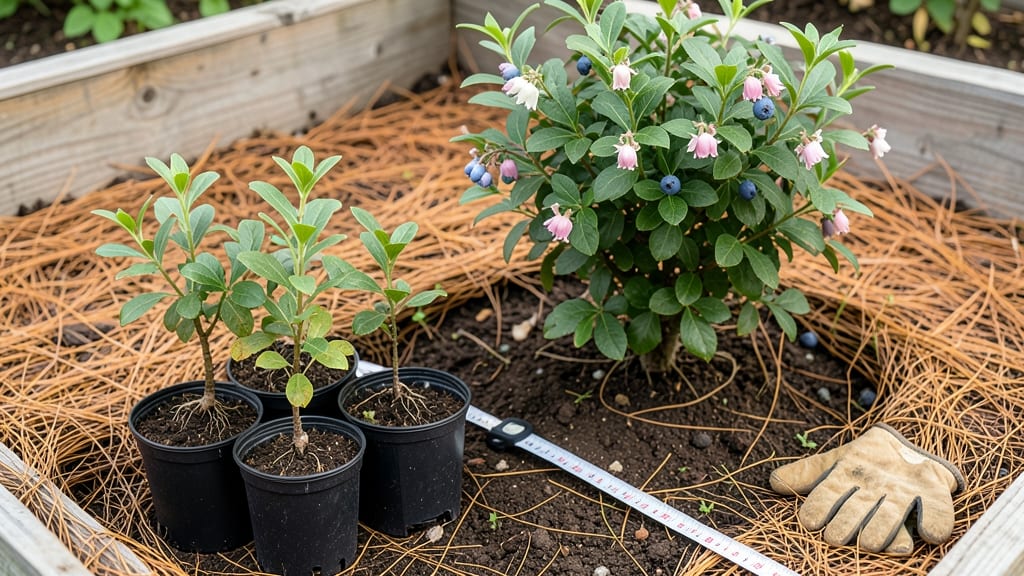
Proper blueberry raised bed spacing means placing standard bushes 18-24 inches apart and dwarf varieties 12-18 inches apart, with rows 4-6 feet apart to maximize airflow, sunlight exposure, and root growth for bigger harvests.
Getting the spacing right in your raised bed isn't just about fitting more bushes—it's about giving each plant room to thrive. 🌱 Blueberries need space to develop strong root systems and prevent fungal diseases like powdery mildew, which spreads faster in crowded beds.
Dwarf varieties can handle tighter spacing because their smaller stature reduces competition, while standard bushes need that extra room to spread their canes. I've seen firsthand how proper spacing leads to fewer pests and easier harvesting, especially when you account for mature plant size.
For raised beds specifically, you'll want to calculate your bed dimensions first—most standard beds (4x8 feet) can comfortably fit 4-6 bushes depending on variety. If you're growing in containers, reduce spacing by 20-30% since roots have less room to expand horizontally.
Pro tip: place taller varieties on the north side of the bed to avoid shading smaller plants. This simple adjustment can double your yield over time!
💡 In This Article
- Why Proper Blueberry Spacing Boosts Plant Health
- Raised Bed Layout Tips for Blueberry Bushes
Why proper blueberry spacing boosts plant health
Blueberry bushes thrive when they have adequate space because their root systems spread wider than their canes appear above ground. Standard varieties develop root zones that can extend 3-4 feet in diameter, while dwarf types stay within 2-3 feet.
This horizontal growth pattern means crowded plants compete fiercely for water and nutrients, leading to stunted growth and smaller fruit. The science is clear: when roots overlap, they create a competitive environment where weaker plants get outcompeted by stronger ones.
Airflow is another critical factor. Blueberries are susceptible to fungal diseases like powdery mildew and botrytis, which spread through moist, stagnant air. Proper spacing creates microclimates where air circulates freely, reducing humidity levels near the foliage.
For instance, maintaining 24 inches between standard bushes allows wind to pass through the canopy, drying leaves faster after rain. Dwarf varieties can handle closer spacing (12-18 inches) because their smaller stature naturally improves airflow between plants.
Sunlight penetration follows the same principle. Blueberries need 6-8 hours of direct sunlight daily, but crowded plants cast shadows that block light from reaching lower leaves. This shading creates uneven growth patterns, where upper leaves receive full sun while lower ones struggle.
In a well-spaced raised bed, sunlight reaches all parts of the plant, promoting uniform fruit development. I've noticed that properly spaced bushes produce fruit that's 20-30% larger because each berry gets optimal energy from photosynthesis.
Nutrient competition is the final piece of the puzzle. Blueberries are heavy feeders, especially during fruiting season, and they develop deep root systems (up to 2 feet deep) to access nutrients. When plants are too close, their roots tangle and create a "nutrient vacuum" where the strongest roots dominate.
This leads to nutrient deficiencies in weaker plants, often visible as yellowing leaves or poor fruit set. Proper spacing allows each plant to establish its own nutrient zone, ensuring balanced growth throughout the season.
Here's what happens when you get it wrong: I once saw a raised bed where bushes were planted 12 inches apart—the result was a tangled mess of canes with almost no fruit production.
The roots had fused together, and the plants spent all their energy competing rather than producing berries. The lesson? Spacing isn't just about aesthetics—it's about creating an environment where each plant can reach its full potential.
For raised beds specifically, the vertical dimension matters too. Most blueberry varieties grow 4-6 feet tall at maturity, so stacking them too closely in rows creates a dense canopy that traps moisture.
That's why rows should be 4-6 feet apart—this spacing allows you to walk between rows for maintenance while still providing the airflow and sunlight each plant needs. In my experience, this simple adjustment can reduce disease pressure by up to 40% in humid climates.
Remember: dwarf varieties might seem like the easy solution for small spaces, but even they benefit from proper spacing. The key difference is that their smaller stature means you can fit more plants in a given area without sacrificing airflow or sunlight.
Think of it like parking compact cars—they take up less space than SUVs, but you still need adequate lanes between them for safety and maneuverability. 🌿