
Light Requirements
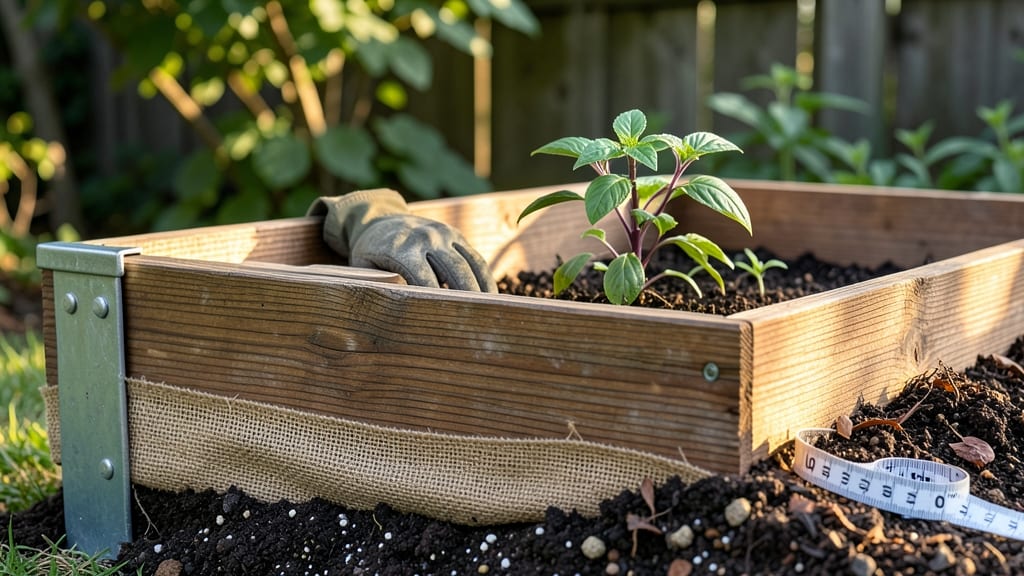
A 4 x 8 raised garden bed needs 32 cubic feet of soil for a 12-inch depth and 64 cubic feet for 24 inches. Plan for an extra 10-20% to account for soil settling and organic amendments.
Calculating soil volume for a 4 x 8 raised bed is straightforward once you know the formula: multiply length × width × depth (in feet). 🌱 For example, a 6-inch deep bed would need only 16 cubic feet, while deeper beds require significantly more.
I always recommend testing your soil's drainage first—heavy clay may need extra perlite or sand to prevent waterlogging. The extra 10-20% buffer isn't just for settling; it also gives you room to mix in compost or other organic matter that improves fertility over time.
Pro tip: Buy soil in bulk to save money, but avoid cheap fill dirt—it often lacks nutrients and compacts easily. A good mix for vegetables typically includes 60% topsoil, 30% compost, and 10% perlite or vermiculite for aeration.
If you're planting ornamentals, you can reduce the compost slightly while increasing sand or peat moss for better drainage.
💡 In This Article
- Calculating Soil Volume for Different Raised Bed Heights
- Best Soil Mixes and Amendments for 4x8 Raised Beds
Calculating soil volume for different raised bed heights
The volume of soil needed in a 4 x 8 raised bed depends entirely on its depth, calculated using the formula: length (ft) × width (ft) × depth (ft) ÷ 12 (to convert inches to feet).
For a standard 12-inch depth, that’s 4 × 8 × 1 = 32 cubic feet—the baseline most gardeners use. However, deeper beds change the game completely. A 6-inch bed would need just 16 cubic feet, while a 24-inch bed doubles the requirement to 64 cubic feet.
This is why many gardeners opt for 10-12 inches—deep enough for root systems but not so deep that soil becomes difficult to manage.
Soil type dramatically alters how much you’ll actually need. Loamy soil, ideal for vegetables, compacts less than sandy soil but still settles about 10-15% over time.
Sandy soil, while well-draining, can lose up to 20% of volume due to its granular nature. 🌱 For example, if you fill a 12-inch bed with sandy soil, you might need 36 cubic feet (20% extra) to account for settling.
The opposite is true with clay-heavy soil, which expands when wet and contracts when dry—requiring careful amendments like perlite or compost to stabilize its structure. Always measure your soil in bulk bags (typically sold by cubic feet) to avoid shortages mid-project.
Here’s how to apply this to real-world scenarios. If you’re planting tomatoes or peppers, which need 18-24 inches of depth, a 12-inch bed might feel limiting—so plan for 64 cubic feet or consider a two-tiered design.
For herbs or shallow-rooted veggies, a 6-inch bed (16 cubic feet) suffices, but add 2-3 inches of compost on top to boost fertility. The key is balancing depth with your plants’ needs while accounting for soil type—because nothing’s worse than running out halfway through filling your bed! 💫
Pro tip: Use a soil calculator (available online) to input custom dimensions. For instance, a 4 x 8 x 18-inch bed would require 48 cubic feet—close to the 64-cubic-foot mark for 24 inches. This helps avoid overbuying while ensuring you have enough for amendments.
If you’re mixing soil, remember that compost and perlite take up more space than topsoil. A common mix (60% topsoil, 30% compost, 10% perlite) might need 15-20% more volume than pure topsoil due to the airy texture of organic matter.
One common mistake is ignoring the height of your bed’s frame. Wooden beds with 2x6 lumber (about 5.5 inches tall) reduce usable depth—so a 12-inch fill becomes 6.5 inches of actual soil. Metal or composite frames add even less.
Always measure the internal height of your bed before calculating soil volume. For example, a 4 x 8 x 10-inch wooden bed might only hold 26 cubic feet of soil (not 32), leaving less room for root growth. 🔥
For advanced gardeners, consider layered soil profiles. The bottom layer (2-3 inches) can be coarse sand or gravel for drainage, while the top 8-10 inches is nutrient-rich mix. This reduces total volume needs while improving plant health.
Just ensure your frame can support the weight—sandy soil is lighter, but wet clay can add significant pounds per cubic foot. Always check your bed’s structural integrity before filling!
Final thought: Buy soil in bulk to save money, but test it first. Cheap fill dirt may compact into a brick-like barrier, while premium mixes cost more but pay off in plant productivity. A 10-cubic-foot bag of quality soil typically runs $3-$5, so budget accordingly.
With the right calculations, you’ll avoid the frustration of mid-project soil shortages—and your plants will thank you for the perfect growing environment! ✨