
Vegetables
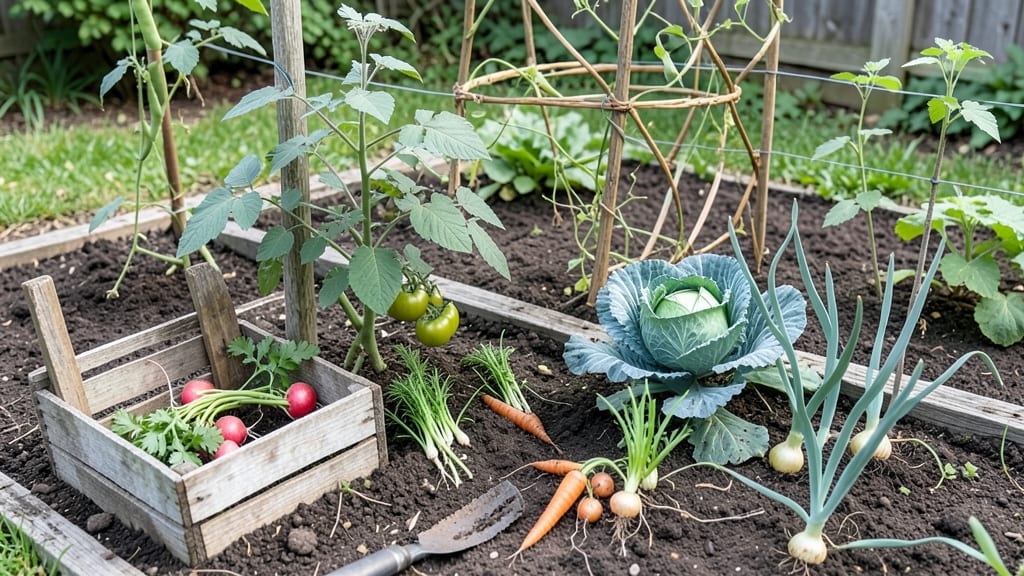
The history of victory gardens shows how WWII transformed urban spaces into food-producing hubs, supplying over 40% of the nation’s vegetables while boosting morale through community-driven agriculture. These gardens, revived from WWI efforts, became patriotic symbols that taught sustainable growing methods still used today.
The concept of victory gardens emerged as a wartime necessity during WWI, but it was WWII that turned them into a nationwide movement. 🌱 By 1943, over 20 million Americans grew food in backyards, vacant lots, and even rooftops—all while government campaigns provided free seeds and gardening advice.
What’s fascinating is how these gardens didn’t just feed families; they created a sense of shared purpose during rationing and shortages.
After the war, many gardens faded, but their legacy lived on in modern urban farming. Today, organizations like the National WWII Museum preserve this history through educational programs, while cities revive the spirit with community plots and school gardens.
The techniques—like crop rotation and efficient space use—remain just as practical for today’s gardeners facing limited space or food insecurity.
💡 In This Article
- Origins and Evolution of WWII Victory Gardens
- Modern Victory Garden Revival and Urban Farming
Origins and evolution of WWII victory gardens
The roots of WWII victory gardens stretch back to World War I, when the U.S. government launched its first "war gardens" in 1917 to conserve food for troops.
These early efforts planted 5 million gardens, producing 1 billion pounds of produce annually. 🌱 The success of WWI's program—combined with the memory of food rationing—made victory gardens a natural solution when WWII began.
By 1942, the Office of Civilian Defense and the National Garden Bureau launched a renewed campaign, distributing 10 million seed packets in just the first year.
What truly distinguished WWII's victory gardens was the unprecedented scale of government coordination. The Victory Garden Program used radio broadcasts, newspaper columns, and even Hollywood films to teach gardening techniques.
First Lady Eleanor Roosevelt became a vocal advocate, hosting garden demonstrations at the White House and encouraging women's clubs to organize neighborhood plots. 📻 The program's peak in 1943 saw 20 million gardens across America, with urban areas like Detroit and Philadelphia converting vacant lots into productive farmland—some growing 40% of the nation's vegetables during peak production.
The wartime gardens weren't just practical—they were psychological weapons against rationing fatigue. Studies showed that families with gardens consumed 27% more vegetables than those without, while community gardens became social hubs where neighbors shared seeds and recipes.
The program's success was so dramatic that by 1945, victory gardens produced 8 million tons of food, freeing up commercial crops for export and military use. 🍅 This level of output would have been impossible without the collective effort of millions of backyard farmers.
After the war, participation dropped sharply as rationing ended and commercial agriculture resumed. By 1947, only 1.5 million gardens remained—just 7% of the wartime peak. However, the movement's legacy persisted in modern urban farming movements.
The techniques developed during WWII—like intensive planting, succession cropping, and soil conservation—became foundational for today's community gardens. What's particularly interesting is how the wartime gardens proved that even small urban spaces could produce significant food yields, a principle now central to sustainable agriculture movements.
One fascinating aspect of the victory garden evolution was how different regions adapted the concept.
In the Northeast, families grew potatoes and cabbage in small backyards, while Southern gardens focused on sweet potatoes and collard greens. 🌿 The Pacific Northwest saw dramatic conversions of suburban lawns into vegetable plots, with some cities like Seattle reporting 90% participation rates among households.
These regional adaptations demonstrate how victory gardens weren't just about growing food—they were about adapting agricultural practices to local climates and cultural traditions.
The most enduring lesson from WWII victory gardens is their demonstration of collective action during crises. What began as a practical solution to food shortages became a cultural phenomenon that taught millions about sustainable growing.
Today, we see echoes of this in modern movements like food justice initiatives and climate-resilient agriculture, where the same principles of community collaboration and efficient land use are being applied to contemporary challenges.
The victory garden story reminds us that food security isn't just about production—it's about people working together. ✨