
Landscaping
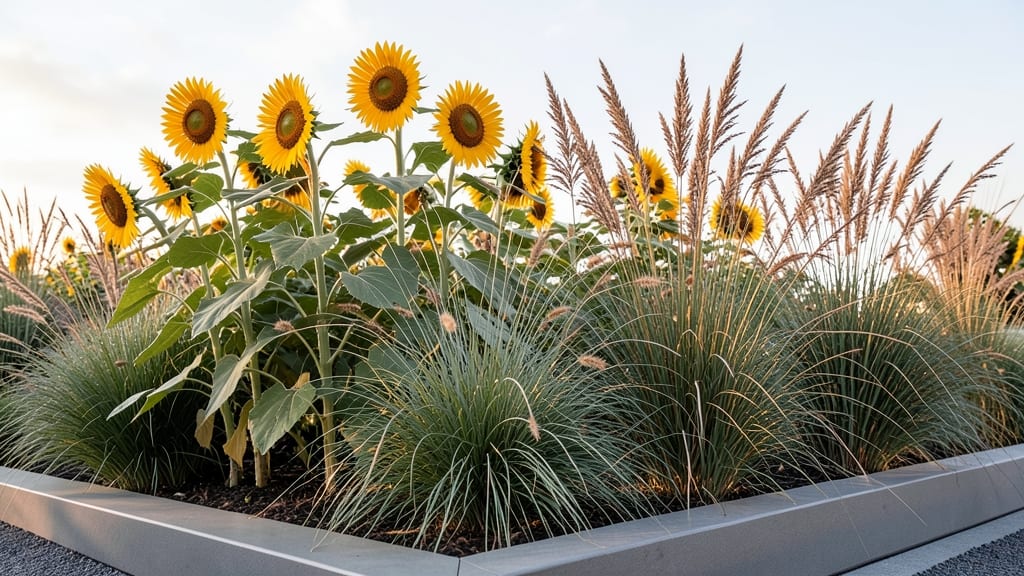
Sunflowers aren’t just cheerful faces—they’re pollinator magnets that extend your garden’s bloom time. These 10 sunflower bed designs transform ordinary spaces into vibrant ecosystems that support bees, butterflies, and birds while keeping your garden lively from spring to frost.
Tall Sunflower Backdrop for Pollinator Corridor
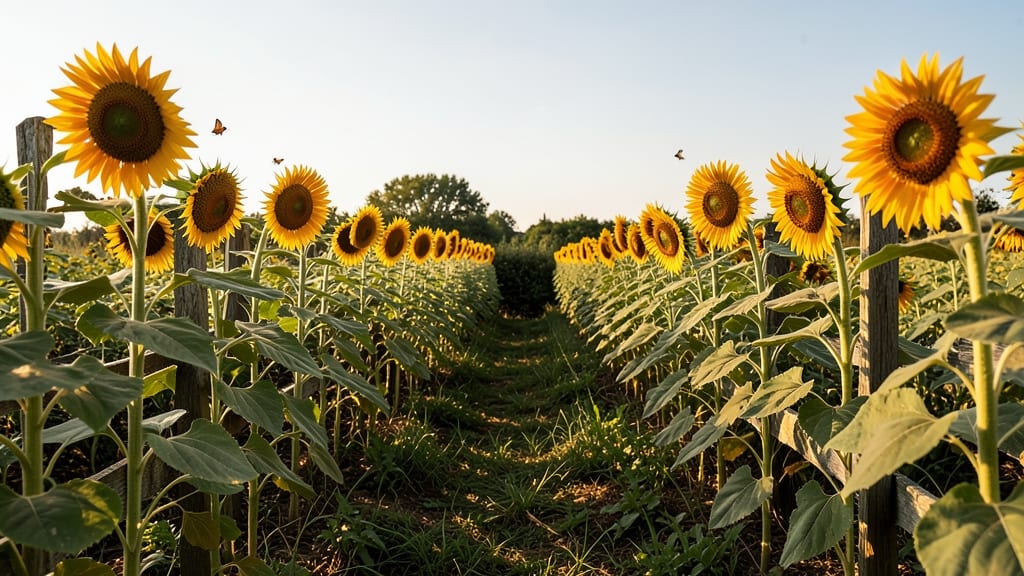
Turn your fence line or property border into a pollinator superhighway with a towering sunflower backdrop. This isn’t just a pretty border—it’s a vertical habitat that gives migrating bees and butterflies a safe, well-fed stopover during their journeys.
Plant tall varieties like 'Mammoth' or 'Russian Giant' (8+ feet) in a dense row along fences or borders, spaced 12-18 inches apart. The deep green foliage provides shelter while the golden blooms offer nectar from midsummer to frost. Add native grasses at the base to create a layered, wildlife-friendly buffer zone.
Perfect for gardeners with long property lines or urban yards where wildlife needs safe passage. Your sunflowers will double as a living fence and a lifeline for pollinators. 🌻
Dwarf Sunflower Meadow Mix for Early Blooms
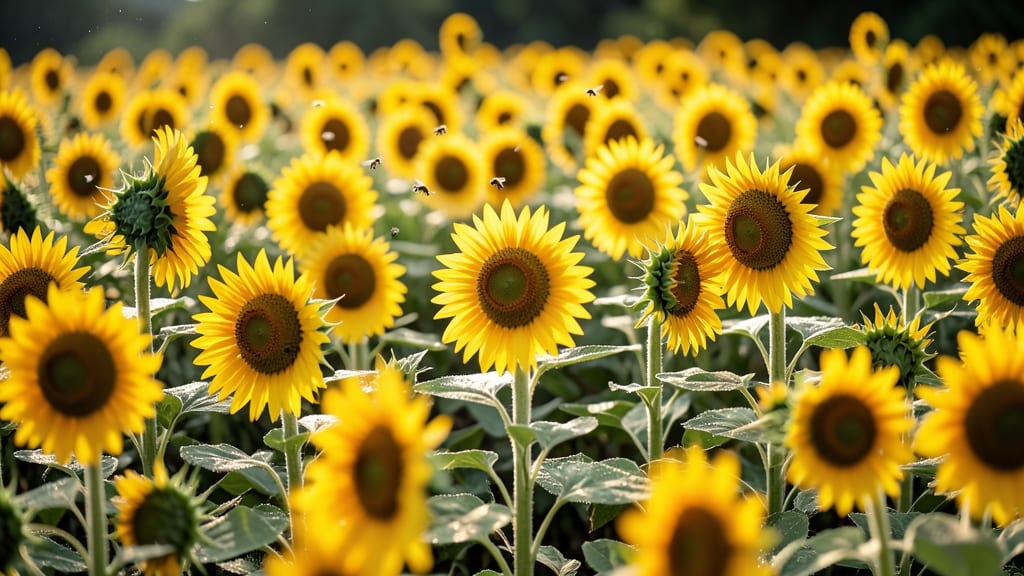
If you’ve ever wished for a burst of color and pollinator activity before most flowers even think about blooming, a dwarf sunflower meadow mix is your secret weapon. These compact varieties pack a punch with 6-8 week blooms, giving early-season bees and butterflies the nectar they crave when other plants are still dormant.
Perfect for balconies, window boxes, or small garden corners, these sunflowers thrive in containers or neatly contained beds. Plant seeds ¼-inch deep in well-draining soil, spacing them 6-12 inches apart—just enough room for their cheerful heads to sway in the breeze. The mix often includes varieties like 'Teddy Bear' and 'Moulin Rouge,' offering both classic yellow and striking burgundy blooms that add visual interest.
This design is especially rewarding for urban gardeners or those with limited space who still want to make a big impact. By filling gaps early in the season, you’ll create a pollinator-friendly oasis that keeps buzzing visitors happy from spring through summer. 🌻
Sunflower and Coneflower Pollinator Tower
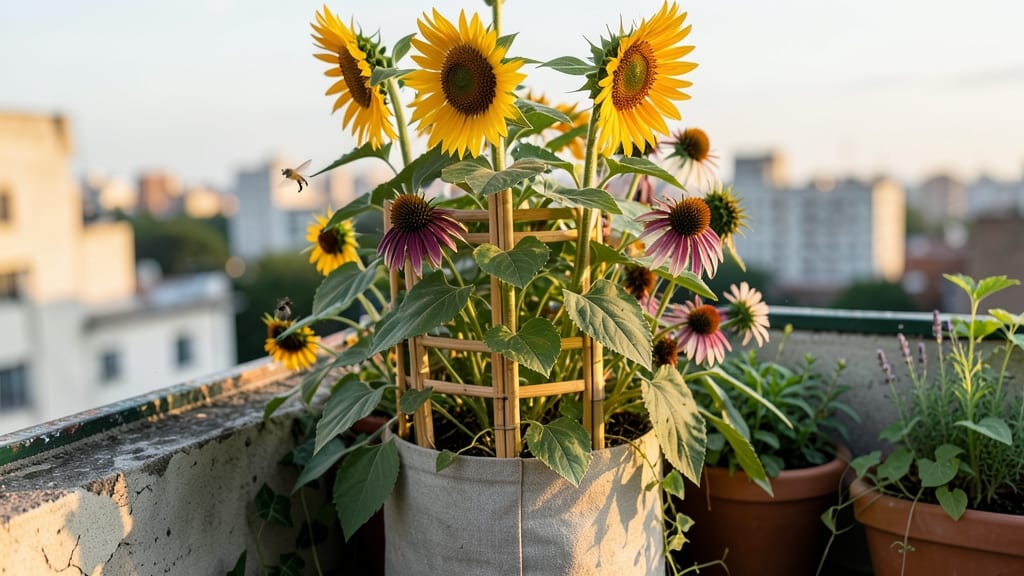
Turn your tiny urban balcony or patio into a buzzing pollinator paradise with a Sunflower and Coneflower Pollinator Tower. This vertical garden packs a punch by combining towering sunflowers with hardy native coneflowers, creating a 360-degree buffet for bees, butterflies, and hummingbirds—all while maximizing limited space.
Start with a sturdy raised planter or repurposed wooden tower (at least 3 feet tall). Plant tall sunflowers like 'Moulin Rouge' along the perimeter for easy access, then interweave purple coneflowers throughout for mid-height blooms. The sunflowers provide bold, late-summer nectar, while coneflowers offer early-season pollen and long-lasting seed heads for winter birds. Space plants 6-12 inches apart to ensure airflow and easy pollinator access from all sides.
This design is perfect for city dwellers with balconies, rooftop gardens, or small yards. The vertical structure saves ground space while creating a stunning focal point that thrives with minimal care. 🌟
Black Oil Sunflower Seed Heirloom Patch

If you love the idea of saving seeds for next year’s garden—or simply want to support local wildlife—black oil sunflower patches are your best bet. These heirloom varieties produce thousands of seeds per plant, creating a feast for birds, squirrels, and pollinators while adding a rustic charm to your landscape.
Plant seeds in early spring or late summer for bold, dark stems and large blooms that mature into dense seed heads. Space plants 12-18 inches apart in full sun, and watch as they attract cardinals, finches, and bees throughout the season. The seeds are also perfect for hand-harvesting and saving—just let a few heads dry on the stalk before collecting.
This patch is ideal for seed-saving gardeners or those who want to reduce waste by growing their own birdseed. The classic aesthetic makes it a standout in cottage or farm-style gardens. 🌟
Sunflower and Zinnia Cutting Garden Border
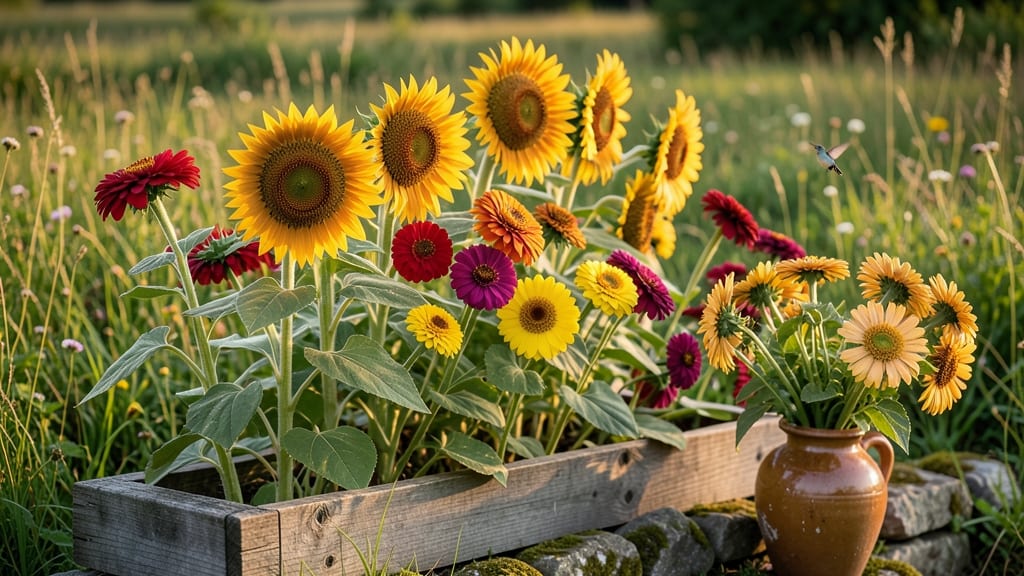
Want a border that keeps your vase full and your garden buzzing with life? A sunflower and zinnia cutting garden delivers both—bold blooms for bouquets and a pollinator party that lasts all season.
Plant tall sunflowers like 'Autumn Beauty' (4-5 feet) as the backbone, interspersed with zinnia varieties in red, orange, and yellow for color contrast. The sunflowers provide structure for your arrangements while their late-summer blooms extend your cutting garden season. Zinnias, with their bee-magnet petals, keep pollinators visiting from early summer until frost. Space sunflowers 12-18 inches apart and zinnias 8-12 inches apart for easy harvesting and airflow.
This design is perfect for cottage gardeners or anyone who loves fresh flowers on the table. With minimal effort, you’ll enjoy year-round harvests and a garden that hums with activity. 🌻
Sunflower and Basil Companion Planting
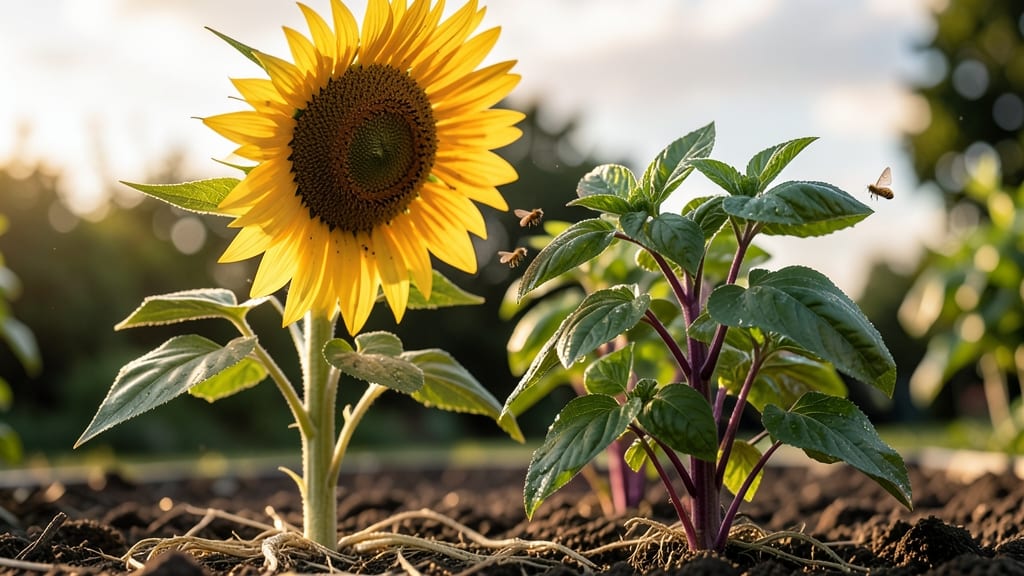
Transform your kitchen garden into a dual-purpose powerhouse with sunflowers and basil growing side by side. This dynamic duo isn’t just about aesthetics—it’s a natural pest control system that protects your basil while attracting pollinators. The towering sunflowers act as a living shield, repelling pests like aphids and whiteflies that might target your basil leaves.
Plant dwarf sunflower varieties like 'Teddy Bear' (2-3 feet tall) around the edges of your basil patch, leaving at least 12 inches between plants. The sunflowers’ deep roots improve soil structure, while their bright blooms draw bees that also pollinate your basil flowers—boosting flavor and yield. For extra protection, sprinkle crushed basil seeds around the base to deter unwanted insects naturally.
This setup is perfect for urban gardeners with limited space or anyone who loves fresh basil but hates chemical sprays. You’ll enjoy pest-free herbs while creating a pollinator-friendly zone right at your fingertips. 🌿
Sunflower and Milkweed Monarch Waystation
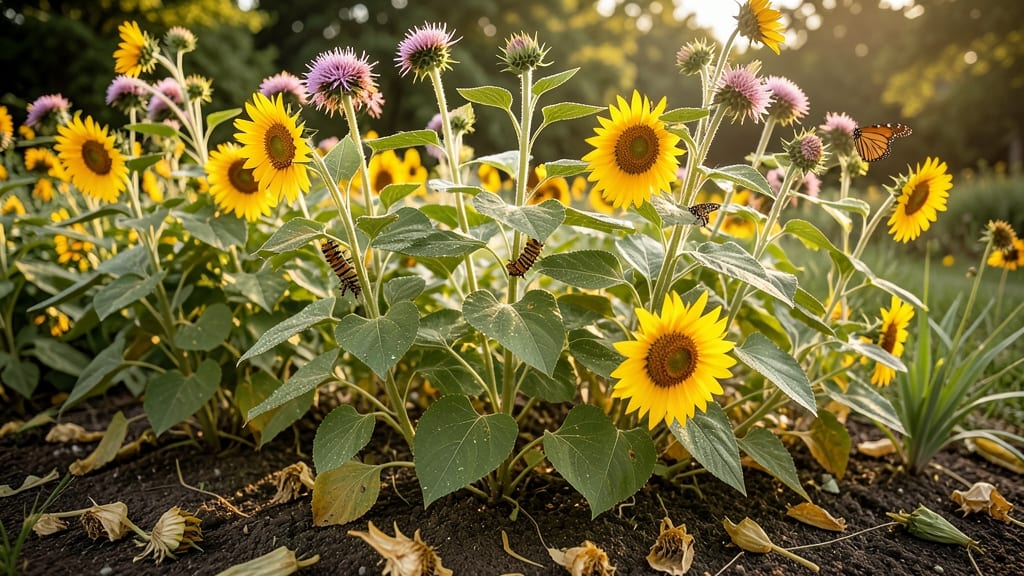
Want to make your garden a true lifeline for monarch butterflies? A sunflower and milkweed waystation gives these iconic pollinators everything they need to thrive—from nectar-rich blooms to the host plants where caterpillars munch and grow.
Plant common milkweed (Asclepias syriaca) as the foundation—its toxic sap deters deer while providing the only food monarch caterpillars will eat. Pair it with tall sunflowers like 'Autumn Beauty' for late-summer nectar when milkweed pods begin to form. Space plants 12-18 inches apart in full sun, and watch as both adults and caterpillars create a buzzing, fluttering ecosystem right in your yard.
This design is perfect for gardeners who want to make a real difference—even small patches help monarch populations recover. By providing both food and shelter, you're not just growing flowers; you're creating a generational home for one of nature's most beloved insects. 🌿
Sunflower and Nasturtium Edible Pollinator Bed
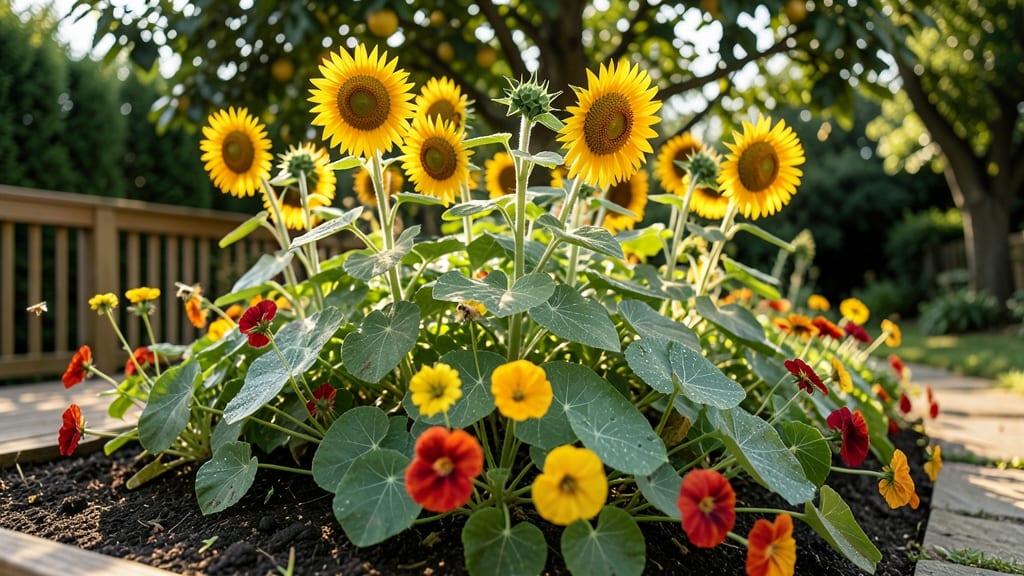
Transform your garden into a dual-purpose edible oasis with a bed that feeds both pollinators and your kitchen table. This clever combo of sunflowers and nasturtiums creates a self-sustaining ecosystem where bees thrive on sunflower nectar while nasturtiums act as natural pest deterrents—keeping aphids and squash bugs away from nearby veggies.
Plant tall sunflowers like 'Moulin Rouge' (3-4 feet) as the backdrop, interspersed with trailing nasturtiums ('Jewel Mix' or 'Alaska') that spill over edges. The sunflowers provide late-summer nectar when other flowers fade, while nasturtiums bloom early, offering edible flowers for salads and garnishes. Space sunflowers 12-18 inches apart and nasturtiums 8-10 inches apart for optimal airflow and pollinator access.
This design is perfect for herb gardeners, container growers, or anyone who wants to eat what they grow. The vibrant colors and pest-repelling benefits make it a win-win for both wildlife and your dinner plate. 🌿
Sunflower and Lavender Drought-Tolerant Mix
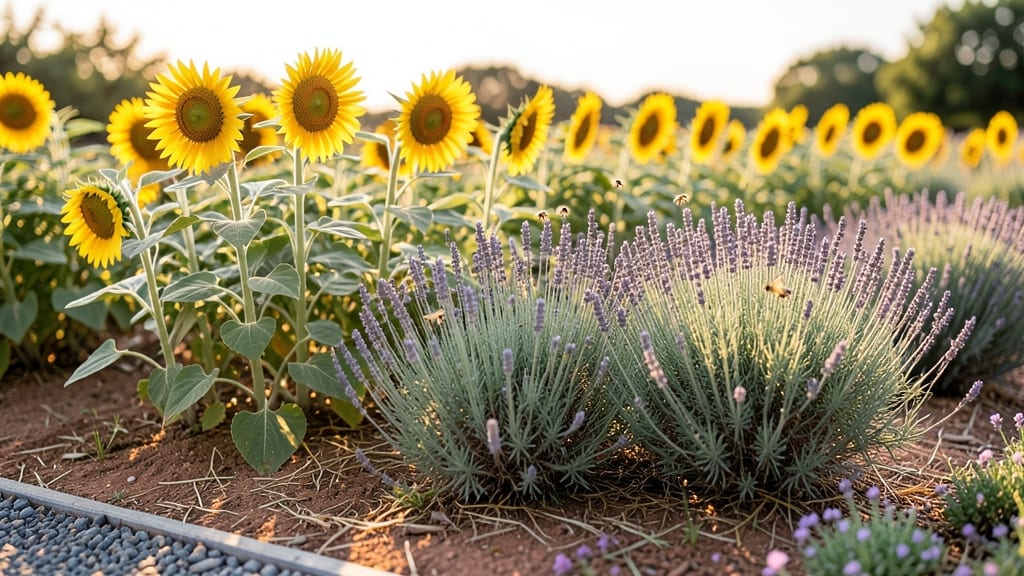
If you’re struggling with water restrictions or simply want a garden that thrives on nature’s schedule, a sunflower and lavender drought-tolerant mix is your answer. This powerhouse pairing slashes irrigation needs by 50% while creating a fragrant, pest-resistant paradise that hums with pollinators from summer to fall.
Start by planting tall sunflowers like 'ProCut' or 'Autumn Beauty' alongside English lavender in well-draining soil. Space sunflowers 12-18 inches apart and lavender 18-24 inches apart to prevent competition. The lavender’s silver foliage and purple blooms deter aphids and rabbits, while sunflowers’ bright yellow faces lure bees and butterflies. Mulch with gravel or pine needles to lock in moisture and suppress weeds—this Mediterranean-style bed needs watering only once every 10-14 days after establishment.
This design is perfect for dry-climate gardeners or those who want a low-maintenance, high-impact bed. The fragrant lavender adds sensory appeal, while sunflowers provide late-season nectar when other plants have faded. Your water bill—and your neighborhood pests—will thank you. 💚
Sunflower and Grass Ornamental Garden

Tired of traditional flower beds that look cluttered or lack structure? A sunflower and grass ornamental garden brings modern elegance to your landscape by blending bold sunflowers with airy ornamental grasses like Miscanthus or Pennisetum for a sleek, textured look that still buzzes with life.
Start by planting tall sunflowers like 'ProCut' (3-4 feet) as vertical accents, then tuck in clumping grasses at the base for movement and contrast. The grasses provide year-round interest—their feathery plumes sway in the wind even after sunflowers fade—while sunflowers draw in bees, butterflies, and hummingbirds from summer through fall. For a polished look, keep pathways clean and use gravel or crushed stone to define the bed.
This design is perfect for urban courtyards, minimalist gardens, or modern landscapes where you want wildlife support without sacrificing style. The combination thrives with minimal watering once established, making it low-maintenance yet high-impact. 💚