
Landscaping
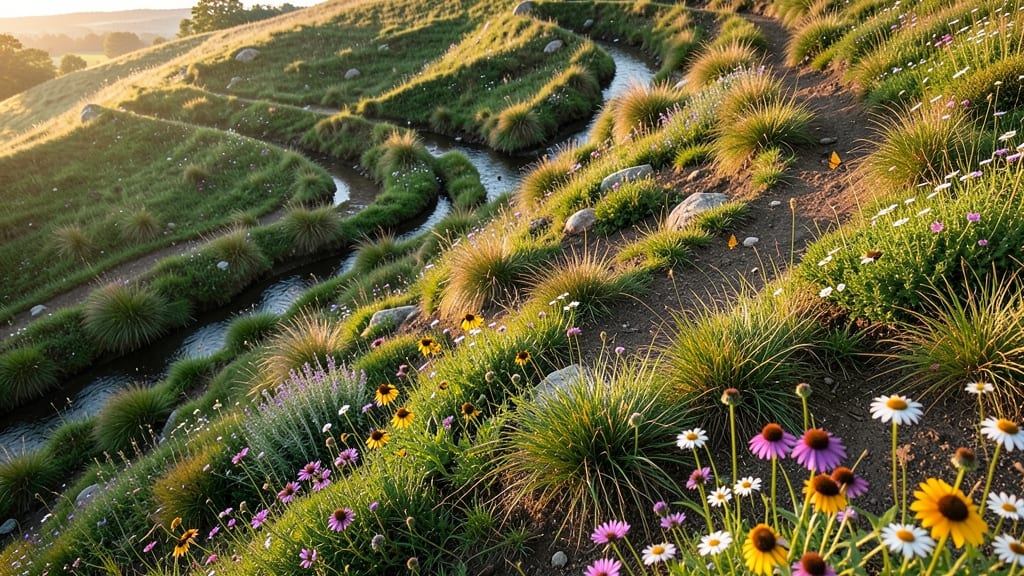
Struggling with sloped yards? These 10 creative flower bed designs transform challenging terrain into lush, erosion-resistant garden spaces that showcase your plants while saving you from constant soil loss.
Retaining Wall Flower Beds
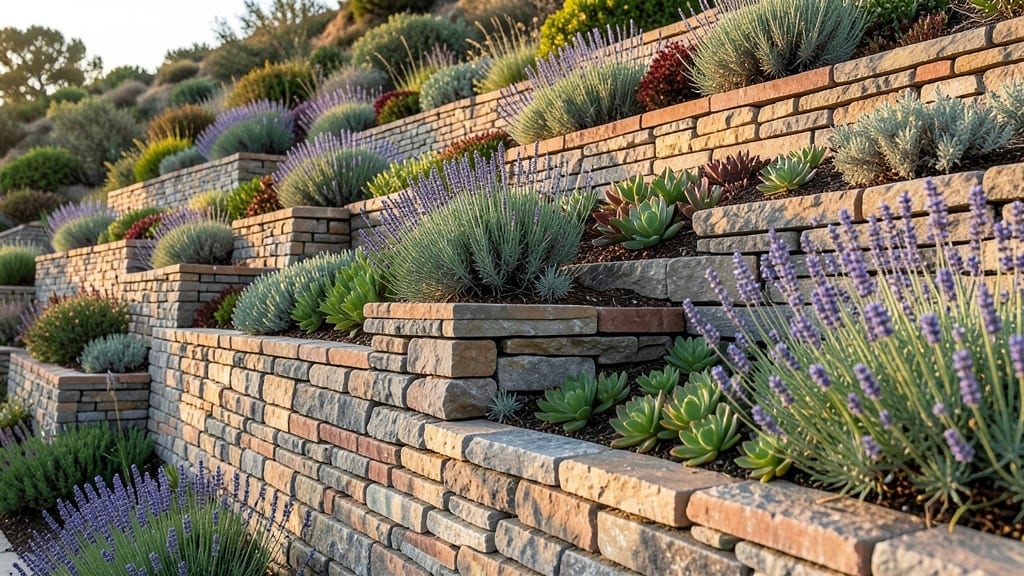
Transform your steepest slopes into stunning, functional garden spaces with retaining wall flower beds—the ultimate solution for both erosion control and eye-catching design. These stacked stone or brick walls create defined tiers where you can showcase drought-tolerant plants like lavender, sedum, and ornamental grasses while preventing soil from washing away during heavy rains.
Start by measuring your slope and calculating the height of each wall section—typically 2-3 feet per tier works best for stability. Use permeable gravel behind the walls to allow water drainage while reinforcing with landscape fabric to prevent root intrusion. For a rustic look, opt for dry-stacked stone walls, while brick or concrete blocks offer a more modern aesthetic.
This design is perfect for homeowners with challenging terrain who want a low-maintenance, high-impact solution. The structured tiers also make it easier to create distinct planting zones for different light conditions, ensuring every plant thrives. 🌿
Stepping Stone Pathways with Edging
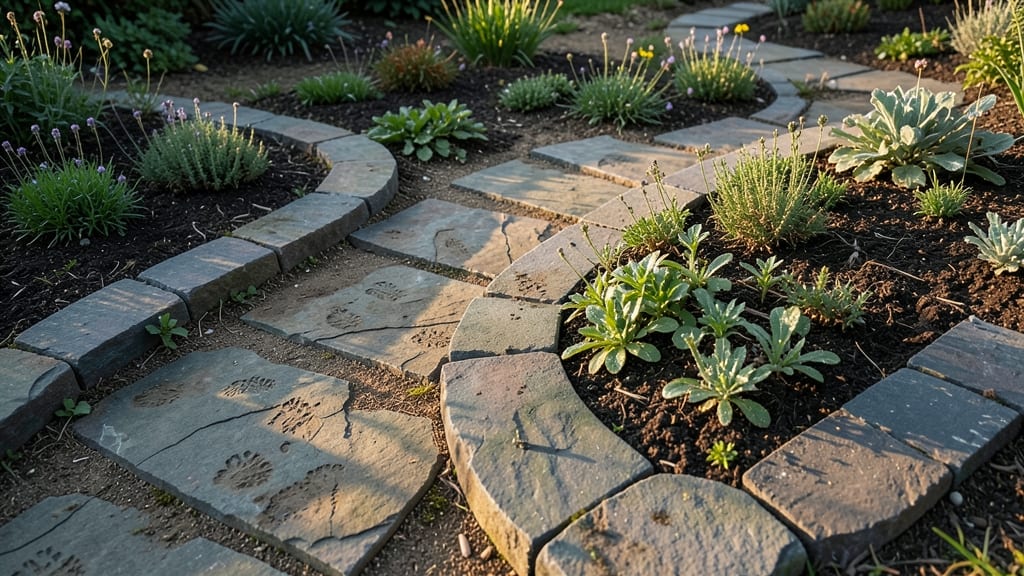
Tired of muddy footprints ruining your garden after every rain? Stepping stone pathways with edging solve two problems at once—giving you a dry, defined walkway while creating built-in planting pockets that naturally direct water away from plant roots.
Use semi-circular edging stones (like flagstone or concrete pavers) to create gentle curves that slow water flow while leaving small gaps between stones for creeping thyme or moss to grow. The edging itself acts as a subtle barrier, preventing soil erosion while adding structure to your slope. For extra drainage, add a layer of gravel beneath the planting pockets to keep roots happy.
This design is perfect for small-space gardeners or those with gentle slopes who want a low-maintenance solution that blends beauty with function. The result? A charming, practical path that keeps your garden looking intentional and your feet dry. 🌿
Wooden Box Terraces on Hillside
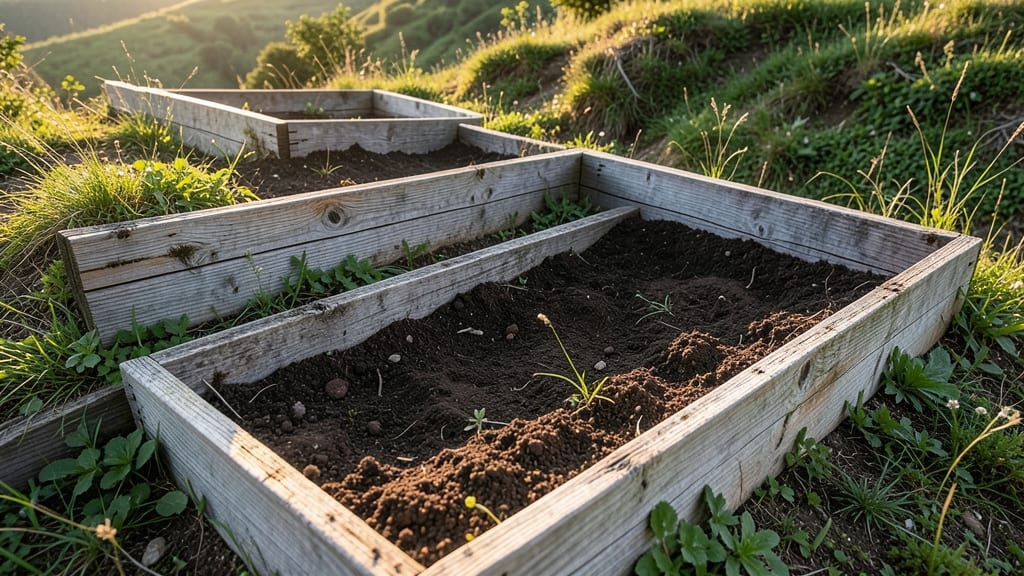
If you're an organic gardener who loves the idea of raised beds but hate the thought of synthetic materials, wooden box terraces are your perfect solution. These custom-fit planters follow your hillside's natural contours while using untreated wood that breaks down naturally, enriching your soil over time.
Start by measuring your slope and cutting cedar or redwood planks to create boxes that fit snugly along the grade. Fill each box with compost-rich soil and plant drought-tolerant perennials like lavender or edibles like heirloom tomatoes. The raised edges prevent soil erosion while allowing excess water to drain naturally through the gaps between boxes.
This method is ideal for gardeners who prioritize sustainability and want to avoid chemical treatments. Plus, the rustic charm of wooden terraces adds a cozy, farmhouse aesthetic to your landscape. 🌿
Bamboo Fence Containment System
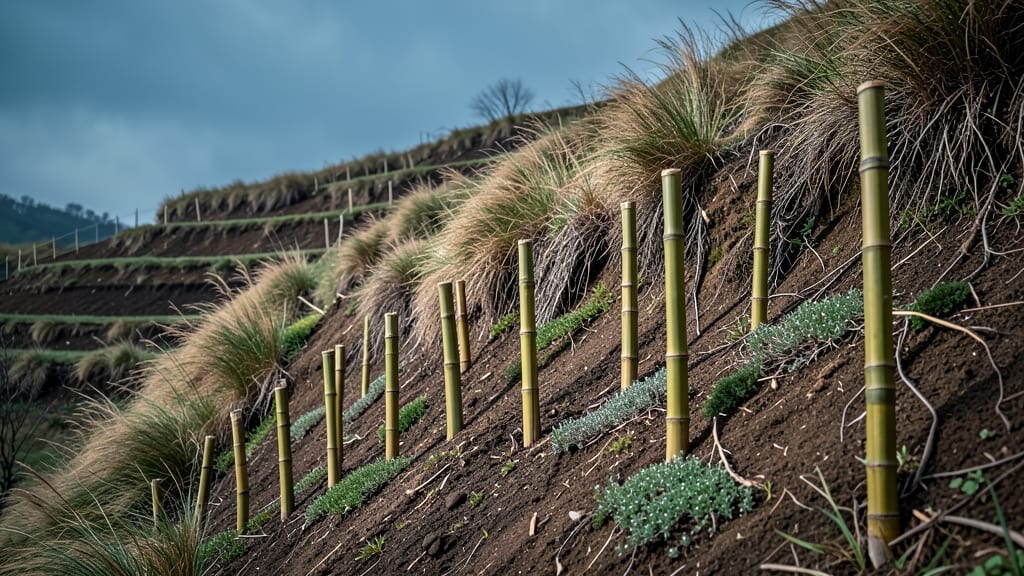
Windy slopes don’t have to mean lost soil or unruly plants—bamboo fence containment turns chaos into Zen. These flexible screens act as natural windbreaks, reducing erosion while creating a serene, layered look that’s pure garden drama.
Install thin bamboo rolls along the slope’s contour, securing them with stakes or lightweight gravel. Behind the screens, plant hostas, ferns, and bleeding hearts—shade-tolerant perennials that thrive in the filtered light. The woven texture also diffuses rainwater, slowing runoff while adding texture to your landscape. For extra stability, pair with native ground covers like creeping phlox.
This system is perfect for gardeners who love Asian-inspired aesthetics but need functional erosion control. It’s low-maintenance, budget-friendly, and blends seamlessly with natural slopes. 🌿
Rock Garden Cascades with Mulch
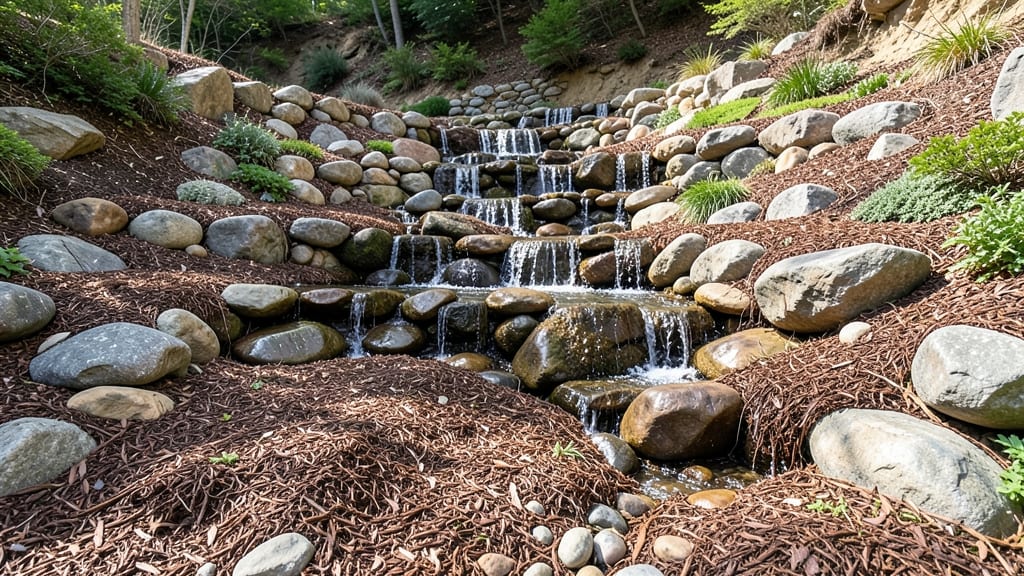
Tired of battling erosion on steep slopes? A rock garden cascade with organic mulch creates a stunning, self-sustaining ecosystem that thrives with minimal effort—no more struggling with washed-out soil or muddy paths.
Start by layering native river rocks in cascading tiers, leaving small pockets for soil and drought-tolerant plants like sedum or alpine wildflowers. Top with 3-4 inches of organic mulch (like pine needles or shredded bark) to retain moisture, suppress weeds, and protect roots. This combo mimics natural landscapes, reducing runoff while keeping your garden looking effortlessly elegant.
Perfect for urban gardeners or low-maintenance enthusiasts, this design requires only seasonal mulch refreshes and occasional weeding. The rocks also reflect sunlight, warming the soil for early spring blooms. 🌻
Tiered Concrete Planters with Drainage
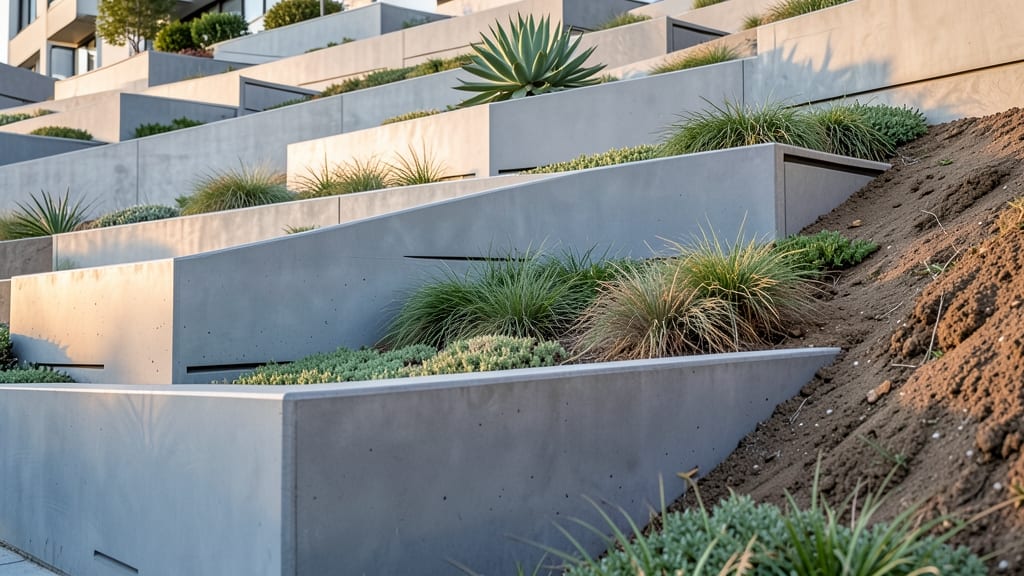
Transform your urban slope into a low-maintenance, high-impact garden with tiered concrete planters that double as erosion control. These modern structures blend seamlessly with contemporary landscapes while directing water away from your yard through built-in drainage channels—no more muddy puddles or washed-out soil!
Opt for pre-cast concrete planters with integrated overflow holes at the bottom of each tier to channel excess water downward safely. Fill them with drought-tolerant plants like sedum, ornamental kale, or lavender—these thrive in well-drained conditions and add striking color to your slope. The stackable design lets you customize heights, creating dramatic visual layers while stabilizing the soil beneath.
Perfect for city gardeners with limited space or those who want a clean, long-lasting solution, these planters require minimal upkeep beyond seasonal pruning. Plus, their sleek, geometric look elevates any modern outdoor space. 💡
Living Wall with Root Barriers
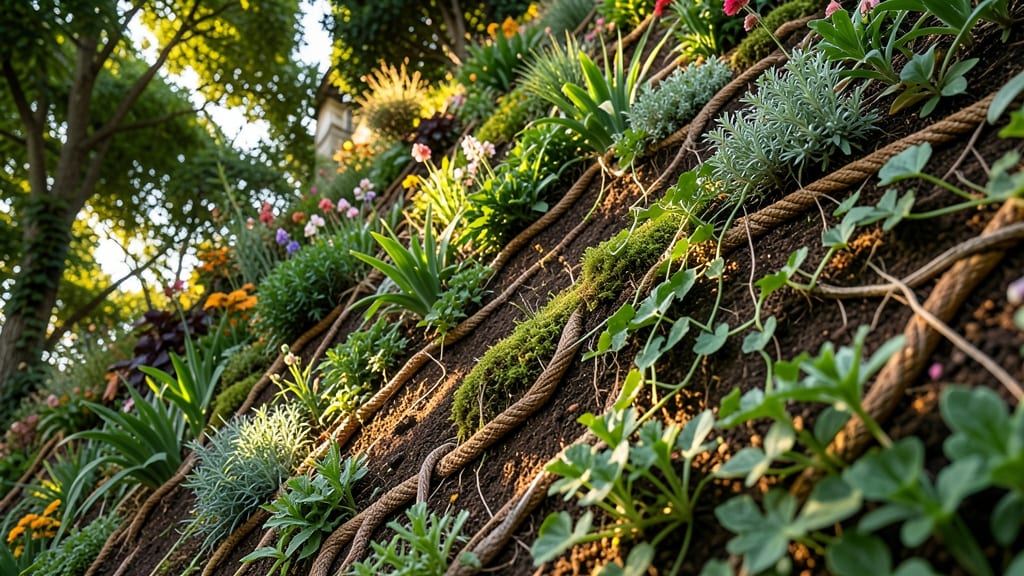
Turn bare, eroding banks into a vertical garden oasis with a living wall using biodegradable root barriers—a game-changer for urban gardeners with steep slopes. This eco-friendly system transforms tricky terrain into a lush, self-sustaining green space while stabilizing soil naturally, without heavy materials or permanent structures.
Start by attaching permeable fabric root barriers (like coconut coir or jute mesh) to the slope, then fill the pockets with a moisture-retentive growing medium mixed with compost. Plant creeping fig, ivy, or ferns—fast-growing vines that will quickly cover the barrier while their roots help anchor the soil. For extra stability, weave in native ground covers like sedum or creeping thyme to reinforce the system from the base.
This method is ideal for small urban lots or eco-conscious gardeners who want to maximize space without sacrificing sustainability. The result? A low-maintenance, high-impact green wall that thrives year-round while preventing erosion. ✨
Swale Plantings with Native Grasses
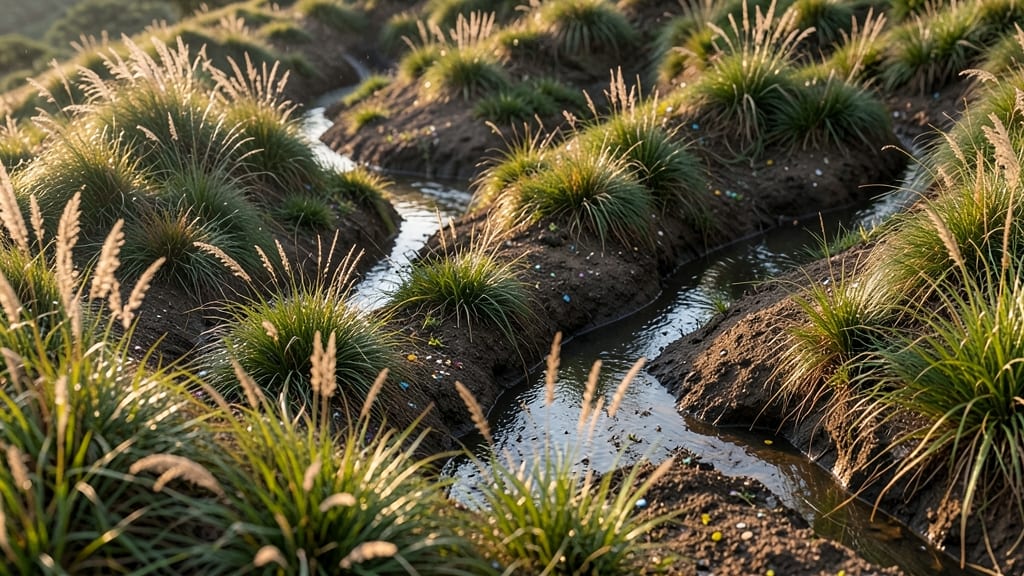
Want a zero-maintenance way to turn your slope into a thriving ecosystem that also captures rainwater? Swale plantings with native grasses are the permaculture secret for slopes—shallow ditches that mimic natural water flow while preventing erosion without heavy construction.
Dig a 6-inch-deep trench along the slope’s contour (never straight downhill!) and fill it with a mix of native grasses like switchgrass or little bluestem, plus deep-rooted perennials like purple coneflower or black-eyed Susan. These plants’ roots act like a sponge, absorbing excess water and filtering it slowly into the soil below. For best results, space swales every 10-15 feet on moderate slopes to create a cascading water-capture system that works invisibly.
This method is ideal for large properties with moderate slopes (10-30% grade) where you want to restore natural water cycles without concrete or wood. The wildflower meadow aesthetic also attracts pollinators year-round. 🌻
Curved Brick Edging with Herbs
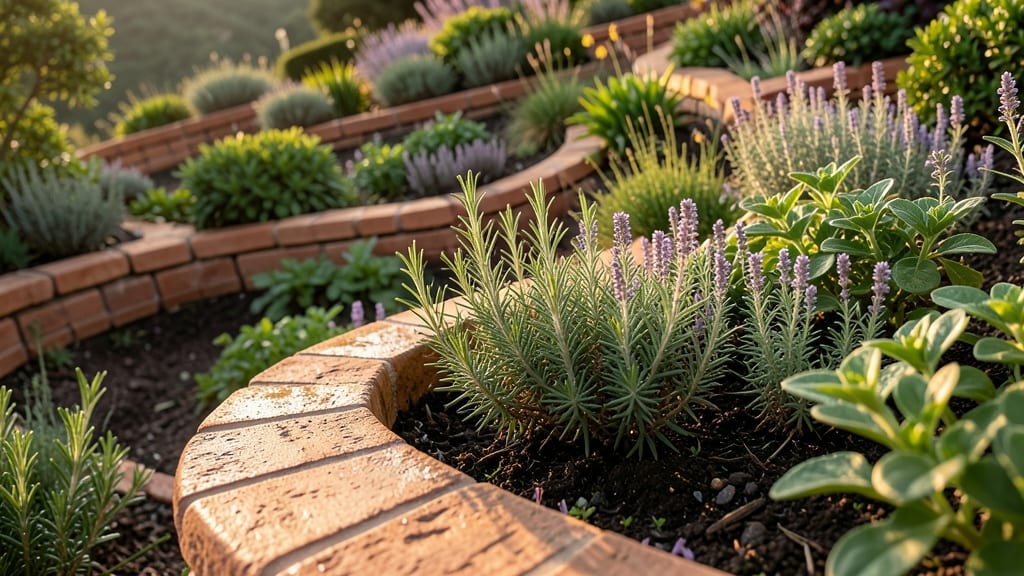
Turn your sloped yard into a fragrant, functional herb garden with curved brick edging—a dual-purpose solution that slows water runoff while creating ideal conditions for culinary herbs like rosemary, thyme, and oregano. The gentle curves of the bricks guide rainwater downhill naturally, reducing erosion while the raised edges prevent soil from washing away during storms.
Start by laying bricks in a slightly curved pattern along your slope, leaving small gaps between them for drainage. Fill the spaces with well-draining soil mixed with compost to keep roots happy, and plant your herbs directly between the bricks. For extra stability, secure the bricks with landscape pins or a thin layer of sand at the base. This method works best on gentle to moderate slopes (10-25% grade) where herbs can thrive without competing with weeds.
Perfect for urban gardeners with limited space or home cooks who want fresh herbs year-round, this design combines beauty with utility. The Mediterranean aesthetic of brick and herbs adds charm while keeping your slope stable and your kitchen stocked. 🌱
Grassed Waterways with Wildflowers

Turn your slope into a thriving pollinator paradise with grassed waterways—nature’s own erosion solution that doubles as a wildflower meadow. These shallow, grass-lined channels mimic natural water flow patterns, guiding rainwater downhill while preventing soil loss during heavy storms. Unlike hard structures, they blend seamlessly into the landscape while supporting local ecosystems.
Plant a mix of deep-rooted native grasses (like switchgrass or little bluestem) along the channel edges to anchor soil, then add clusters of wildflowers such as black-eyed Susans, butterfly weed, and purple coneflowers to attract bees, butterflies, and hummingbirds. These plants thrive in moist conditions and self-seed over time, reducing maintenance. For best results, create channels that follow the slope’s natural contours—no steep grades needed—and mulch with straw to protect young plants.
This eco-friendly design is ideal for large properties, rural gardens, or permaculture enthusiasts who want to restore natural water flow while creating a low-maintenance, high-reward landscape. It’s the ultimate win-win for both your garden and local wildlife. ✨