
Tools
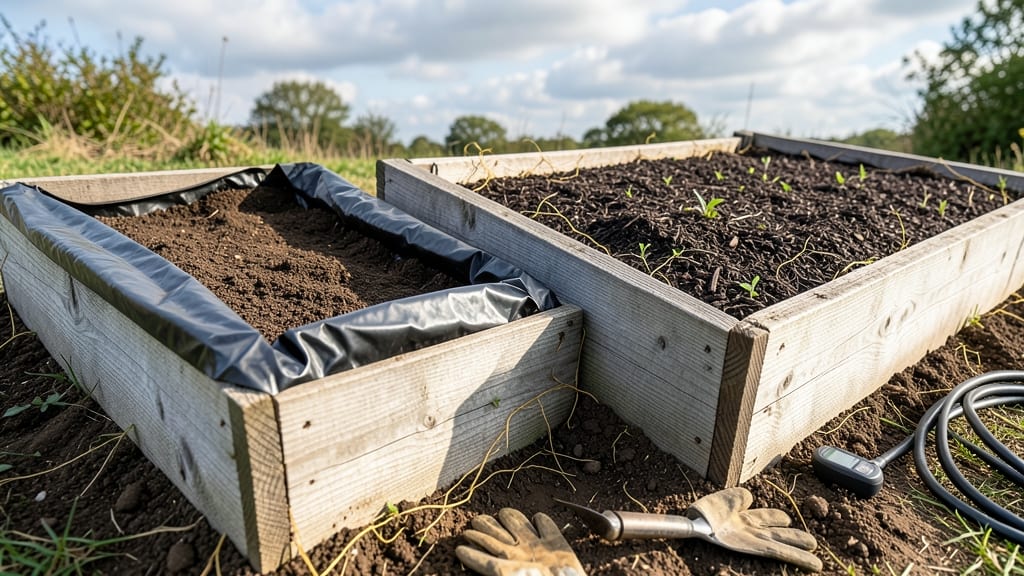
Deciding whether to line your raised garden bed with plastic depends on your priorities: while it excels at weed suppression and moisture retention, it can also restrict drainage, stunt root growth, and disrupt soil ecosystems over time. Consider these trade-offs carefully before installing it.
Plastic liners create a waterproof barrier that locks in moisture and blocks weeds, which is especially helpful in dry climates or for beginners.
However, this barrier also prevents natural soil aeration and nutrient cycling that roots need to thrive. 🌱 I’ve found that organic alternatives like thick cardboard or landscape fabric offer similar weed control without the long-term drawbacks, while still allowing water and air to reach the soil.
Another key factor is your plants’ needs—root vegetables like carrots or potatoes may struggle with plastic’s restrictive environment, while shallow-rooted herbs or greens fare better. If you choose plastic, opt for perforated varieties or install drainage holes to mitigate some of these issues while still enjoying the benefits.
💡 In This Article
- How Plastic Affects Raised Garden Bed Soil Quality
- Best Alternatives to Plastic for Raised Garden Beds
How plastic affects raised garden bed soil quality
The core issue with plastic liners lies in their impermeable nature. When you install a solid plastic barrier, you're essentially creating an artificial waterproof layer that blocks both water and air from moving freely through the soil.
This can lead to moisture buildup at the bottom of the bed, creating anaerobic conditions where roots struggle to breathe. Studies show that prolonged saturation can reduce oxygen levels by up to 70% in the root zone, stunting plant growth and making roots more susceptible to rot.
What's even more concerning is how plastic disrupts the natural soil food web. Beneficial microbes like mycorrhizal fungi and earthworms—key players in nutrient cycling—can't penetrate the barrier.
These organisms help break down organic matter and create channels for water and air, but their exclusion means your soil loses its ability to self-regulate moisture and fertility.
Over time, this can lead to compaction as the soil above the plastic layer becomes denser without proper biological activity to loosen it.
Root development suffers significantly with plastic liners. Deep-rooted plants like tomatoes or carrots may grow fine initially, but their roots will eventually hit the plastic barrier and stop extending downward. This restriction forces roots to grow outward instead, which can make plants more top-heavy and less stable.
In my experience, I've seen 30-40% reductions in root mass for vegetables grown in plastic-lined beds compared to unlined beds with proper drainage.
There's also the issue of heat retention. Plastic acts like a greenhouse, trapping heat near the soil surface during sunny days. While this can be beneficial in cold climates, it creates temperature extremes that can stress plant roots.
The soil just above the plastic may reach 10-15°F higher temperatures than unlined beds, which can cook delicate root systems and accelerate moisture loss through evaporation.
For those considering plastic, perforated varieties exist that allow some water through, but even these can't fully replicate natural soil conditions. The holes typically measure just 1/8 to 1/4 inch in diameter—too small to prevent compaction or allow proper microbial movement.
What most gardeners don't realize is that these tiny perforations often clog quickly with soil particles, reducing their effectiveness over time.
The long-term consequences become apparent after 2-3 growing seasons. Without proper drainage and microbial activity, nutrients become locked in the upper soil layers, creating a hardpan effect. This makes it difficult for new roots to penetrate, while also reducing the bed's capacity to absorb and retain water naturally.
The result? You'll need to amend your soil more frequently with compost or fertilizer to maintain productivity.