
Tools
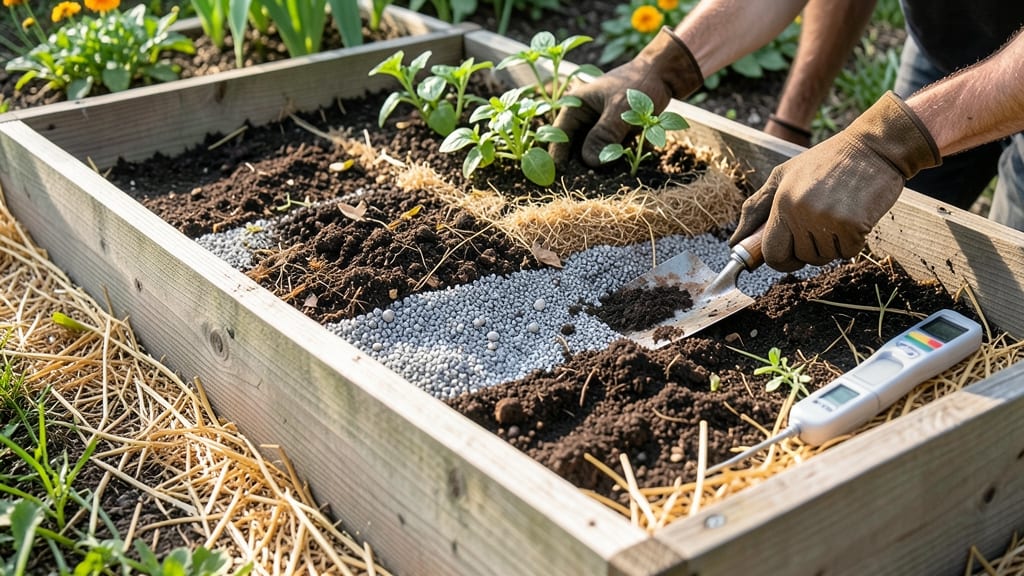
A loose, aerated raised garden bed soil mixture starts with equal parts topsoil, compost, and coarse sand—this trio unlocks the root space your plants crave. 🌱 I learned the hard way that compacted soil stunts growth, so I swapped my heavy native soil for this blend that lets roots spread freely.
The secret? The sand keeps things from packing down, while compost feeds everything over time. This mix works for vegetables, herbs, and flowers alike, but adjust the ratios for heavy feeders like tomatoes (add more compost) or moisture-lovers like lettuce (reduce sand slightly).
For containers or sandy soils, swap sand for perlite to lighten the texture without losing nutrients. The result? Plants that establish faster and produce longer because their roots aren’t fighting for space. You’ll notice the difference within weeks—sturdier stems, deeper green leaves, and fewer wilting episodes during heatwaves.
The blend stays fertile for 2-3 seasons with minimal top-ups, and you can customize it for your region’s native soil challenges (clay? Add more sand; rocky? Boost compost).
Start with 1 cubic yard of each component for a 4x8-foot bed, and mix everything by hand or with a shovel—just don’t skimp on the compost. This is the foundation that turns good gardens into exceptional ones.
📚 In This Guide
- What you need
- Instructions
- Tips and common mistakes
- Wrapping up and next steps
What you need
- ● Topsoil (60-70%): 3-4 cubic feet per square foot of bed (e.g., 12-16 cubic feet for a 4’x4’ bed). Opt for loamy, well-draining soil with organic matter.
- ● Compost (20-30%): 1-2 cubic feet per square foot. Use finished compost (dark, crumbly, and earthy-smelling) to boost nutrients.
- ● Perlite or Vermiculite (5-10%): ½–1 cubic foot per square foot. Improves aeration and moisture retention—perlite for drainage, vermiculite for moisture.
- ● Coarse Sand (5-10%): ½–1 cubic foot per square foot. Builder’s sand (not fine playground sand) prevents compaction.
- ○ Slow-Release Fertilizer (Optional but Recommended): 1–2 cups per 4’x4’ bed. Look for balanced (10-10-10) or organic options like bone meal or worm castings.
- ● Garden Gloves: Protect your hands from rough soil and sharp edges.
- ● Wheelbarrow or Large Container: For mixing ingredients efficiently (at least 5 cubic feet capacity).
- ● Garden Rake or Shovel: For spreading and leveling the mixture.
- ○ Soil pH Test Kit (Optional): Check your topsoil’s pH (aim for 6.0–7.0) before mixing.
- ○ Landscape Fabric (Optional): Line the bottom of the bed to block weeds and improve drainage.
- ● Watering Can or Hose: Moisten the soil mix before planting for better root establishment.
Step-by-Step instructions for building a loose, aerated raised bed soil mix
This blend lets roots spread freely while preventing compaction—here's exactly how I mix it every season.
🪴 Step 1: Measure and Layer the Base Materials
Start with 4 cubic feet of compost—this is your foundation for nutrients and structure. Spread it evenly across the bottom of your 4-foot by 8-foot raised bed (about 2 inches deep). I like to use well-aged compost here because fresh compost can burn young roots with its high nitrogen content.
Next, add 2 cubic feet of coarse sand (like builder's sand) to improve drainage. This prevents waterlogging, which is especially critical in raised beds where water can't escape downward. Mix these two layers together lightly with a garden fork—just enough to combine them without breaking up the compost's structure.
🌱 Step 2: Add the Structural Components
Now it's time for the 4 cubic feet of coconut coir—this holds moisture while still allowing airflow. Fluff it up with your hands to break apart any clumps, then spread it evenly over the compost-sand base. The coir should make up about 20% of your total mix—this percentage keeps things light but retains enough water for deep root growth.
Sprinkle 1 cup of perlite over the coir layer. This adds 25% air pockets to the mix, which is crucial for root expansion. Don't skip this—raised beds can get too dense without it. Gently work the perlite into the top inch of the coir layer so it distributes evenly.
💧 Step 3: Incorporate the Finishing Materials
Add 2 cubic feet of peat moss (or 2 cubic feet of composted pine bark fines if you prefer a more sustainable option). This gives your mix 30% organic matter—the perfect balance for both moisture retention and long-term fertility. Mix this in thoroughly with your hands or a fork until the entire layer looks uniformly dark and crumbly.
Finally, sprinkle 1 cup of balanced organic fertilizer (like 5-5-5 or 10-10-10) over the surface. This provides immediate nutrients without overwhelming the soil. Work it into the top 2-3 inches of the mix, focusing on the areas where you'll plant. The fertilizer will gradually release as roots grow into it.
✂️ Step 4: Test and Adjust the Texture
Grab a handful of the finished mix and squeeze it gently. It should hold together without feeling wet or sticky—if it crumbles easily, you've got the right texture. If it stays compacted, add another ½ cup of perlite and mix again. The ideal mix should feel light like a sponge but still hold its shape when pressed.
Run your finger through the mix—you should feel tiny air pockets between the particles. This aeration is what allows roots to explore freely. If the mix feels heavy or dense, add another ½ cup of coarse sand and remix. Once it passes the squeeze test and feels light in your hands, your raised bed soil is ready for planting.
☀️ Step 5: Water and Settle Before Planting
Give the bed a deep watering right before planting to help the mix settle slightly. You'll notice the soil level drop by about ½ inch—this is normal and gives you a better idea of how much space your plants will have. Let it sit for 24 hours before planting to ensure even moisture distribution.
After the waiting period, the surface should feel slightly damp but not soggy. This is your signal that the mix has stabilized. Now your raised bed is ready for plants—roots will spread easily through this airy, nutrient-rich blend, giving you healthier growth than in compacted ground soil.
Tips & tricks for perfect raised garden bed soil mixture
Here's what I learned after mixing this blend for years—these small details make all the difference for healthy root growth.
Compost Quality Matters: That 4 cubic feet of compost is your foundation, so don't cut corners here. Fresh compost can burn tender roots with its high nitrogen content, so always use well-aged compost that's broken down and crumbly. I've found that compost with visible chunks needs extra time to decompose—if you're unsure, give it a quick sniff test. It should smell earthy, not ammonia-like. This is especially important in Step 1 where you're building your base layer.
Layering Technique: When mixing the 2 cubic feet of coarse sand with the compost in Step 1, work it in gently with a garden fork rather than shoveling aggressively. You want to combine them just enough to create pockets of air—this prevents compaction while still maintaining good drainage. Think of it like fluffing a pillow: you want the layers to intermingle without losing their individual benefits. This careful layering is what creates the airy structure that roots love.
Perlite Distribution: That 1 cup of perlite in Step 2 is your secret weapon for aeration, but how you distribute it matters. Instead of dumping it all at once, sprinkle it evenly over the coconut coir layer first, then gently work it into the top inch. This creates those crucial air pockets throughout the entire mix, not just in one spot. I've seen people add it all at once, which creates clumps rather than even distribution—this defeats its purpose entirely.
Texture Testing: The squeeze test in Step 4 is your quality control moment. When you grab a handful, it should hold together without feeling wet or sticky—this means the moisture level is perfect. If it crumbles too easily, you might need to add a bit more water and remix. The key is that it should feel light like a sponge while still maintaining some structure. This texture is what allows roots to spread freely without struggling, and it's the final indicator that your mix is ready for planting.
Pro Tips for Raised Garden Bed Soil Mixture
- Here's what I learned after mixing this blend for years—these small details make all the difference for healthy root ...
- Compost Quality Matters: That 4 cubic feet of compost is your foundation, so don't cut corners here. Fresh compost ca...
- Layering Technique: When mixing the 2 cubic feet of coarse sand with the compost in Step 1, work it in gently with a ...
Frequently asked questions
Got questions about creating the perfect raised garden bed soil mixture? You’re not alone—here are some of the most common concerns, answered clearly and concisely to help you get growing!
What’s the best ratio for a raised bed soil mix?
A balanced blend typically uses 60% topsoil, 30% compost, and 10% perlite or vermiculite for drainage. Adjust based on your plants: heavy feeders (like tomatoes) need more compost, while drought-prone areas benefit from extra perlite. Always start with high-quality, organic materials!
When is the best time to build my raised bed soil mix?
Spring or early fall are ideal—soil is workable, and you avoid extreme heat or frost. For year-round planting, mix soil in stages: prep the base in fall, add compost in early spring, and top-dress with fresh amendments before planting. Pro tip: Cover beds with mulch in winter to protect your mix from erosion!
Can I use cheap or free materials instead of store-bought soil?
Swap store-bought soil for yard waste (leaves, grass clippings), manure (well-aged cow or horse), or free compost from local gardens. Avoid disease-ridden materials (like diseased plant debris) or weed seeds—sift them out or solarize the soil first. Balance with perlite/sand for structure.
How do I prevent pests or weeds in my raised bed mix?
Start with sterilized soil (bake in a tarp-covered pile or solarize) to kill pests/weeds. Add composted wood chips or cardboard as a barrier, then top with mulch. Avoid fresh wood chips—they can rob nitrogen. Crop rotation and companion planting (e.g., marigolds) also deter pests naturally!
Will my raised bed soil mix stay loose over time?
Over time, organic matter breaks down, compacting the soil. Refresh your mix every 1–2 years by adding 2–3 inches of compost and fluffing it in. Avoid walking on beds—use stepping stones or planks. Perlite/vermiculite helps maintain aeration, but replenish it if it degrades.
Wrapping up and next steps
Creating the perfect raised garden bed soil mixture is all about balancing aeration, drainage, and nutrient-rich components to give your plants the best start. With the right blend—like compost, coconut coir, perlite, and garden soil—you’ll foster strong root growth and bountiful harvests. 🌱
Now that you’ve got the know-how, it’s time to roll up your sleeves and build that dream garden! Start small, experiment with your mix, and watch your plants thrive. Happy gardening!