
Tools
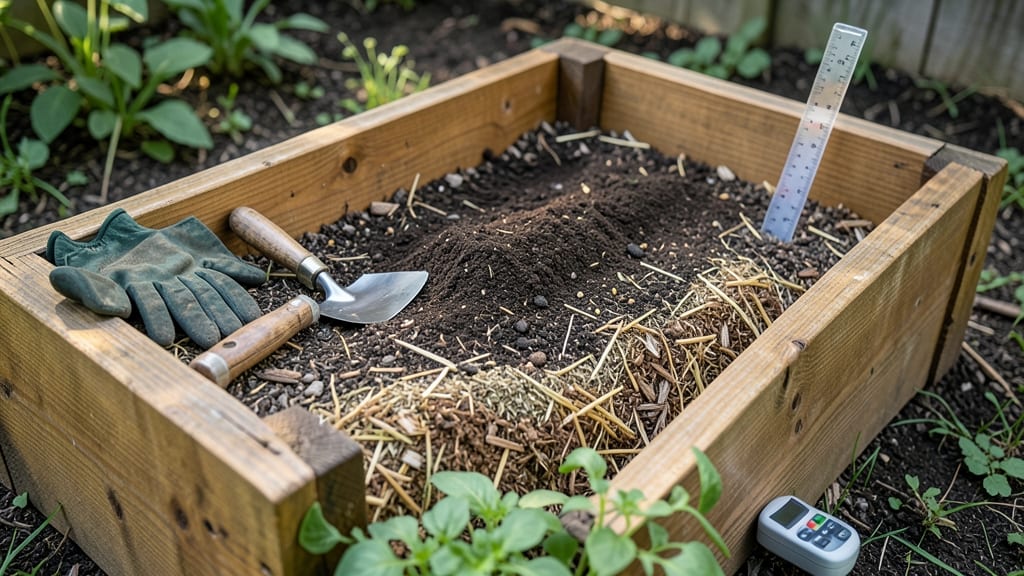
The right raised garden bed soil depth is the foundation of a thriving garden—whether you're growing tomatoes, herbs, or flowers.
Here’s the truth: too little depth and your plants will struggle to establish strong roots, while too much depth wastes money and space. The ideal depth isn’t just about inches—it’s about creating the perfect layers for drainage, nutrients, and root growth.
In this guide, I’ll break down the science behind soil depth, from the minimum 6 inches for shallow-rooted plants to the 18+ inches needed for root crops like carrots or potatoes.
You’ll also learn how to layer your bed for maximum efficiency, avoid costly mistakes, and keep your soil healthy year after year.
Whether you’re a beginner setting up your first raised bed or a seasoned gardener fine-tuning your setup, these insights will help you grow stronger, healthier plants with less effort.
Optimal raised garden bed soil depth by plant type: root zone requirements
When planning your raised garden bed, soil depth isn’t just about filling space—it’s about giving roots the room to thrive. Shallow beds stunt growth, while overly deep beds waste resources. The key lies in understanding root zone requirements for each plant type.
Most vegetables need 6-12 inches of soil, but deep-rooted crops like asparagus demand 18+ inches. Let’s break down the science so you can tailor your bed’s depth to your plants’ needs.
Root systems vary wildly: carrots need 12-18 inches to grow straight and plump, while leafy greens like lettuce thrive in just 6 inches. Flowers and herbs often fall in the middle, requiring 8-12 inches for optimal health.
The top 6 inches of soil hold the most nutrients, so focus on enriching this zone first. For shrubs and perennials, deeper beds (up to 24 inches) prevent transplant shock and support long-term growth.
Here’s the game-changer: soil density matters. Loose, airy soil (like a mix of compost and coconut coir) allows roots to spread easily, while compacted soil restricts growth. If your bed has heavy clay or sand, add organic matter like peat moss or leaf mold to improve aeration.
For container-like beds, prioritize depth over width—roots grow downward when space is limited.
| Plant Type | Ideal Soil Depth | Root Zone Notes | Example Plants |
|---|---|---|---|
| Leafy Greens | 6-8 inches | Shallow roots; prioritize nutrient-rich topsoil | Lettuce, Spinach, Kale |
| Root Vegetables | 12-18 inches | Deep taproots; avoid rocks or hardpan | Carrots, Potatoes, Beets |
| Fruiting Plants | 10-14 inches | Moderate roots; balance depth with mulch | Tomatoes, Peppers, Cucumbers |
| Herbs | 8-12 inches | Mostly shallow but benefit from deeper beds | Basil, Parsley, Thyme |
| Flowers | 8-12 inches | Varies by variety; annuals need less depth | Marigolds, Zinnias, Lavender |
| Shrubs/Perennials | 18-24 inches | Deep roots; mulch heavily to retain moisture | Raspberries, Blueberries, Asparagus |
For compacted soil, layer your bed with coarse materials at the bottom (like gravel or bark chips) to improve drainage, then top with loose, organic-rich soil. This mimics natural soil layers and prevents waterlogging.
If you’re repurposing an existing bed, test the soil’s drainage rate: pour water into a hole—if it drains in 1 hour, you’re good; if it pools, add sand or perlite.
Pro tip: Deep-rooted plants like asparagus or artichokes benefit from a 24-inch-deep bed, but most home gardens can’t justify the cost. Instead, plant these in dedicated corners and focus on nutrient-rich topsoil for shallower-rooted crops.
For container-like beds (under 12 inches deep), choose bush varieties of tomatoes or peppers to avoid root bind.
Don’t overlook the bottom layer—it’s not just for drainage. Use carbon-rich materials (like wood chips or straw) to balance the nitrogen-heavy topsoil. This creates a microbiome-friendly environment where beneficial
Layering your raised bed soil: the perfect mix of depth, drainage, and nutrients
Creating the perfect raised bed soil depth isn’t just about throwing dirt into a wooden box—it’s about crafting a layered ecosystem that supports root growth, drainage, and nutrient retention.
I’ve learned through trial and error that the right layers can mean the difference between wilted seedlings and thriving vegetables. Whether you’re growing shallow-rooted herbs or deep-rooted asparagus, your soil’s structure is the foundation of success.
The key to success lies in a 3-layer system that balances aeration, water retention, and nutrient density. Too many gardeners skip the drainage layer, leading to root rot, while others overfill with expensive topsoil.
Let’s break down the science-backed approach I’ve perfected over years of gardening—without breaking the bank.
- 1 Drainage Layer (4-6 inches): Start with coarse gravel or crushed stone to prevent waterlogging. This layer ensures excess water escapes while allowing roots to breathe.
- 2 Carbon-Rich Layer (4-6 inches): Add wood chips, straw, or coconut coir to improve aeration. This layer breaks down slowly, creating air pockets for roots.
- 3 Compost-Rich Layer (6-12 inches): Mix well-rotted compost, aged manure, and topsoil for nutrient density. This is where most of your plant’s roots will thrive.
- 4 Topsoil Finish (2-4 inches): Use high-quality topsoil to create a seed-friendly surface. This layer should be loose and free of clumps to encourage germination.
For shallow-rooted plants like lettuce or radishes, a 6-inch total depth is perfect. These plants don’t need much room to spread, so you can save on materials while still providing enough space for healthy growth.
I’ve successfully grown entire salad mixes in 6-inch-deep beds by focusing on nutrient-rich compost in the top layers.
If you’re growing deep-rooted vegetables like carrots, potatoes, or asparagus, aim for 12-18 inches of total depth. The extra space allows roots to access moisture and nutrients deeper in the soil.
For these plants, I recommend doubling the compost-rich layer to 10-12 inches. You can also use cost-saving alternatives like leaf mold or peanut hulls instead of expensive compost blends.
One of my favorite budget-friendly swaps is using cardboard or newspaper as a weed barrier between the drainage and carbon-rich layers. It breaks down slowly, adding organic matter while suppressing weeds.
Just make sure it’s compost-free and free of glossy inks. For the topsoil finish, I often mix in vermiculite or perlite to improve drainage and aeration without spending much.
After layering, give your soil a gentle watering to settle everything in place. Avoid compacting the layers, as this can create air pockets that stunt root growth. If you’re reusing an existing raised bed, consider top-dressing with fresh compost annually to replenish nutrients.
With this layered approach, you’ll create a self-sustaining ecosystem that keeps your plants happy and healthy all season long. 🌱