
Tools
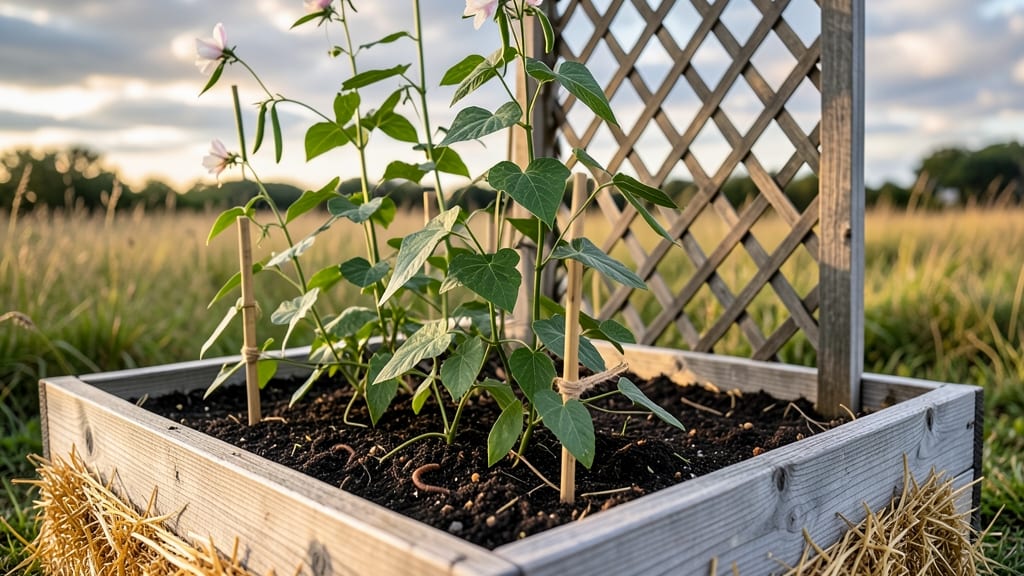
A raised bed with trellis turns wasted vertical space into a productive powerhouse. 🌱 I built mine last spring after realizing my balcony could grow twice as much with just a few extra supports.
The combination lets you grow cucumbers, pole beans, and even morning glories in the same compact footprint while keeping everything accessible and pest-resistant.
Start with a sturdy raised bed—at least 12 inches deep—and add trellises either along the sides or as freestanding frames. I used 2x4 lumber for mine, but metal or PVC works too.
The key is spacing: 3-4 feet between climbing plants gives them room to sprawl without competing for sunlight. Drainage holes in the bed and sturdy anchoring for the trellis prevent tipping in wind.
You’ll end up with a garden that produces 2-3x more than flat beds, stays organized, and looks like a lush vertical garden. My cucumbers now stretch 8 feet tall instead of sprawling across the ground, and the beans snap so easily I barely need to bend over.
The trellis also keeps slugs from feasting on your hard work.
Works for any size garden—even a 4x8-foot bed fits on a patio. Just adjust the trellis height based on what you’re growing: 5-6 feet for cucumbers, 4-5 feet for beans. The best part? You’ll reclaim floor space for seating or more beds while growing more than ever before.
📚 In This Guide
- What you need
- Instructions
- Tips and common mistakes
- Wrapping up and next steps
What you need
- ● Raised Bed Frame: Untreated lumber (cedar or redwood recommended for durability) – 4x8 ft bed: 2 pieces 8 ft long (2x12 in.), 2 pieces 4 ft long (2x12 in.)
- ● Corner brackets or screws (galvanized or stainless steel) – 4-8 pieces
- ● Trellis: PVC pipes (½" diameter) or wooden stakes – 2-4 pieces (cut to 6-8 ft tall)
- ● Twine, garden twine, or jute twine – 1-2 spools
- ○ Metal or wooden trellis panels (optional, 4x8 ft) – 1-2 pieces
- ● Landscape Fabric: 1 roll (to prevent weeds)
- ● Garden Soil: 1-2 cubic yards (high-quality, well-draining mix)
- ● Tools: Drill/driver & screws
- ● Measuring tape & pencil
- ● Level (to ensure even bed placement)
- ● Staple gun (for securing landscape fabric)
- ● Garden gloves & safety glasses
- ● Compost or worm castings – Boost soil fertility
- ● Drip irrigation kit – Water-efficient gardening
- ● Mulch (straw or wood chips) – Retains moisture & suppresses weeds
- ● Paint or stain – For a polished look (use non-toxic options!)
Step-by-step guide to building a raised bed with trellis
Here's how to create a space-efficient vertical garden that maximizes your harvest and keeps climbing plants off the ground.
🪴 Step 1: Select and Assemble Your Raised Bed Frame
Choose untreated cedar or redwood lumber for natural rot resistance. For a 4-foot by 8-foot bed (the ideal size for four gardeners), use 2x6 boards cut to 4-foot lengths for the sides and 8-foot lengths for the ends. Assemble the frame with 2.5-inch deck screws, leaving the top edges flush for a clean finish. I always pre-drill holes to prevent wood splitting—this is where most DIY projects fail.
Add corner braces for stability, especially if your bed will sit on uneven ground. Line the bottom with landscape fabric to block weeds while allowing drainage. The bed should stand 10-12 inches high—enough to prevent soil compaction but not so tall it becomes difficult to reach the center. Test stability by gently rocking the frame before adding soil.
🌱 Step 2: Install the Trellis System
For a permanent trellis, attach 1x2 cedar slats horizontally across the bed's interior using stainless steel screws. Space them 12 inches apart vertically to support vines as they grow. I like to install them at a 45-degree angle for better vine attachment—this mimics natural climbing angles. For a removable trellis, use powder-coated metal mesh stretched between vertical posts for easy cleanup after harvest.
Position the trellis along the north or east side of the bed to avoid shading shorter plants. If you're growing heavy climbers like pole beans or cucumbers, add vertical support stakes every 3 feet along the trellis line. Water the soil thoroughly before planting to help roots establish quickly—this prevents early wilting when vines start climbing.
☀️ Step 3: Layer Soil for Optimal Drainage and Fertility
Fill the bed with a 12-inch soil mix starting with 4 inches of coarse gravel at the bottom for drainage. Add 4 inches of compost next to improve fertility, then top with 4 inches of high-quality potting mix. For a 4-foot by 8-foot bed, you'll need about 1.5 cubic yards of soil total—rent a wheelbarrow if moving it manually. I always mix in 1 cup of bone meal at this stage to boost phosphorus for strong root development.
Water the soil deeply until it's evenly moist to a depth of 6 inches. Avoid compacting the soil as you fill—walk around the bed instead of stepping inside. The trellis will cast shade, so plant shade-tolerant companions like lettuce or radishes near the base while keeping full-sun lovers like tomatoes and cucumbers closer to the trellis for maximum light exposure.
🌿 Step 4: Plant and Train Climbing Veggies
Install climbing plants like pole beans, cucumbers, or malabar spinach near the trellis, giving them 12-18 inches of space between plants. For heavier vines, tie them to the trellis with soft garden twine as they grow—this prevents stem damage. I plant bush varieties like bush beans around the perimeter to utilize space efficiently. Water deeply after planting to encourage root spread into the loose soil.
Watch for new growth along the trellis within 7-10 days—this is your cue to start pruning side shoots to direct energy upward. If vines grow too aggressively toward the sun, gently weave them through the trellis slats rather than tying them tightly. Overly tight ties can girdle stems as they thicken. For indeterminate tomatoes, use tomato cages near the trellis to support early growth before they take over the vertical space.
✂️ Step 5: Maintain and Harvest for Maximum Yield
Train vines weekly by tying or weaving them upward as they grow. Prune yellowing leaves and side shoots that aren't producing fruit to improve airflow and reduce disease risk. For cucumbers and squash, remove male flowers if you want to save seeds—female flowers have tiny fruits behind them. Water at the base in the morning to prevent fungal issues from evening moisture. The trellis will cast shade, so mulch the bed with 2 inches of straw to retain moisture.
Harvest pole beans every 2-3 days to encourage continuous production. For cucumbers, pick when they're 6-8 inches long—waiting too long reduces flavor and encourages powdery mildew. After harvest, remove spent vines and compost them, then rotate crops next season to prevent soil-borne diseases. The trellis design makes cleanup effortless—just pull up vines and replace them with new plants in early spring.
Tips & tricks for building a raised bed with trellis
Here's what I've learned after years of vertical gardening—and how to avoid the mistakes that trip up beginners.
Wood Selection Wisdom: Cedar and redwood resist rot naturally, but if you're on a budget, pressure-treated lumber works too—just avoid the green-tinted kind, which contains arsenic. For a 4-foot by 8-foot bed, I recommend using 2x6 boards because they're wide enough to prevent soil spillage while still being manageable for one person to assemble. If you're building a larger bed, consider 2x8 boards for added stability, but they'll require two people to lift and position. Pre-drilling screw holes is non-negotiable—this simple step prevents wood splitting and makes assembly go smoothly.
Trellis Angle Matters: The 45-degree angle for trellis slats isn't just aesthetic—it creates a natural climbing path for vines. When installing 1x2 cedar slats spaced 12 inches apart, imagine how a vine would naturally wrap around a support. The angle helps distribute weight more evenly, reducing the risk of slats bending under heavy climbers like cucumbers or squash. For removable trellises, powder-coated metal mesh is my go-to because it's rust-resistant and easy to clean after harvest. If you're growing indeterminate tomatoes, consider adding a second trellis parallel to the first for extra support as the plants mature.
Soil Layering Strategy: The 12-inch soil mix is designed to balance drainage and fertility, but the order matters. Start with 4 inches of coarse gravel at the bottom—this prevents waterlogging and root rot. The 4 inches of compost in the middle is where the magic happens for fertility, while the top 4 inches of potting mix gives you a clean planting surface. When mixing in that 1 cup of bone meal, do it in the middle layer where roots will actively seek out phosphorus. For a 4-foot by 8-foot bed, I've found that pre-mixing the soil in a wheelbarrow ensures even distribution and prevents compaction. Watering to 6 inches deep after filling helps settle the soil without compacting it.
Plant Spacing Secrets: The 12-18 inches between climbing plants might seem generous, but it's crucial for airflow and disease prevention. When planting near the trellis, position your pole beans or cucumbers so their first leaves face the trellis—this encourages them to grow toward the support naturally. For heavy vines, use soft garden twine loosely tied in figure-8 patterns rather than tight knots. This allows the stems to thicken naturally while still providing support. I've seen many gardeners struggle with vines breaking free because they tied them too tightly early on. The 7-10 day window for new growth is your best indicator of when to start training vines—wait until you see active growth before beginning to tie or weave.
Pro Tips for Raised Bed With Trellis
- Here's what I've learned after years of vertical gardening—and how to avoid the mistakes that trip up beginners.
- Wood Selection Wisdom: Cedar and redwood resist rot naturally, but if you're on a budget, pressure-treated lumber wor...
- Trellis Angle Matters: The 45-degree angle for trellis slats isn't just aesthetic—it creates a natural climbing path ...
Frequently asked questions
What’s the best time of year to install a trellis in a raised bed?
Install your trellis before planting season—ideally in early spring or late fall. This gives roots and vines plenty of time to establish without competition for space. For winter crops (like peas), set it up as soon as the ground is workable. Pro tip: Pre-drill holes in your trellis frame to attach it securely to the bed’s sides or stakes, so it doesn’t shift when plants are heavy with fruit!
Which vegetables grow best on a trellis in a raised bed?
Climbing veggies thrive with vertical support! Top picks include pole beans, cucumbers, zucchini, peas, and indeterminate tomatoes. Avoid root vegetables (like carrots) or sprawling plants (like squash)—they’re better suited for ground-level growth. Pair heavy climbers (like tomatoes) with a sturdy trellis or cage to prevent toppling.
How do I keep my trellis from collapsing under heavy vines?
Prevent sagging with these tricks:
- Use thick, durable materials (e.g., bamboo stakes, metal cages, or pressure-treated wood).
- Space supports closely—every 1–2 feet for cucumbers/tomatoes, 3–4 feet for lighter vines like peas.
- Tie vines loosely with soft plant ties or old T-shirts (avoid wire or tight knots that can damage stems).
- Prune regularly to encourage upward growth and reduce weight.
Can I reuse a trellis from year to year, or should I replace it?
Yes! With proper care, a trellis can last 5–10 years. Clean it annually with a 10% vinegar solution to prevent mold/mildew, and check for warping or rust. Replace only if the structure weakens or becomes unsafe. For wooden trellises, seal them yearly to extend their lifespan.
Are there budget-friendly alternatives to store-bought trellises?
DIY options include:
- Bamboo stakes or branches—lashed together in a teepee shape.
- PVC pipes or rebar—cut and bent into a frame.
- Old ladders or wire mesh—repurposed for climbing support.
- String or twine—stretched between bed corners for peas or lightweight vines.
How do I prevent pests from attacking vines on a trellis?
Elevated vines can attract pests like aphids or cucumber beetles. Try these solutions:
- Use row covers early in the season to block pests.
- Introduce beneficial insects (like ladybugs) or spray neem oil.
- Inspect leaves daily for eggs or chewed foliage.
- Rotate crops yearly to disrupt pest life cycles.
Wrapping up and next steps
A raised bed with trellis isn’t just a smart way to maximize your garden’s potential—it’s a game-changer for growing lush, high-yielding veggies in minimal space! 🌱 By combining vertical support with nutrient-rich soil, you’ll enjoy healthier plants, easier harvesting, and a stunning display of climbing greens and flowers.
Whether you’re a seasoned gardener or just starting out, this setup makes growing delicious, space-saving crops effortless.
Ready to transform your garden? Start small—pick one trellis-friendly veggie like cucumbers or beans—and watch your green thumb shine! Grab your materials, roll up your sleeves, and let your vertical garden grow! 🌿