
Vegetables
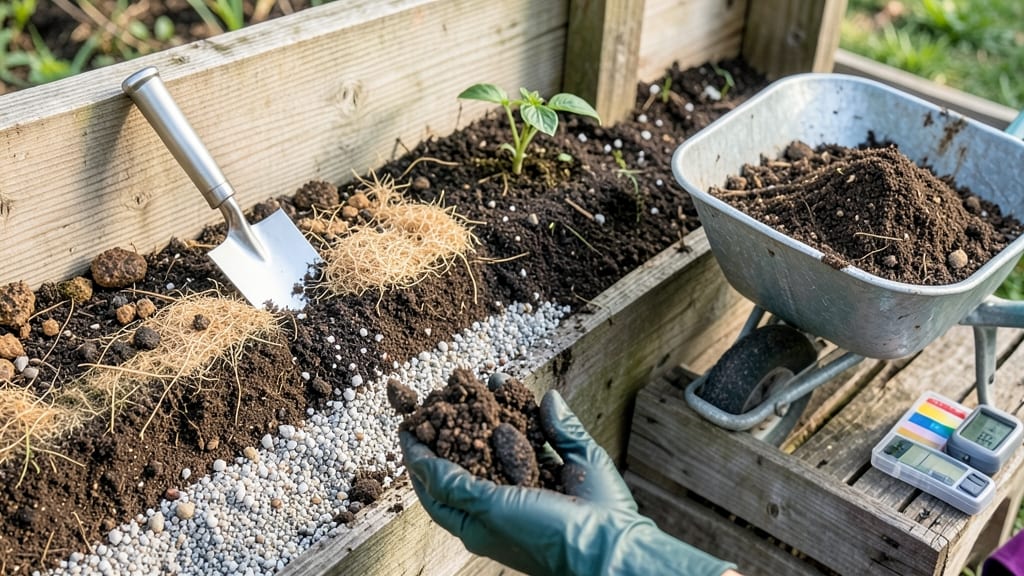
A perfect raised bed vegetable soil mixture is the foundation for bountiful harvests of tomatoes, carrots, and leafy greens—one that keeps roots happy, nutrients flowing, and water where it belongs.
Struggling with poor yields in your raised beds? The secret to thriving vegetables lies in a science-backed soil blend that balances drainage, nutrient density, and root expansion. Too much compost can burn roots, while too little sand leaves crops thirsty—getting the ratios right makes all the difference.
This guide breaks down the exact layered loam ratios professional gardeners use for heavy feeders like potatoes and root crops like beets. We’ll cover the ideal mix of topsoil, compost, and organic matter, plus how to adjust for your climate and soil type.
By the end, you’ll know how to build a nutrient-rich profile that supports strong growth from spring planting through fall harvest—without the guesswork.
The perfect raised bed soil mixture ratios for heavy feeders & root crops
Creating the ideal raised bed soil mixture for vegetables isn't just about throwing in dirt and compost. The perfect blend depends on whether you're growing heavy feeders like tomatoes or root crops like carrots.
Each plant type demands specific nutrient ratios, moisture control, and aeration to thrive. Let’s dive into the science-backed ratios that deliver bigger yields and healthier plants.
For heavy feeder vegetables, think tomatoes, peppers, and squash—they crave nutrient-rich soil with high organic matter. Meanwhile, root crops like carrots, beets, and radishes need loose, well-draining soil to prevent forking.
The key? A layered approach that balances both needs. Start with a bottom drainage layer, then build up with nutrient-dense layers tailored to your plants.
Here’s the summary-table breaking down the ideal soil mixture ratios for different vegetable types, including the essential components and their proportions:
The topsoil provides the foundational structure, while compost adds essential nutrients and microbial life. Peat moss improves moisture retention, and perlite or sand ensures proper aeration.
For heavy feeders, the higher compost ratio (30%) ensures they get the continuous nutrients they need, while root crops benefit from a slightly higher perlite/sand ratio (15%) to keep soil loose.
If your raised bed sits in a clay-heavy area, increase the perlite or coarse sand to 20% to prevent compaction. Conversely, in sandy soil regions, reduce perlite to 5% and add coco coir for better moisture retention.
Always test your soil’s pH level—most vegetables prefer a slightly acidic to neutral range (6.0-7.0). Adjust with lime or sulfur if needed.
For layered construction, start with a 2
How to layer your raised bed soil for maximum vegetable growth
If your raised beds feel like they’re holding back your tomatoes, carrots, or squash, the issue might be in the layers. Think of your raised bed like a lasagna—each layer has a job. The bottom drains, the middle feeds, and the top nurtures.
Without this structure, roots suffocate, nutrients wash away, and your plants struggle. I’ve layered dozens of beds, and the difference between wilting and thriving vegetables comes down to this simple science.
Start by choosing the right base materials for your native soil type. If your yard has clay-heavy soil, add coarse sand or perlite to prevent compaction. For sandy soil, mix in peat moss or coconut coir to retain moisture.
The key is balancing drainage, aeration, and nutrient density from the ground up. Let’s build your bed layer by layer, just like the pros do.
🌱 Step-by-Step Raised Bed Soil Layering Guide
- 1 Bottom Drainage Layer (10-15%): Use gravel, crushed stone, or wood chips (2-3 inches). This prevents waterlogging and encourages root penetration. Avoid fine sand—it compacts over time.
- 2 Middle Nutrient Layer (60-70%): Mix topsoil (50%), compost (30%), and peat moss or coco coir (20%). For heavy feeders like peppers, add worm castings (10%). This layer holds moisture and feeds roots for months.
- 3 Top Planting Layer (20-30%): Use a light potting mix (50%) blended with compost (50%). This fluffy top layer reduces soil-borne diseases and makes planting seeds or transplants effortless. Keep it loose—roots need room to expand!
- 4 Adjust for Clay Soil: Replace 20% of the middle layer with perlite or vermiculite to break up compaction. Add gypsum (1 cup per square foot) to improve structure over time.
- 5 Adjust for Sandy Soil: Boost the middle layer with peat moss (30%) and composted manure (10%) to retain moisture. Avoid perlite—it worsens drainage issues.
💡 Pro Tip: Water each layer thoroughly before adding the next to settle materials and eliminate air pockets.
Now that your layers are in place, resist the urge to till them—this disrupts the structure. Instead, top-dress with mulch (straw or shredded leaves) to protect the soil and conserve moisture. Over time, roots will naturally extend through all layers, accessing nutrients and water exactly where they need them.
My zucchini and kale go from wilting to vigorous in just 2 weeks after a proper layering.
For long-term success, add a slow-release fertilizer (like bone meal or fish emulsion) to the middle layer before planting. This ensures your vegetables have a steady nutrient supply all season.
And remember: the best soil is alive with microbes and earthworms. Avoid chemical fertilizers—they kill the very organisms that make your soil thrive.
If your raised bed feels like a science experiment, it’s working. The layers might look simple, but they’re the difference between struggling plants and a bountiful harvest.
Next time you’re mixing soil, think of it as building a home for your vegetables—one where roots can breathe, water drains, and nutrients last all season. Happy gardening! 🌿