
Light Requirements
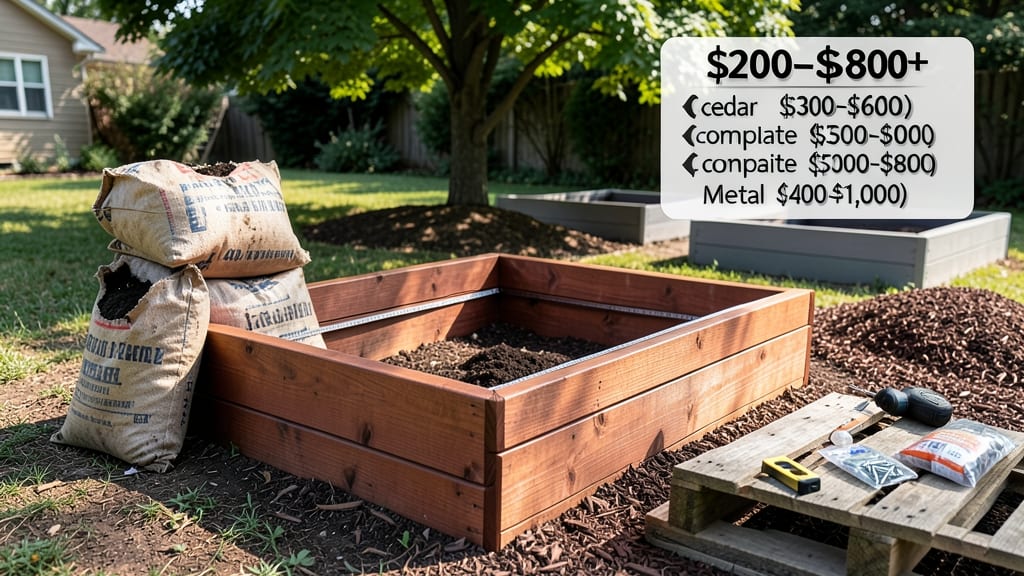
Building a raised garden bed typically costs between $100 and $1,000+, with prices varying based on materials, dimensions, and whether you assemble it yourself or purchase a pre-made kit. Natural wood options like cedar or redwood run $30–$75 per square foot, while durable composite lumber or cinder blocks average $20–$50 per square foot. Don't forget to budget $50–$300 extra for soil, drainage, and hardware.
Your final cost depends heavily on the materials you choose and whether you opt for a custom build or a pre-assembled kit. 🌱 Cedar and redwood are popular for their natural resistance to rot, but they come at a premium compared to untreated pine or composite alternatives.
For example, a 4'x8' bed using cedar planks might cost around $500, while the same size in composite lumber could drop to $300. The real savings often come from DIY assembly—skipping professional labor can cut costs by 30–50%, though it requires time and basic carpentry skills.
Regional lumber prices also play a role, so checking local suppliers can help you find better deals on quality materials.
Beyond the base structure, unexpected expenses often sneak in. Quality gardening soil alone can run $20–$50 per cubic yard, and proper drainage solutions (like gravel or landscape fabric) add another $10–$30.
Hardware like galvanized screws, corner brackets, and landscape fabric might seem minor, but they quickly add up to $50–$100 for a standard bed. Over time, you'll also need to factor in maintenance costs—treating wood annually or replacing it every 5–10 years, depending on exposure to the elements.
💡 In This Article
- Breaking Down Raised Garden Bed Material Costs
- Hidden Costs to Factor Into Your Raised Bed Budget
Breaking down raised garden bed material costs
The price of your raised garden bed hinges on the material you choose, each with distinct cost-per-square-foot ranges and durability factors. Cedar and redwood are premium options, typically running $30–$75 per square foot due to their natural resistance to rot and insects.
These woods contain oils that repel moisture, extending their lifespan to 10–15 years with minimal treatment. For example, a 4'x8' bed (32 sq ft) built with 2x6 cedar planks might cost $960–$2,400, depending on thickness and quality.
Composite lumber offers a mid-range alternative at $20–$50 per square foot, combining durability with lower maintenance. Brands like Trex or Fiberon mimic wood's appearance but resist warping and pests, lasting 25+ years. A 4'x8' composite bed could cost $640–$1,600, though initial prices are higher than pine.
On the budget end, untreated pine or pressure-treated lumber drops costs to $10–$30 per square foot, but requires annual sealing to prevent rot—adding $50–$150 per year in upkeep over 5–7 years.
Regional lumber prices create significant variations. In the Pacific Northwest, cedar might cost 20–30% less due to local forests, while Southern states see lower pine prices. Prebuilt kits from brands like CedarCraft or Gardman simplify assembly but mark up materials by 30–50% for convenience.
For instance, a 4'x4' prebuilt kit averages $400–$800, while DIYing the same size could cost $200–$500.
Durability factors into long-term savings. Cedar and composite beds require minimal repairs, while pine may need annual staining/sealing and full replacement every 5–7 years. Cinder blocks or bricks add structural permanence but cost $15–$40 per square foot installed, with mortar and labor pushing totals higher.
For example, a 4'x8' block bed might run $600–$1,200 before soil and drainage.
Consider these trade-offs when choosing materials:
- Cedar/Redwood: High upfront cost but 10–15 years of low maintenance
- Composite: Mid-range cost with 25+ years of durability
- Pine: Budget-friendly but needs annual treatment and shorter lifespan
- Blocks/Bricks: Permanent structure but higher labor costs
For cost-conscious gardeners, mixing materials—like cedar corners with pine sides—can balance durability and budget. Always factor in regional lumber prices and your willingness to DIY versus paying for prebuilt convenience. 🌿