
Planting
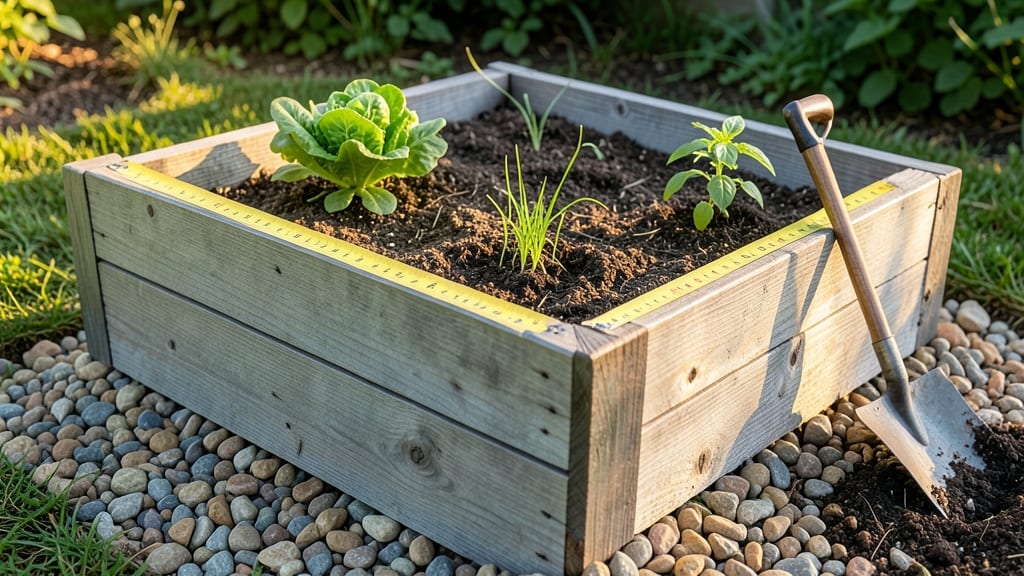
To determine how deep a raised garden bed needs to be, aim for 6 to 12 inches for most vegetables, herbs, and shallow-rooted plants like lettuce, while deeper-rooted crops such as tomatoes or carrots require 12 to 18 inches. Soil depth directly impacts root growth and plant health.
A raised garden bed's depth isn't just about fitting plants—it's about giving roots room to breathe and access nutrients. 🌱 Shallow-rooted plants like basil or spinach thrive in 6-inch beds, while root vegetables need extra space to develop fully.
I've found that adding compost or organic matter to the bottom layer helps create a nutrient-rich foundation, especially in deeper beds where roots may struggle to reach topsoil.
For intensive planting or container gardening, you might even go deeper—up to 24 inches—to accommodate multiple layers of crops. The key is matching the bed's depth to your plants' needs while ensuring proper drainage. Too shallow, and roots get crowded; too deep, and you waste space and resources.
💡 In This Article
- Root Depth Requirements for Different Plants
- Building the Perfect Raised Garden Bed: Depth Guide by Plant Type
Root depth requirements for different plants
Root systems vary dramatically between plant types, and this directly influences how deep your raised bed should be. Shallow-rooted plants like lettuce, spinach, or herbs such as basil and cilantro only need 4-6 inches of soil because their roots spread horizontally to absorb moisture and nutrients near the surface.
These plants thrive in well-aerated topsoil where microbial activity is highest. 🌱 Meanwhile, deep-rooted vegetables like carrots, potatoes, or tomatoes require 12-18 inches to develop fully, as their roots need space to grow downward for stability and access to water stored deeper in the soil profile.
The science behind this involves how roots access nutrients and water. Shallow roots rely on the top 2-3 inches of soil where organic matter decomposes rapidly, releasing nitrogen and other essential nutrients. Deep roots, however, tap into subsoil layers where minerals like phosphorus and potassium accumulate over time.
For example, a carrot's edible taproot can extend up to 12 inches long, while a tomato's fibrous roots spread 18-24 inches deep to anchor the plant and access moisture during drought conditions.
Soil aeration also plays a critical role. Compacted or waterlogged soil at the bottom of a shallow bed can suffocate roots, leading to stunted growth or disease.
This is why raised beds—especially deeper ones—benefit from a 3-4 inch layer of coarse material like gravel or perlite at the base to improve drainage and prevent root rot. The ideal scenario is a loose, crumbly texture throughout the bed's depth, allowing roots to penetrate easily without resistance.
Consider the plant's life cycle too. Fast-growing crops like radishes or green onions can mature in just 3-4 weeks and don't need deep soil, while perennials like asparagus or rhubarb require 12+ inches of depth to establish their extensive root systems over multiple seasons.
Even within the same plant family, varieties differ—bush beans (shallow roots) vs. pole beans (deeper roots) is a classic example of how genetics influence depth requirements.
Another factor is how plants compete for resources. In a 6-inch bed, shallow-rooted plants like lettuce will outcompete deeper-rooted crops for space, leading to poor growth. This is why many gardeners use interplanting strategies, pairing shallow-rooted herbs with deep-rooted vegetables in the same bed.
The herbs use the top layer, while the vegetables access deeper soil layers without direct competition.
For container gardening or small raised beds, you can simulate depth by using soil layers with varying textures.
Start with a 2-inch layer of coarse sand or gravel at the bottom for drainage, followed by 4-6 inches of compost-rich topsoil, and top with 2-3 inches of finished compost.
This mimics a deeper soil profile in a compact space, giving plants like cherry tomatoes or dwarf varieties the room they need to thrive.