
Trees
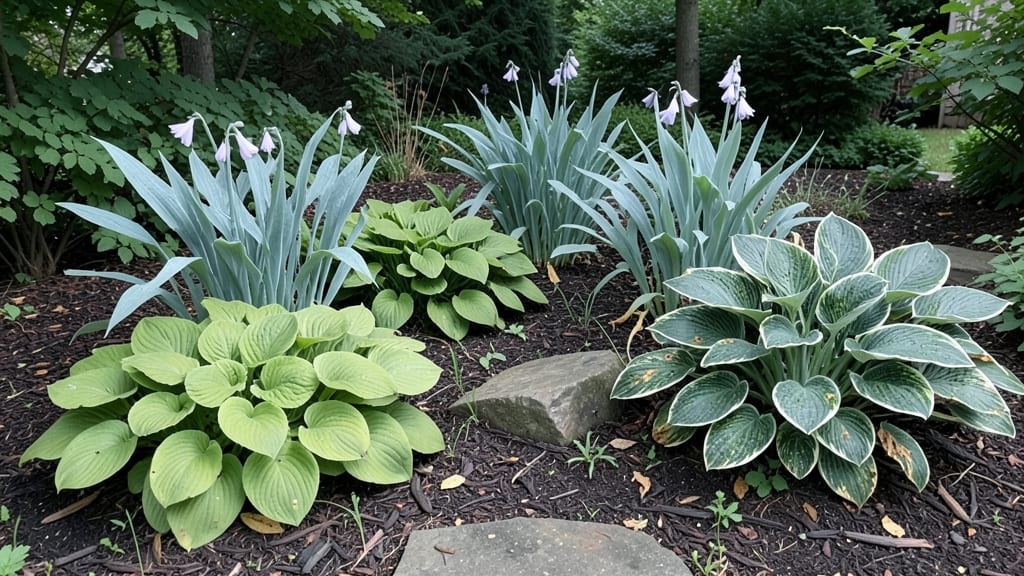
Hosta gardens pictures reveal stunning foliage varieties like 'Blue Angel,' 'Francee,' and 'Halcyon,' thriving in shade with vibrant colors, diverse textures, and sizes ranging from tiny 6-inch leaves to sprawling 2-foot giants—perfect for creating dynamic, layered garden designs.
Hostas are the unsung heroes of shade gardens, offering a dazzling array of leaf patterns and hues that transform dull corners into lush focal points. 🌿 The secret lies in their adaptability—hostas handle low light better than most plants, making them ideal for spots where sun-loving flowers struggle.
What's more, their slow-growing nature means they'll stay vibrant for years with minimal fuss, while their varied heights create natural tiers in garden beds.
When planning your hosta garden, think beyond just color—consider the texture contrast between smooth-edged varieties like 'Patriot' and ruffled types like 'June.' Pairing them with ferns or heucheras adds depth, while their late-summer blooms provide unexpected pops of purple or lavender.
The key? Grouping by size first, then color, to create visual flow that draws the eye through your garden like a living painting.
💡 In This Article
- Why Hostas Excel in Shade Gardens
- Designing a Stunning Hosta Garden Layout
Why hostas excel in shade gardens
Hostas thrive in shade because their leaves have evolved to maximize light absorption even in low-light conditions. Their broad, horizontal leaves contain a high concentration of chlorophyll b—a pigment that absorbs light more efficiently in dim environments than most plants.
This adaptation allows them to photosynthesize effectively with as little as 20-30% of full sunlight, making them ideal for wooded gardens or north-facing beds where other plants wilt.
The secret lies in their slow-growing, resource-conserving metabolism. Unlike fast-growing annuals that demand constant sunlight, hostas prioritize energy storage in their thick, fleshy roots. These roots form dense, fibrous networks that spread horizontally, creating a self-mulching system that retains moisture and regulates temperature.
This root structure also explains why hostas often survive in partial shade—they can endure brief periods of drought better than many shade-loving competitors.
Leaf color plays a fascinating role in this adaptation. Blue-tinged varieties like 'Blue Angel' contain higher levels of anthocyanins, pigments that protect leaves from UV damage while reflecting blue light—an evolutionary trick that actually helps them absorb more red wavelengths in shaded conditions.
Meanwhile, golden varieties like 'Francee' produce more carotenoids, which compensate for low chlorophyll activity in dim light by converting light into energy more efficiently.
What most gardeners don't realize is how hosta leaf size correlates with shade tolerance. Smaller leaves (6-12 inches) like those of 'Halcyon' have a higher surface-area-to-volume ratio, allowing them to capture more diffuse light.
Larger varieties (18-24 inches) often develop thicker leaves with waxy coatings that reduce water loss—a critical adaptation for shaded areas where evaporation is slower but humidity remains high.
Here's what this means for your garden: Hostas don't just survive in shade—they thrive because their biology is optimized for it.
Their ability to grow in filtered light conditions (like dappled sunlight through trees) while still producing vibrant foliage makes them the perfect foundation for creating lush, low-maintenance garden spaces. The trade-off?
They grow more slowly than sun-loving plants, which is why their dramatic foliage remains the star of the show for years without needing replacement.
For those curious about the science, hostas achieve this through a process called facultative shade adaptation. Unlike obligate shade plants that must grow in darkness, hostas can shift between sun and shade tolerance by adjusting their chlorophyll production.
This flexibility is why you'll often see hostas flourishing in morning sun with afternoon shade—a condition that would stress many other perennials.