
Container Gardens
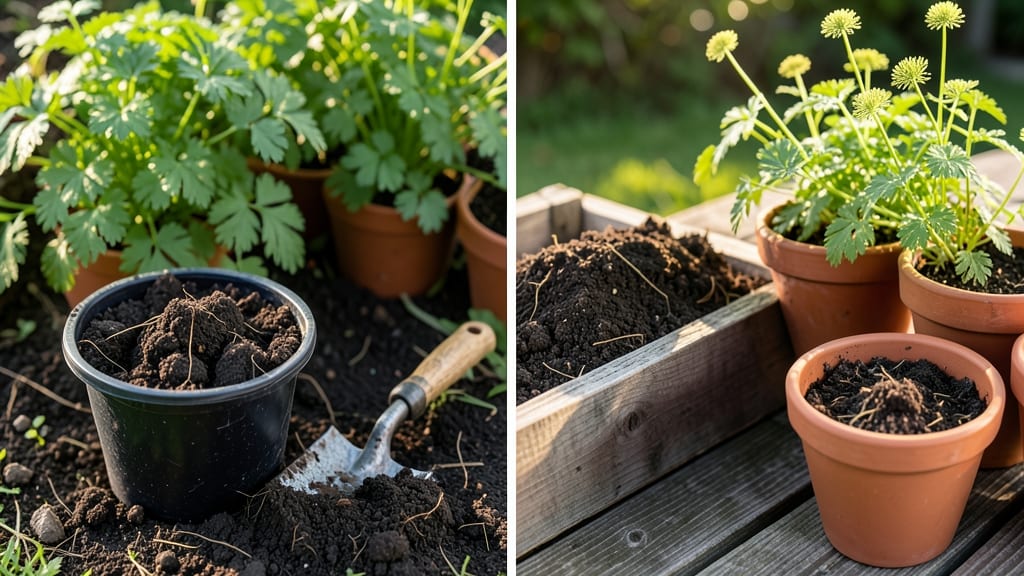
You can use raised bed soil in pots, but it needs adjustments since it drains slower, compacts easily, and may lack the aeration container plants need. Mix in perlite, coarse sand, or compost to improve drainage and root health before repotting.
Raised bed soil works differently in pots because it's designed for larger volumes where roots can spread freely. 🌱 In containers, the confined space causes moisture to linger longer, while the lack of organic matter can lead to poor aeration.
I've found that adding 20-30% perlite or horticultural sand helps create air pockets, while a handful of compost improves nutrient availability. For heavy clay soils, consider using 50% potting mix to balance texture.
This modification isn't just about drainage—it's about mimicking the natural soil structure plants expect in containers. The right mix prevents root rot while still providing enough moisture retention for healthy growth. Succulents need even more grit, while leafy greens benefit from extra compost.
Always test your amended soil by squeezing a handful—it should hold shape but crumble easily when dry.
💡 In This Article
- Why Raised Bed Soil Fails in Container Gardens
- How to Modify Raised Bed Soil for Pots
Why raised bed soil fails in container gardens
Raised bed soil is formulated for large, open spaces where roots can spread horizontally and vertically.
In pots, this same soil becomes problematic because it lacks the air pockets and loose structure that container plants need. 🌱 The issue starts with particle size—raised bed soil often contains more clay and silt, which pack down tightly when confined to a pot.
This compaction reduces oxygen flow to roots, a critical factor since container plants rely on efficient aeration in their limited growing space.
The drainage difference is dramatic: raised bed soil may hold moisture for days after watering, while potting mixes are designed to shed excess water within 1-2 hours. For example, a standard potting mix might contain 20-30% perlite or vermiculite by volume, while garden soil rarely exceeds 5-10% organic matter.
This means water sits longer in pots, increasing root rot risk for plants like basil or peppers that prefer drier conditions. The texture also matters—ideal potting soil should feel like a damp sponge, while garden soil often feels dense and sticky when wet.
Another key issue is nutrient availability. Raised bed soil provides steady nutrients over time through decomposition, but in containers, these nutrients can leach out too quickly or become inaccessible due to compaction. 🌿 Plants in pots also experience more rapid nutrient depletion because they have limited root zones.
For instance, a tomato plant in a 5-gallon pot may exhaust nitrogen reserves within 4-6 weeks without amendments, while the same plant in a raised bed might have 3-4 months of natural nutrient supply.
Consider the root environment: in raised beds, roots can grow 12-18 inches deep and spread widely, while container roots often max out at 6-12 inches deep depending on pot size. This confinement makes plants more sensitive to soil texture—what works in a bed can suffocate roots in a pot.
The solution lies in recreating the ideal container soil environment by adding structural components that raise bed soil lacks.
For visual comparison, imagine pouring water into two containers: one with fine sand (garden soil) and one with coarse gravel mixed with sand (amended potting mix). The gravel version drains 3-4 times faster while still holding moisture near roots.
This same principle applies to your soil mix—adding grit creates microscopic drainage channels that prevent waterlogging. 💡
The science behind this is simple: oxygen diffusion through soil occurs most efficiently when particles aren't tightly packed. In containers, this becomes even more critical because there's no natural soil turnover from wind or rain.
The right amendments create a "soil sponge" that holds moisture while allowing air circulation—exactly what confined roots need to thrive.