
Pests
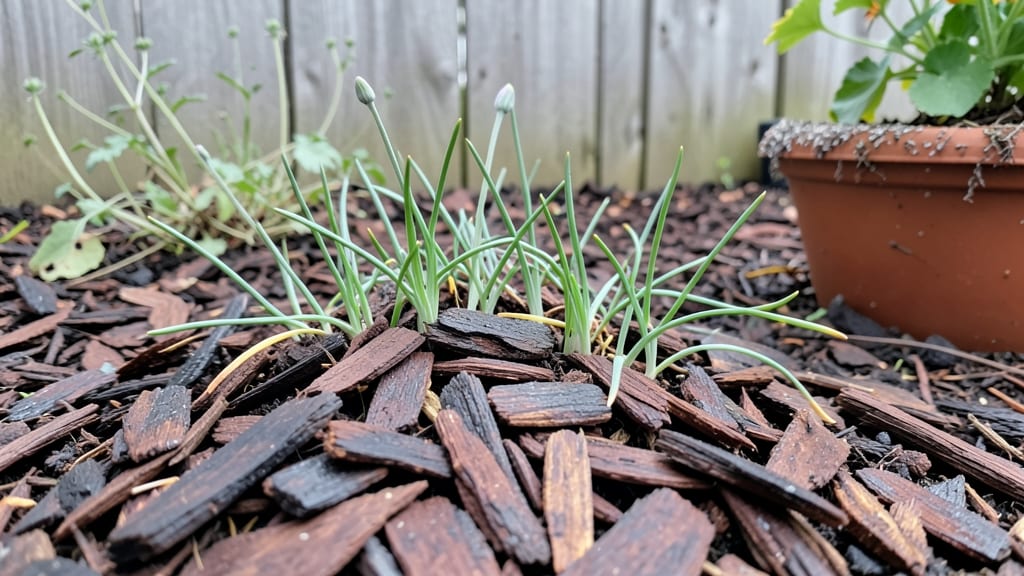
Dealing with bark in garden soil starts by raking out large pieces, then amending the soil with compost or sand to speed up natural breakdown. Avoid tilling to protect soil structure, and incorporate organic matter like aged manure for lasting soil health improvements.
Bark buildup in garden beds creates a double problem: it smothers plant roots while forming a water-resistant layer that blocks moisture absorption. 🌱 The waxy coating on bark slows decomposition, leaving your soil compacted and nutrient-starved over time.
Instead of letting it sit, I recommend blending in coarse compost or sand first to improve drainage, then adding nitrogen-rich amendments like alfalfa meal to kickstart microbial activity.
For stubborn bark patches, a layer of mulch or cover crops like clover can help break it down naturally over 3-6 months. Timing matters—spring or fall is ideal when soil temperatures are moderate, giving microbes the perfect environment to work their magic.
The key is patience: rushing with heavy machinery can actually worsen soil compaction, so gentle methods win every time.
💡 In This Article
- Why Bark Buildup Harms Garden Soil Health
- Natural Ways to Break Down Bark in Garden Beds
Why bark buildup harms garden soil health
When bark accumulates in garden beds, it creates a physical barrier that suffocates roots and disrupts soil aeration. The waxy outer layer of bark contains lignin and suberin, compounds that resist natural breakdown, forming a water-repellent crust.
This hydrophobic layer prevents moisture penetration, leaving roots thirsty even after watering. Studies show soils with 10%+ bark content can reduce water infiltration by up to 40%, creating drought-like conditions for plants.
The chemical composition of bark also throws off soil pH balance. As it decomposes slowly, it releases tannins that acidify the soil—sometimes dropping pH from ideal 6.0-7.0 to 5.0 or lower, which locks out essential nutrients like phosphorus and calcium.
The cellulose fibers in bark bind tightly to nitrogen in the soil, creating a "lock-up" effect where plants can't access this critical nutrient. This is why you might see yellowing leaves even when you're fertilizing regularly.
Microbial activity takes a hit too. Healthy soil teems with 1 billion bacteria per gram, but bark buildup creates anaerobic pockets where only tough microbes survive. The lignin in bark requires specialized fungi to break it down, which compete with beneficial microbes for resources.
Over time, this shifts your soil's microbial balance toward decomposers rather than nutrient-cyclers, reducing organic matter quality. The result? Soil that looks rich on the surface but is actually nutrient-poor at the root level.
Here's what's happening under the surface: The dense mat of bark fragments creates physical resistance to root penetration, increasing soil compaction by 20-30%. This is why you might see plants struggling even when they have plenty of water—roots can't expand properly to access moisture deeper in the soil profile.
The situation worsens in clay soils, where bark exacerbates existing compaction issues by preventing natural soil aggregation.
Consider this comparison: A garden bed with 5% bark content might show 30% less root growth compared to healthy soil, while beds with 15%+ bark can experience 50% reduced plant vigor.
The visual difference is striking—plants in bark-heavy soil often show stunted growth, pale leaves, and poor flowering, despite receiving the same care as nearby healthy beds. 🌱
The long-term damage extends beyond this season. Bark buildup creates a feedback loop: as it decomposes unevenly, it forms pockets of varying organic matter content, creating micro-environments where some areas are nutrient-rich while others remain barren.
This uneven distribution makes it harder for plants to establish consistent root systems, setting up future struggles with drought tolerance and disease resistance.